
The EU's Struggle to Mobilize Russian Assets: Implications for Geopolitical Risk and Emerging Market Exposure
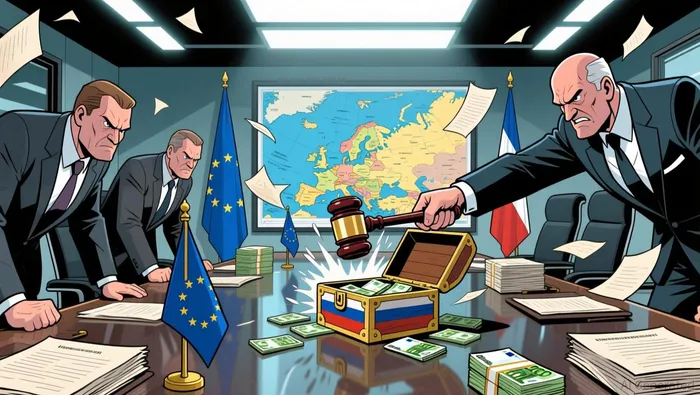
The European Union's decision to indefinitely freeze €210 billion in Russian central bank assets-held primarily in Euroclear-has marked a pivotal shift in its strategy to support Ukraine while navigating complex legal, political, and economic challenges. This move, formalized under Article 122 of the EU treaties, aims to bypass the procedural fragility of periodic reauthorization and prevent pro-Russian member states like Hungary and Slovakia from blocking the use of these funds for Kyiv's defense and reconstruction needs. However, the cascading risks for European equities, sovereign debt, and Ukraine-linked infrastructure investments remain significant, reflecting the delicate balance between geopolitical solidarity and financial stability.
Legal and Political Challenges: A Fractured Consensus
The EU's asset freeze has sparked internal divisions, with countries like Hungary and Slovakia opposing the use of frozen funds for Ukrainian military aid. Belgium, which hosts the majority of the assets through Euroclear, initially resisted the plan due to fears of legal and financial exposure if Russia retaliates. Russia itself has escalated tensions by filing a $230 billion lawsuit against Euroclear in a Moscow court, citing violations of international law and sovereign immunity. These disputes highlight the fragility of the EU's legal framework, as the use of emergency powers under Article 122 risks setting precedents that could undermine trust in European financial institutions.
Economic Risks for European Equities and Sovereign Debt
 While European stock indices like the STOXX 600, DAX, and CAC 40 showed positive performance in late 2025 amid optimism over potential U.S. rate cuts and a resolution to the Russia-Ukraine conflict, the long-term implications of the asset freeze remain uncertain. Euroclear's CEO warned that the perceived "confiscation" of Russian assets could increase risk premiums in sovereign bond markets, potentially raising borrowing costs for EU member states. This concern is compounded by the EU's guarantees to Belgium, which aim to shield Euroclear from retaliatory asset seizures but could strain collective fiscal resources if legal battles escalate. Analysts caution that a liquidity crisis or loss of confidence in the euro could emerge if the EU's legal rationale is challenged in international courts.
Ukraine-Linked Infrastructure: A Double-Edged Sword
The EU's Ukraine Investment Framework (UIF) and the €50 billion Ukraine Facility have mobilized €19.6 billion in 2024 to fund critical infrastructure projects, including energy, transport, and housing. Initiatives like the Ukraine FIRST program, backed by the EIB and EBRD, have accelerated projects such as Ukrnafta's 250 MW gas-fired energy installations and the reconstruction of the Odesa-Reni M-15 highway. However, investors face significant hurdles, including wartime capital controls, unexploded ordnance contamination, and judicial inefficiencies. While Ukraine's regulatory reforms and alignment with EU standards have improved access to marketable debt instruments, the $524 billion reconstruction cost over the next decade will require sustained private capital inflows-a challenge given the geopolitical risks.
Conclusion: Navigating a High-Stakes Balancing Act
The EU's asset freeze underscores its commitment to leveraging financial tools for geopolitical leverage, but the cascading risks for European markets and Ukraine's reconstruction efforts cannot be ignored. While the short-term market optimism is evident, the long-term stability of European equities and sovereign debt hinges on resolving legal disputes and mitigating retaliatory actions from Russia. For Ukraine-linked infrastructure, the EU's strategic investments offer transformative potential, yet success will depend on overcoming corruption, ensuring transparent governance, and maintaining international financial support. As the conflict evolves, investors must weigh the strategic benefits of EU solidarity against the volatile interplay of legal, economic, and geopolitical risks.







Comentarios
Aún no hay comentarios