
EU's Battery Ambition: Breaking China's Grip
Generado por agente de IAWesley Park
jueves, 28 de noviembre de 2024, 9:47 am ET1 min de lectura
As the global demand for batteries surges, particularly in Europe, the European Union (EU) finds itself increasingly reliant on Chinese imports. In a move to address this concern, France, Germany, and Sweden have urged the incoming European Commission to prioritize the development of the EU's battery sector. This article explores the implications of this push and the potential impact on the EU's strategic autonomy and energy security.
The EU's dependence on Chinese battery technology is a pressing issue. With China controlling over 85% of global battery cell production, as reported by the International Energy Agency, the EU's reliance on this critical technology is a cause for concern. The new Batteries Regulation, entering into force on August 17, 2023, aims to address this challenge by promoting a circular economy and reducing reliance on non-EU raw materials.
Key measures in the Batteries Regulation include high recycling targets for critical raw materials like lithium, cobalt, and nickel. By 2027, 50% of lithium and 90% of cobalt, copper, lead, and nickel must be recovered, with recycled content targets set for 2025 and 2031. This will secure EU supply chains and support the shift to a circular economy.
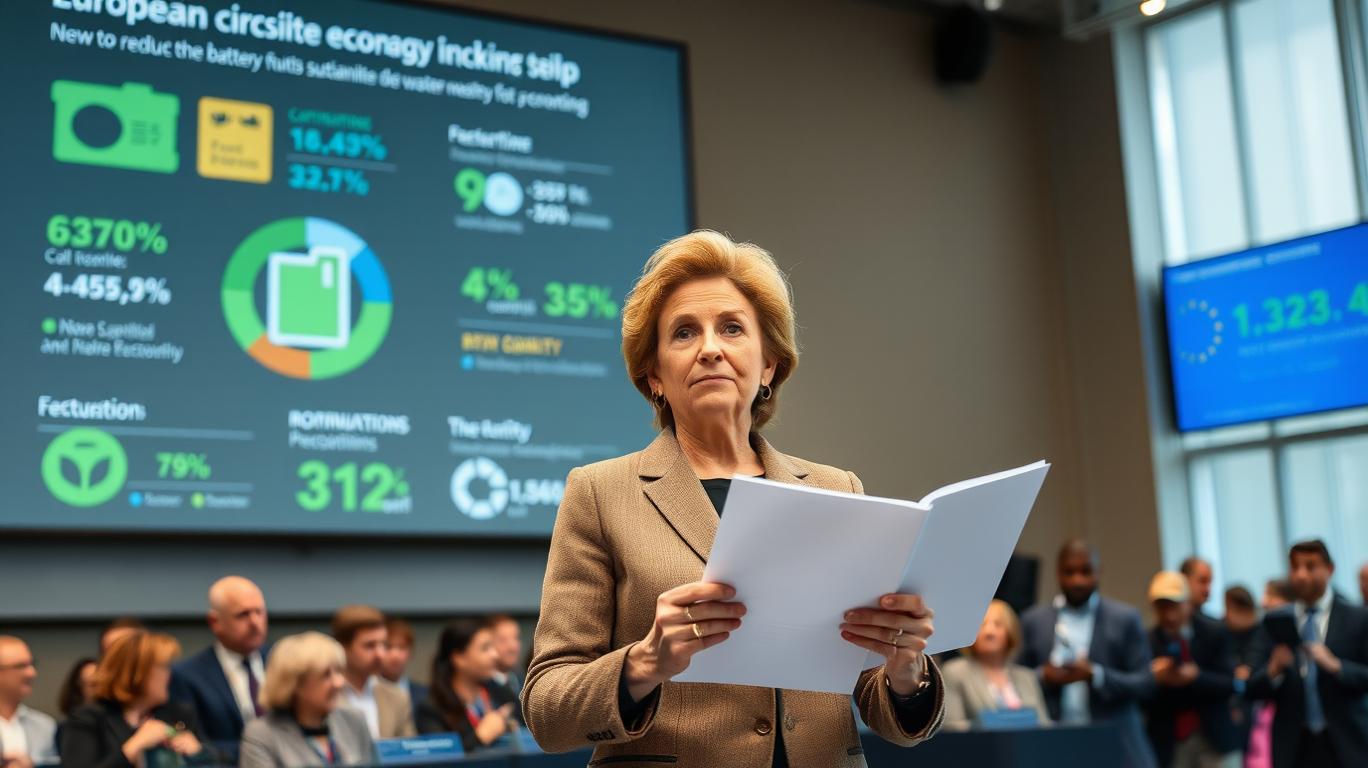
The introduction of a digital battery passport and due diligence policy will also play a crucial role in securing alternative sources of raw materials. The digital passport provides detailed information on each battery, aiding professionals in recycling and repurposing materials, while the due diligence policy requires companies to identify and address environmental and social risks linked to raw material sourcing. By promoting transparency and responsible sourcing, these measures can help reduce dependence on Chinese suppliers and open up new markets for the EU battery sector.
Stricter waste collection targets are also expected to play a significant role in reducing EU reliance on Chinese battery imports. The new Batteries Regulation sets waste collection targets for portable batteries (45% by 2023, 63% by 2027, and 73% by 2030) and light means of transport (LMT) batteries (51% by 2028 and 61% by 2031). These targets aim to increase the recycling and recovery of valuable materials like lithium, cobalt, copper, lead, and nickel, thereby reducing the need for imports from China.
In conclusion, the EU's push to develop its battery sector is a critical step in achieving strategic autonomy and energy security. By adopting a circular economy approach, promoting transparency in raw material sourcing, and setting ambitious recycling targets, the EU can significantly decrease its dependence on Chinese battery raw materials. The new Batteries Regulation demonstrates the EU's commitment to building an innovative, sustainable, and globally competitive battery value chain, positioning it to overcome the challenges posed by China's dominance in the battery market.
The EU's dependence on Chinese battery technology is a pressing issue. With China controlling over 85% of global battery cell production, as reported by the International Energy Agency, the EU's reliance on this critical technology is a cause for concern. The new Batteries Regulation, entering into force on August 17, 2023, aims to address this challenge by promoting a circular economy and reducing reliance on non-EU raw materials.
Key measures in the Batteries Regulation include high recycling targets for critical raw materials like lithium, cobalt, and nickel. By 2027, 50% of lithium and 90% of cobalt, copper, lead, and nickel must be recovered, with recycled content targets set for 2025 and 2031. This will secure EU supply chains and support the shift to a circular economy.
The introduction of a digital battery passport and due diligence policy will also play a crucial role in securing alternative sources of raw materials. The digital passport provides detailed information on each battery, aiding professionals in recycling and repurposing materials, while the due diligence policy requires companies to identify and address environmental and social risks linked to raw material sourcing. By promoting transparency and responsible sourcing, these measures can help reduce dependence on Chinese suppliers and open up new markets for the EU battery sector.
Stricter waste collection targets are also expected to play a significant role in reducing EU reliance on Chinese battery imports. The new Batteries Regulation sets waste collection targets for portable batteries (45% by 2023, 63% by 2027, and 73% by 2030) and light means of transport (LMT) batteries (51% by 2028 and 61% by 2031). These targets aim to increase the recycling and recovery of valuable materials like lithium, cobalt, copper, lead, and nickel, thereby reducing the need for imports from China.
In conclusion, the EU's push to develop its battery sector is a critical step in achieving strategic autonomy and energy security. By adopting a circular economy approach, promoting transparency in raw material sourcing, and setting ambitious recycling targets, the EU can significantly decrease its dependence on Chinese battery raw materials. The new Batteries Regulation demonstrates the EU's commitment to building an innovative, sustainable, and globally competitive battery value chain, positioning it to overcome the challenges posed by China's dominance in the battery market.



Divulgación editorial y transparencia de la IA: Ainvest News utiliza tecnología avanzada de Modelos de Lenguaje Largo (LLM) para sintetizar y analizar datos de mercado en tiempo real. Para garantizar los más altos estándares de integridad, cada artículo se somete a un riguroso proceso de verificación con participación humana.
Mientras la IA asiste en el procesamiento de datos y la redacción inicial, un miembro editorial profesional de Ainvest revisa, verifica y aprueba de forma independiente todo el contenido para garantizar su precisión y cumplimiento con los estándares editoriales de Ainvest Fintech Inc. Esta supervisión humana está diseñada para mitigar las alucinaciones de la IA y garantizar el contexto financiero.
Advertencia sobre inversiones: Este contenido se proporciona únicamente con fines informativos y no constituye asesoramiento profesional de inversión, legal o financiero. Los mercados conllevan riesgos inherentes. Se recomienda a los usuarios que realicen una investigación independiente o consulten a un asesor financiero certificado antes de tomar cualquier decisión. Ainvest Fintech Inc. se exime de toda responsabilidad por las acciones tomadas con base en esta información. ¿Encontró un error? Reportar un problema


SOBRE NOSOTROS
Nuestra historiaAutores de noticiasBase de conocimientosPolítica de privacidadTérmino de usoDescargo de responsabilidad de corretaje de tercerosTérminos de uso de AIMEDivulgaciones de riesgos de AInvest AICarrerasCONTÁCTENOS
Email: support@ainvest.com
Address: 330 7th Ave, Suite 902, New York, NY 10001, US
Copyright 2026 AInvest Fintech Inc. All rights reserved.


Comentarios
Aún no hay comentarios