
The EU's Palestine Donor Group: A Catalyst for Reconstruction and Regional Stability
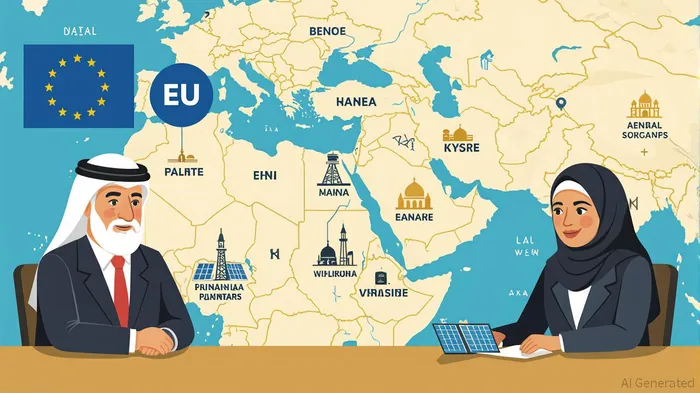
The European Union's Palestine Donor Group is emerging as a pivotal force in reshaping the geopolitical and economic landscape of the Middle East. , the EU is not only addressing immediate humanitarian needs but also laying the groundwork for long-term stability. This strategic approach, rooted in coordinated donor efforts and institutional reform, offers a compelling case for investors seeking opportunities in emerging markets while mitigating geopolitical risks.
A Blueprint for Stability: Coordinated Aid and Institutional Reform
The EU's Palestine Donor Group is designed to streamline financial assistance and align donor priorities with the Palestinian Authority's (PA) reform agenda. , the EU aims to strengthen fiscal sustainability, democratic governance, and public infrastructure. This funding is critical for stabilizing a region plagued by fragmentation and volatility. For instance, the Palestinian Fund for Reconstruction and Development (PFRD)—a multi-donor trust fund—has already attracted contributions from Japan, Canada, and the UK, pooling resources to avoid duplication and ensure transparency [1]. Such coordination reduces the risk of aid misallocation, a common concern in conflict-affected zones, and creates a predictable environment for investors.
The EU's emphasis on governance reform further underscores its commitment to risk mitigation. By supporting the PA's institutional capacity, the EU is fostering a framework where rule of law and accountability can take root. This is not just a moral imperative but an economic one: stable governance attracts private-sector investment. For example, , metrics that directly correlate with reduced geopolitical risk [2].
Sector-Specific Opportunities: Energy, Infrastructure, and Human Capital
The Palestine Donor Group's focus on infrastructure and energy transition presents tangible investment opportunities. The West Bank and Gaza Electricity Sector Performance Improvement Project, supported by EU funding, aims to modernize energy distribution and pilot solar solutions in Gaza. These initiatives align with global trends toward decarbonization and energy security, sectors where geopolitical risks are often tied to fossil fuel dependence. By investing in renewable energy, the EU is not only addressing environmental concerns but also insulating the region from the volatility of oil and gas markets [3].
Infrastructure development is another high-impact area. The EU's Connecting Europe Facility, which funds cross-border transport and digital projects, could serve as a model for Gaza's reconstruction. For instance, rebuilding roads, bridges, and digital networks would not only restore connectivity but also create a foundation for economic activity. According to a World Bank report, infrastructure projects in fragile contexts can reduce conflict risks by up to 30% by fostering economic interdependence and community cohesion [4].
Human capital development, though less tangible, is equally vital. . A well-educated population is a magnet for foreign direct investment (FDI), as companies seek regions with reliable labor pools. This aligns with the EU's broader Women, Peace, and Security agenda, which recognizes that gender equality in education and employment correlates with lower conflict recurrence rates [5].
Geopolitical Risk Mitigation: A Data-Driven Approach
The Palestine Donor Group's impact on geopolitical risk reduction is perhaps best measured through the lens of the (GRI). By pooling donor resources and aligning with the PA's reform goals, the EU is addressing systemic vulnerabilities that drive instability. For example, the to secure UN recognition for Palestine—backed by 15 countries—demonstrates how diplomatic coordination can de-escalate tensions. While recognition alone does not eliminate risks, it signals a shift toward multilateralism, .
Moreover, the EU's alignment with on a ceasefire and two-state solution further stabilizes the region. This regional cooperation reduces the likelihood of proxy conflicts, a historical driver of geopolitical risk in the Middle East. For investors, this means fewer disruptions to supply chains and a more predictable regulatory environment.
Challenges and the Path Forward
Despite these strides, challenges remain. The lack of quantifiable metrics on risk reduction in some EU-funded projects—such as the Rebuild Gaza Report's focus on spatial planning—highlights the need for more granular data. Investors must also navigate the complex interplay between geopolitical actors, including U.S. policy shifts under the Trump administration, which have rolled back climate incentives and created uncertainty in clean-energy markets [7]. However, the EU's continued commitment to renewable energy and its partnerships with non-U.S. economies (e.g., China, Gulf states) provide a buffer against such volatility.
Conclusion: A Win-Win for Stability and Returns
The EU's Palestine Donor Group exemplifies how strategic, coordinated aid can transform high-risk regions into investment-friendly environments. By prioritizing governance reform, infrastructure, and energy transition, the EU is not only addressing immediate humanitarian needs but also building a foundation for sustainable growth. For investors, this represents a unique opportunity to align capital with geopolitical risk mitigation—a rare combination in today's volatile world. As the EU's donors' platform launches in the fall of 2025, the stage is set for a new era of stability in Palestine—one that promises both social impact and financial returns.







Comentarios
Aún no hay comentarios