
EU Agricultural Volatility: French Farmer Protests and the Reshaping of Agribusiness Investments
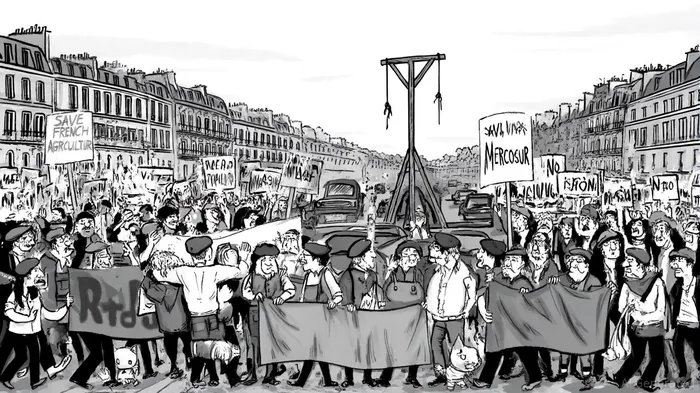
The European Union's agricultural sector is facing unprecedented volatility in 2025, driven by escalating French farmer protests against the EU-Mercosur trade agreement. These demonstrations, fueled by fears of unfair competition from South American imports and eroding food sovereignty, are not only reshaping domestic policy debates but also triggering significant shifts in agribusiness investments and supply chain strategies. For investors, the interplay between grassroots mobilization, regulatory adjustments, and geopolitical trade dynamics presents a complex landscape of risks and opportunities.
The Mercosur Agreement: A Catalyst for Disruption
The EU-Mercosur trade deal, finalized in December 2024, aims to eliminate over 90% of tariffs on agricultural products, including beef, poultry, and soybeans[1]. While proponents argue it will boost European exports of machinery and vehicles to South America, French farmers and agribusiness stakeholders have raised alarms about the influx of cheaper, less-regulated imports. According to a report by Bloomberg, Brazilian multinational JBSJBS-- could see an additional €1.7 billion in profits by 2040 under the agreement[2]. This disparity has galvanized French farmers, who claim the deal undermines EU environmental and health standards, such as restrictions on hormone-treated meat and deforestation-linked commodities[3].
Supply Chain Adjustments and Corporate Responses
Agribusinesses are recalibrating their strategies in response to the uncertainty. For instance, European retailers like Carrefour and Intermarché have accelerated initiatives to label locally sourced products (e.g., “viande française”) to reassure consumers amid fears of imported goods[4]. Meanwhile, large agribusinesses, including fertilizer and pesticide suppliers, have lobbied for regulatory flexibility, such as the controversial Duplomb bill, which seeks to ease restrictions on pesticides like acetamiprid[5]. This bill, introduced by far-right MP Laurent Duplomb, has sparked fierce debate, with environmental groups warning it could exacerbate biodiversity loss[5].
Investors are also witnessing a shift toward regionalization. As stated by Rabobank, European companies are diversifying supply chains to mitigate risks from trade disruptions, with some redirecting soybean imports from Brazil to avoid over-reliance on Mercosur markets[6]. Conversely, U.S. agribusinesses are pivoting to alternative EU markets, capitalizing on the bloc's trade tensions with South America[6].
Policy Safeguards and Their Limitations
The EU has introduced measures to cushion the blow for domestic farmers, including a €6.3 billion support fund and mechanisms to suspend tariff reductions if imports surge by more than 10%[7]. However, critics argue these safeguards are insufficient. A Reuters analysis highlights that farmers distrust the EU's ability to enforce compliance with Mercosur producers' adherence to environmental and health standards[8]. This skepticism is compounded by the aging French farming population—half of whom are expected to retire within five years—and the lack of young entrants to the profession[9].
Geopolitical Implications and Investor Considerations
The EU-Mercosur deal has also intensified geopolitical rivalries. While France and other nations resist the agreement, Germany and Spain advocate for it as a strategic counterbalance to U.S. trade policies[10]. This divide underscores the fragility of EU consensus, complicating long-term investment planning. For investors, the key risks include regulatory shifts, supply chain bottlenecks, and reputational damage from perceived environmental negligence. Conversely, opportunities lie in sustainable agriculture technologies and regional food systems that align with growing consumer demand for traceability and eco-friendly practices[11].
Conclusion
French farmer protests are a microcosm of broader tensions in the EU's agricultural sector, where trade liberalization clashes with sustainability and food sovereignty imperatives. For agribusiness investors, the path forward requires navigating a dual challenge: adapting to regulatory and market volatility while aligning with evolving consumer and environmental expectations. As the EU-Mercosur deal moves toward ratification, the resilience of European agriculture will hinge on its ability to innovate, collaborate, and balance global engagement with local protectionism.





Comentarios
Aún no hay comentarios