
Why the EU's 2029 CBDC Launch Fails to Outcompete Decentralized Alternatives Like Best Wallet
Privacy: A Central Bank's Dilemma vs. Self-Custody Freedom
The ECBXEC-- has emphasized privacy as a cornerstone of its digital euro, but its design remains shrouded in ambiguity. According to a Coinotag report, the ECB is grappling with balancing user privacy against the risk of destabilizing traditional banking systems. For instance, simulations suggest that generous holding limits for the digital euro could trigger a €700 billion shift from bank deposits to CBDC wallets, potentially undermining financial stability. This tension between privacy and systemic risk highlights a fundamental flaw: the ECB's privacy framework is inherently constrained by regulatory and political considerations.
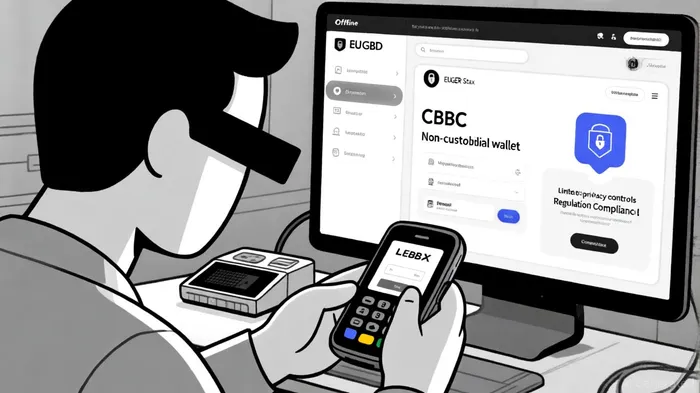
In contrast, non-custodial wallets like Ledger Stax and Trezor Model T offer users uncompromised control over their assets. Ledger Stax, for example, features a CC EAL6+ secure element chip and encrypted Bluetooth connectivity, enabling secure transactions across 5,500+ cryptocurrencies and NFTs, as shown in a Chainup roundup. These wallets eliminate the need for intermediaries, ensuring that users' private keys remain entirely in their possession. As ICObench notes, non-custodial solutions prioritize "self-sovereign identity," a concept that CBDCs-by design-cannot replicate.
Scalability: Hybrid Strategies vs. Centralized Bottlenecks
Scalability is another area where non-custodial wallets outpace the EU's CBDC ambitions. Best Wallet, highlighted as the top non-custodial solution in 2025, supports over 60 blockchains and offers a hybrid model combining cold storage for long-term security with hot wallets for active trading. This flexibility allows users to engage with DeFi protocols, NFT marketplaces, and token swaps seamlessly. Trust Wallet and Zengo further enhance scalability with features like biometric locks, integrated dApp browsers, and keyless recovery.
The ECB's scalability roadmap, however, remains opaque. While the bank has approved the use of distributed ledger technology (DLT) for wholesale transactions, its retail CBDC infrastructure is expected to rely on centralized systems to ensure compliance with anti-money laundering (AML) regulations, as the Coinotag report explains. This approach risks creating bottlenecks, particularly as global blockchain networks like EthereumETH-- and SolanaSOL-- continue to scale through layer-2 solutions and cross-chain interoperability. As a Blockonomi article notes, the ECB's focus on stability may come at the cost of agility, leaving it lagging behind decentralized networks that prioritize user-driven innovation.
Investor Incentives: Staking, Launchpads, and the CBDC Void
Non-custodial wallets have become a hub for investor incentives, offering features that CBDCs cannot replicate. Best Wallet, for instance, includes a token launchpad for presale participation and built-in staking capabilities, enabling users to earn yields directly within the app. Trust Wallet and MetaMask further enhance user experience with integrated exchanges and NFT marketplaces, creating a self-contained ecosystem for DeFi engagement. These incentives align with the growing demand for passive income and early access to emerging projects-a stark contrast to the ECB's lack of investor-focused features.
The ECB's digital euro, by design, is a monetary policy tool, not an investment vehicle. While it may offer low-risk, stable value, it lacks the mechanisms to generate returns or participate in the DeFi economy. As a Cryptopotato roundup highlights, non-custodial wallets are increasingly integrating "yield-generating" features, such as liquidity provision and governance voting, which empower users to actively shape the future of decentralized finance. The EU's CBDC, constrained by its centralized architecture, cannot replicate this dynamic.
Conclusion: The Decentralized Edge
The EU's 2029 CBDC launch represents a significant step toward digital currency adoption, but it is unlikely to outcompete decentralized alternatives like Best Wallet. Non-custodial wallets offer superior privacy through self-custody, unmatched scalability via hybrid blockchain integration, and robust investor incentives that align with the DeFi ethos. While the ECB's digital euro may succeed in reducing reliance on foreign payment systems, it will struggle to match the innovation and user-centricity of decentralized solutions. For investors and users prioritizing autonomy, flexibility, and returns, the future remains firmly rooted in the decentralized world.






Comentarios
Aún no hay comentarios