
Ethereum Staking Dominance and Network Security: Assessing the Long-Term Implications of 2,000,000 ETH Locked in the Beacon Chain
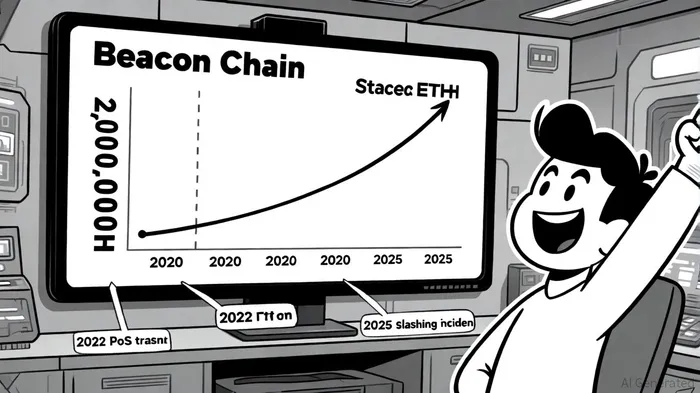
Ethereum's transition to proof-of-stake (PoS) in 2022 marked a paradigm shift in blockchain security and value capture. As of September 2025, the network continues to solidify its position as the leading PoS chain, with over 1.2 million validators securing the network. However, the recent slashing of 39–40 validators—linked to operator-side issues with third-party staking providers like Ankr and Allnodes—raises critical questions about the interplay between institutional adoption, network security, and the long-term implications of 2,000,000 ETH locked in the Beacon Chain.
The Staking Dominance Thesis
Ethereum's staking dominance is underpinned by its ability to attract institutional capital. As of early 2025, over 16% of circulating ETH is staked, a figure that has grown steadily since the 2022 merge. This represents a significant value capture mechanism, as staked ETH generates yield for holders while reinforcing network security. According to a report by Coindesk, the recent slashing event—though rare—highlights the fragility of infrastructure layers in a rapidly scaling ecosystem[1].
The 2,000,000 ETH threshold (assuming it has been reached) would represent a milestone in Ethereum's value capture narrative. At current prices, this amount translates to over $4 billion in locked value, creating a flywheel effect: higher staking participation increases security, which in turn attracts more capital. This dynamic is further amplified by Ethereum's EIP-4844 upgrades, which are expected to boost transaction throughput and reduce gas fees, making the network more attractive for institutional use cases like DeFi and NFTs.
Network Security: A Double-Edged Sword
While Ethereum's security model has proven resilient, the September 2025 slashing event underscores the risks of operator-side failures. Validators slashed during the incident lost approximately 0.3 ETH each, with additional losses from inactivity leaks[2]. These penalties were traced to infrastructure missteps during migration processes, not protocol-level vulnerabilities. This distinction is critical: the SSV Network's distributed validator technology, which splits keys across multiple operators, was not compromised. Instead, the incident exposed the need for stricter operational standards among third-party staking providers.
Such events, though rare (only 525 validators slashed since 2020), test the network's ability to maintain trust. For institutions, the key concern is whether these incidents could deter adoption. However, the opposite may be true. The transparency of slashing events—publicly visible on blockchain explorers—demonstrates Ethereum's accountability mechanisms. In contrast, traditional finance's opaque risk management practices often obscure failures until they escalate.
Institutional Adoption and the Path Forward
The 2,000,000 ETH staked in the Beacon Chain is not just a number—it's a signal. Institutions are increasingly viewing EthereumETH-- as a yield-generating asset class, akin to sovereign bonds but with programmable money advantages. Data from blockchain analytics firm Glassnode indicates that institutional staking inflows have outpaced retail participation since mid-2024[3]. This trend is further supported by the rise of liquid staking derivatives (e.g., stETH, rETH), which allow institutions to collateralize staked ETH without sacrificing liquidity.
However, the September slashing event serves as a cautionary tale. For Ethereum to achieve mass institutional adoption, it must address operational risks in its staking ecosystem. This includes:
1. Standardizing validator infrastructure to reduce human error.
2. Enhancing slashing penalties for malicious behavior to deter bad actors.
3. Promoting decentralized staking solutions that minimize single points of failure.
Conclusion: A Network in Transition
Ethereum's journey toward 2,000,000 ETH staked is a testament to its evolving role in the global financial system. While the recent slashing incident highlights vulnerabilities, it also demonstrates the network's capacity for self-correction. For investors, the long-term implications are clear: Ethereum's value capture is accelerating, but its security and institutional appeal will depend on how the community addresses operational risks.
As the Beacon Chain continues to mature, the focus must shift from merely increasing staked ETH to ensuring the robustness of the entire staking ecosystem. In this context, Ethereum's dominance is not just about numbers—it's about building a resilient, trustless infrastructure that can withstand the pressures of scale.






Comentarios
Aún no hay comentarios