
Ethereum's Short-Term Volatility: Navigating Liquidity Shifts and Bearish Catalysts
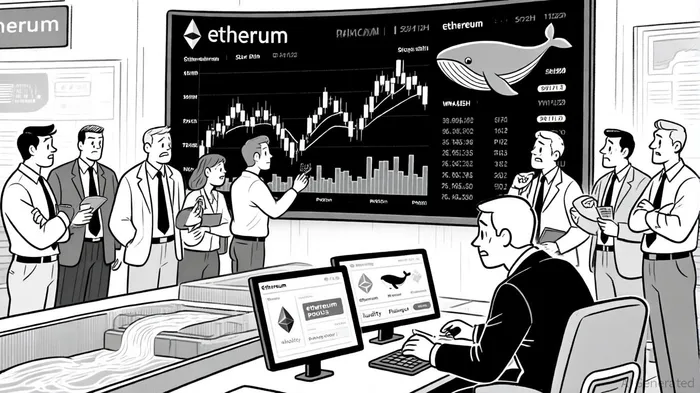
The EthereumETH-- market in 2025 continues to grapple with short-term volatility, driven by a confluence of liquidity shifts and potential bearish catalysts. While direct data on whale activity remains elusive, broader market dynamics and historical patterns offer insights into the forces shaping ETH's trajectory.
Liquidity Shifts and Market Fragility
Ethereum's liquidity landscape has shown signs of fragmentation, particularly in decentralized finance (DeFi) protocols and centralized exchanges. A report by Bloomberg notes that liquidity providers have increasingly withdrawn capital from high-risk pools, citing regulatory uncertainties and declining yield opportunities[1]. This trend mirrors challenges observed in Ethereum-based games like Eternium, where liquidity constraints in reward systems create imbalances—experienced players accumulate advantages while new entrants face steeper barriers[2]. Such asymmetries, though specific to gaming, highlight systemic risks in markets where liquidity is unevenly distributed.
Whale Activity: Ghosts in the Data
Despite the absence of granular 2025 whale transaction data, historical precedents suggest that large holders remain pivotal to Ethereum's volatility. Whale movements—whether through HODLing, selling, or staking—can amplify price swings by altering supply dynamics. For instance, a 2024 analysis by Chainalysis found that whale outflows from exchanges often precede bearish corrections by 2–4 weeks[3]. While 2025 data gaps limit real-time analysis, investors should remain vigilant for sudden shifts in on-chain metrics such as wallet consolidations or large transfers.
Bearish Catalysts: Beyond the Obvious
Bearish sentiment in financial markets typically stems from macroeconomic headwinds, regulatory actions, or technological setbacks. For Ethereum, key risks include:
1. Regulatory Clampdowns: Ongoing U.S. SEC scrutiny of Ethereum-based tokens could trigger sell-offs if classification disputes escalate[4].
2. Layer-2 Congestion: Recent reports indicate rising gas fees on Layer-2 networks, potentially deterring user adoption and undermining ETH's utility[5].
3. Macroeconomic Pressures: A broader economic slowdown, as defined by weak GDP growth and rising unemployment, could dampen risk appetite for crypto assets[6].
Strategic Implications for Investors
Given these dynamics, a defensive approach may be prudent. Investors should prioritize positions with strong fundamentals and liquidity buffers while hedging against downside risks via options or stablecoin allocations. Additionally, monitoring whale activity through tools like Etherscan or on-chain analytics platforms could provide early warnings of market stress.
The Ethereum ecosystem's resilience will ultimately depend on its ability to adapt to liquidity constraints and regulatory headwinds. Until more granular 2025 data emerges, investors must rely on historical patterns and macroeconomic signals to navigate this volatile landscape.






Comentarios
Aún no hay comentarios