
Ethereum Set to Adopt ZK-EVMs as Validation Mechanism by 2030
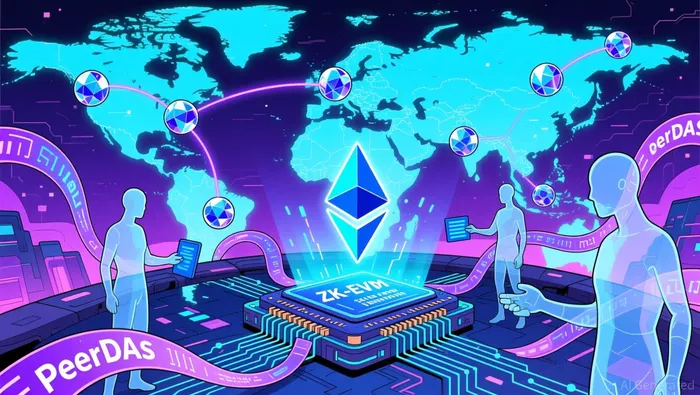
Ethereum co-founder Vitalik Buterin has announced that the network is making significant progress in addressing the blockchain trilemma, combining decentralization, consensus, and high bandwidth through the deployment of zero-knowledge EthereumETH-- Virtual Machines (ZK-EVMs) and PeerDAS. This marks a fundamental shift in Ethereum's scalability roadmap according to the report.
ZK-EVMs have reached production-grade performance at the alpha stage, while PeerDAS is live on Ethereum's mainnet. This combination enables Ethereum to process more data while maintaining security and decentralization. Buterin emphasized that these are not minor improvements but transformative changes to the network.
The timeline for Ethereum's adoption of ZK-EVMs spans from 2026 to 2030. In 2026, gas limit increases will begin, independent of ZK-EVM requirements. Initial opportunities for running ZK-EVM nodes will also emerge during this year.
Why Did This Happen?
Ethereum's evolution over the past decade has seen it move beyond earlier peer-to-peer network models. Unlike BitTorrent, which offered high bandwidth and decentralization but lacked consensus, or BitcoinBTC--, which provided decentralization and consensus but limited bandwidth, Ethereum now combines all three. This is achieved through ZK-EVMs and data availability sampling (DAS).
The convergence of these technologies allows Ethereum to support higher throughput while maintaining the integrity of the network. Buterin cited a GitHub commit from around 2015, demonstrating the long-term research and development effort that led to this milestone.
How Markets Responded
The announcement has been well-received within the Ethereum ecosystem, as it reinforces the network's commitment to addressing key scalability issues. ZK-EVMs and PeerDAS are now part of live code running on mainnet, offering a tangible solution rather than theoretical concepts.
Investors and developers are optimistic about the implications of this development. The focus now shifts to ensuring the safety and robustness of ZK-EVMs, as performance has already been validated. This phase is critical to maintaining trust and ensuring long-term adoption according to experts.
What Are Analysts Watching Next?
From 2026 to 2028, Ethereum will introduce gas repricings and changes to the state structure. These adjustments aim to make higher gas limits operationally safe. The gradual approach allows the network to adapt incrementally rather than through disruptive upgrades.
Between 2027 and 2030, ZK-EVMs will become the primary block validation method. This transition will enable further substantial gas limit increases and enhance the network's throughput. Buterin also mentioned distributed block building as a long-term objective to reduce centralized interference risks and improve geographic fairness for transaction inclusion.
The broader implication is that Ethereum is positioning itself as a more scalable and secure platform, which could attract more developers and applications to the ecosystem. This, in turn, may lead to increased demand for Ethereum-based services and further adoption of the network according to market analysis.






Comentarios
Aún no hay comentarios