
Ethereum's Low-Risk DeFi Transition: A Catalyst for Institutional Adoption and Long-Term Value
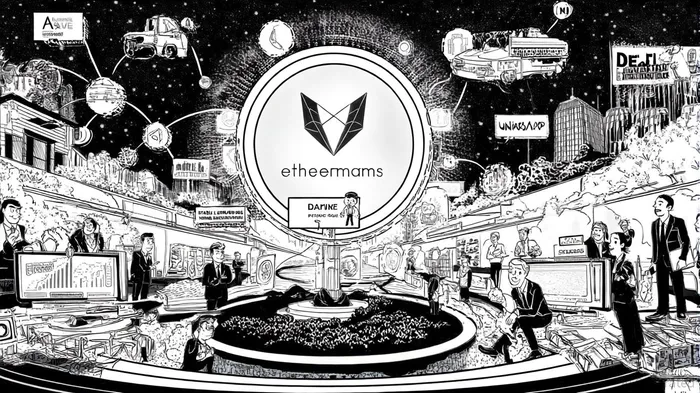
Ethereum's transition to low-risk decentralized finance (DeFi) is reshaping its value proposition for both institutional investors and long-term holders. Co-founder Vitalik Buterin has positioned this shift as a strategic pivot to ensure Ethereum's sustainability and relevance in a maturing crypto market. By prioritizing stable, transparent, and scalable financial tools, EthereumETH-- aims to bridge the gap between decentralized innovation and institutional trust, a move that could redefine its role in global finance.
Vitalik Buterin's Vision: Low-Risk DeFi as Ethereum's Economic Backbone
Vitalik Buterin has consistently advocated for low-risk DeFi as the cornerstone of Ethereum's future. In a CNBC interview[4], he compared this vision to Google's reliance on search advertising—a model that generates consistent value without speculative volatility. Low-risk DeFi, as defined by Buterin, includes applications like fully collateralized lending, stablecoin-pegged savings protocols, and transparent payment systems. These tools, he argues, offer greater security and predictability than traditional finance (TradFi) in many cases[1].
Buterin's emphasis on simplicity and resilience is evident in the evolution of protocols like AaveAAVE--, which now provides stable lending rates and compounding yields without speculative incentives[3]. He has also criticized regulatory frameworks that disproportionately target transparent DeFi projects while tolerating opaque TradFi practices, noting that agencies like the SEC create “incentives for innovation to move underground”[1]. This critique underscores the urgency of aligning Ethereum's infrastructure with institutional compliance requirements.
Institutional Adoption: Stability Over Speed
At the EthCC 2025 conference, Buterin highlighted that institutions are increasingly prioritizing Ethereum's stability, privacy, and censorship resistance over speed[1]. This aligns with the actions of major financial players:
- Robinhood launched tokenized stocks and ETFs on ArbitrumARB--, an Ethereum Layer 2 solution, enabling 24/7 trading[1].
- Deutsche Bank is building a tokenization platform on zkSyncZK--, leveraging Ethereum's security for asset-backed tokens[1].
- BlackRock and Coinbase have expanded Ethereum-based offerings, including tokenized public equities and stablecoin-pegged funds[1].
These developments reflect a broader trend: Ethereum's infrastructure is becoming the backbone for institutional-grade financial tools. For example, Ethereum stablecoins (e.g., USDCUSDC--, DAI) now dominate 70% of the DeFi market[1], underscoring their role in facilitating seamless, trustless transactions.
Market Sentiment and Long-Term Value
The resurgence of DeFi, with total value locked (TVL) surpassing $100 billion[2], signals growing confidence in Ethereum's low-risk ecosystem. Unlike speculative projects, protocols like Aave and CompoundCOMP-- generate recurring revenue through interest rate mechanisms, creating a flywheel effect that strengthens Ethereum's network over time[3]. Buterin has also proposed innovations such as basket currencies and inflation-indexed flatcoins to expand Ethereum's utility beyond dollar-based tools[3], a move that could attract macroeconomic actors.
From an investment perspective, Ethereum's transition to low-risk DeFi addresses two critical pain points:
1. Regulatory Uncertainty: By focusing on transparent, collateralized systems, Ethereum reduces the risk of regulatory overreach.
2. Scalability: Layer 2 solutions like Arbitrum and zkSync enable high throughput without compromising security[1], making Ethereum viable for global institutional use.
Implications for Ethereum's Asset Value
Ethereum's shift to low-risk DeFi could drive both network fees and long-term asset value. As institutions adopt Ethereum-based tools, demand for gasGAS-- and staking rewards is likely to rise, reinforcing ETH's utility. Additionally, the growth of tokenized assets (e.g., real-world assets, public equities) on Ethereum's infrastructure could expand its market capitalization beyond its native token.
However, challenges remain. Regulatory scrutiny of stablecoins and cross-border compliance issues could slow adoption. Buterin's advocacy for a balanced approach—prioritizing innovation while engaging with regulators—will be critical in navigating these hurdles[1].
Conclusion
Ethereum's transition to low-risk DeFi represents a strategic alignment with institutional needs and macroeconomic stability. By fostering a ecosystem of secure, scalable financial tools, Ethereum is positioning itself as the infrastructure layer for the next era of digital finance. For investors, this evolution offers a compelling case for long-term value, provided regulatory and technical challenges are managed effectively.





Comentarios
Aún no hay comentarios