
Ethereum's Price Decline Below $4,500: Is a Long Squeeze Imminent Amid Shifting Market Dynamics?
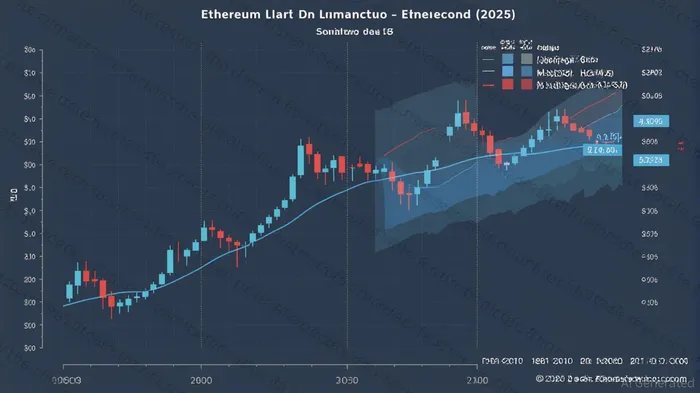
Ethereum's recent slide below $4,500 has reignited debates about the likelihood of a long squeeze in the coming weeks. While on-chain metrics and technical patterns suggest heightened bearish pressure, macroeconomic tailwinds and institutional adoption hint at a potential reversal. This analysis synthesizes on-chain data, liquidity dynamics, and macroeconomic signals to assess whether EthereumETH-- is poised for a short-term correction or a broader bullish breakout.
On-Chain Metrics: Overheating and Profit-Taking Risks
Ethereum's profit supply—a measure of circulating ETH held at a gain—peaked at 99.68% on September 12, 2025, entering historically “overheated territory” [1]. This metric has historically preceded price corrections, as seen in August 2025 when a similar peak triggered a 9% drop [1]. The taker buy-sell ratio, a gauge of futures market sentiment, further underscores bearish momentum, falling to 0.91 on September 13 [1].
Open interest in Ethereum futures also reveals a volatile landscape. While open interest surged to $132.6 billion in late August, reflecting aggressive leveraged positioning, it has since stabilized around $58–$60 billion [2]. This decline suggests partial unwinding of speculative bets, but the risk of cascading liquidations remains. For instance, a single trader lost $12.5 million in leveraged ETH positions during a recent price dip, highlighting systemic fragility [3].
Technical Analysis: Rising Wedge and Key Support Levels
Ethereum's price action has formed a rising wedge pattern on the daily chart, a classic bearish reversal signal. The breakdown below $4,634—a critical psychological level—has exposed support at $4,485 and $4,382 [1]. A further decline to $4,060 is possible if selling pressure intensifies, as historical September trends show a median return of -12.7% for Ethereum [4].
However, technical indicators are mixed. The Net Unrealized Profit/Loss (NUPL) for long-term holders is near a three-month high at 0.62, historically preceding corrections [5]. Conversely, Ethereum's 77% Q3 gains and strong institutional inflows—$11 billion in ETF inflows and record staking activity—suggest a potential breakout above $5,000 [6].
Macroeconomic Signals: Fed Rate Cuts and Dollar Weakness
The U.S. Federal Reserve's anticipated rate cuts in 2025 are a critical macroeconomic variable. With a 90% probability of a 25-basis-point cut by September 17 and a 50-basis-point cut on the table, accommodative monetary policy could bolster risk-on sentiment [7]. Lower interest rates reduce the cost of leveraged positions, potentially stabilizing Ethereum's price.
The U.S. Dollar Index (DXY) also plays a pivotal role. A weaker dollar typically drives capital into risk assets like Ethereum, as evidenced by Ethereum's inverse correlation with DXY (r = -0.63) [8]. Recent inflation data—annual CPI at 2.9%—further supports a dovish Fed stance, indirectly benefiting Ethereum [9].
Liquidity and Short Squeeze Potential
Ethereum's record short interest—13,291 net short contracts on CME—creates a unique dynamic. While these positions are part of a delta-neutral basis trade (shorting futures while staking spot ETH), a sustained price rally could trigger a short squeeze [10]. Open interest of $132.6 billion underscores the scale of leveraged exposure, with $4,550 as a decisive level. A clean breakout above this threshold could activate algorithmic buying programs and ETF inflows, propelling Ethereum toward $5,000–$6,000 [11].
Strategic Positioning: Balancing Risks and Opportunities
For investors, the path forward hinges on risk tolerance. Short-term traders should monitor the $4,382 support level and the September 17 Fed meeting for directional cues. A breakdown below $4,382 could extend the decline to $4,060, while a rebound above $4,550 may attract algorithmic buyers.
Long-term holders, however, have compelling reasons to stay. Ethereum's dominance in altcoin season—11.6% market share—and institutional adoption (e.g., BlackRock's iShares Ethereum Trust) suggest resilience [12]. If the Fed delivers a 50-basis-point rate cut, Ethereum could retest $5,000–$6,000 by year-end.
However, historical backtests of similar technical strategies—such as buying on MACD Golden Cross signals and holding for 30 days—have shown underperformance, with an average return of -1.06% and a hit rate of just 13.5% since 2022. This underscores the importance of combining technical signals with macroeconomic and on-chain analysis to avoid overreliance on single indicators.
Conclusion
Ethereum's price decline below $4,500 reflects a confluence of profit-taking, bearish technical patterns, and macroeconomic uncertainty. Yet, the interplay of record short interest, Fed rate cuts, and institutional inflows creates a high-probability scenario for volatility. Traders should prepare for a potential short squeeze if Ethereum breaks above $4,550, while long-term investors may find value in the $4,200–$4,400 range. As the market navigates these dynamics, disciplined risk management and real-time monitoring of on-chain metrics will be paramount.







Comentarios
Aún no hay comentarios