
Ethereum's Path to a New All-Time High: On-Chain Metrics and Macro Drivers in Q4 2025
Ethereum's journey toward a potential all-time high (ATH) in October 2025 is being shaped by a confluence of on-chain activity and macroeconomic tailwinds. While the network faces persistent challenges like high gasGAS-- fees and competition from LayerLAYER-- 2 solutions, its foundational role in DeFi, stablecoins, and institutional-grade infrastructure positions it as a critical asset in the evolving crypto landscape.
On-Chain Metrics: A Surge in Activity, But Constraints Remain
Ethereum's on-chain metrics in Q3 2025 revealed a robust network, with monthly transaction volume hitting a record 46.67 million-a 3.6% increase from its previous peak in May 2021, according to Gate Research. This surge was driven by a 7-day moving average of daily transactions nearing 1.64 million, the same Gate Research report notes. Meanwhile, monthly active addresses reached 17.55 million, the highest level since 2021, with daily averages at 480,000, as the report also shows. These figures underscore Ethereum's enduring appeal, particularly in high-value use cases like DeFi settlements and NFT trading.
However, the network's growth is not without friction. Despite Ethereum's dominance in on-chain fee revenue ($74.28 million in July 2025, per Gate Research), gas fees remain a barrier for retail users. The average transaction cost, while stabilized by EIP-1559's predictable fee model (the Gate Research analysis observes), still lags behind the sub-cent fees of chains like SolanaSOL-- and Base. This has accelerated user migration to Layer 2 solutions, with daily transaction counts plateauing around 1.5 million, according to the same Gate Research findings.
Macroeconomic Drivers: Institutional Adoption and Regulatory Clarity
The macroeconomic narrative for EthereumETH-- in 2025 is defined by institutional adoption and regulatory progress. The approval of U.S. spot Ether ETFs in 2024 marked a watershed moment, as reported in an Observer article. That Observer piece notes these ETFs have attracted pension funds, asset managers, and banks, shifting market dynamics from retail-driven volatility to institutional-grade liquidity and risk management.
Technological upgrades have further bolstered Ethereum's institutional appeal. The Pectra upgrade in May 2025, which merged the Prague and Electra forks, streamlined execution and consensus while introducing EIP-7251 to raise validator stake limits, according to a Forvest review. These improvements enhanced scalability and node efficiency, reducing transaction costs and attracting capital from entities prioritizing operational predictability.
Regulatory clarity has also played a pivotal role. The SEC's exemption of liquid staking tokens from securities rules and its approval of in-kind creation/redemption for ETHETH-- ETFs, the Forvest review reports, have reduced legal uncertainty for staking service providers. This has enabled the inclusion of staking tokens in future ETFs, further solidifying Ethereum's integration into mainstream finance.
DeFi and Stablecoin Dynamics: A Catalyst for Growth
Ethereum's dominance in DeFi and stablecoins remains a cornerstone of its demand. By July 2025, Ethereum-based protocols accounted for the majority of the $137 billion total value locked (TVL), driven by a resurgence in yield farming and decentralized exchanges, the Forvest review indicates. Additionally, Ethereum hosts 52.4% of the global stablecoin supply, with active users exceeding 25 million by Q3 2025, according to the Stablecoin Industry Report. This infrastructure underpins cross-border remittances and payment systems, amplifying Ethereum's utility beyond speculative trading.
The Road to October 2025: Challenges and Opportunities
While Ethereum's on-chain activity and macroeconomic tailwinds are compelling, its path to a new ATH hinges on addressing gas fee inefficiencies and sustaining DeFi innovation. The migration to Layer 2 networks, though a challenge, also represents an opportunity to offload low-value transactions while preserving Ethereum's role as the settlement layer.
Institutional demand, meanwhile, appears resilient. With Ethereum's role in stablecoin issuance and its integration into regulated investment products, the network is increasingly viewed as a hybrid asset-part store of value, part programmable infrastructure. This dual utility could drive demand from both capital preservation-focused investors and developers building the next generation of decentralized applications.
Conclusion
Ethereum's potential to break its ATH in October 2025 rests on its ability to balance scalability challenges with macroeconomic momentum. The surge in on-chain activity, coupled with institutional adoption and regulatory clarity, creates a strong foundation for price appreciation. However, sustained innovation in gas fee optimization and DeFi use cases will be critical to converting this momentum into a new price milestone.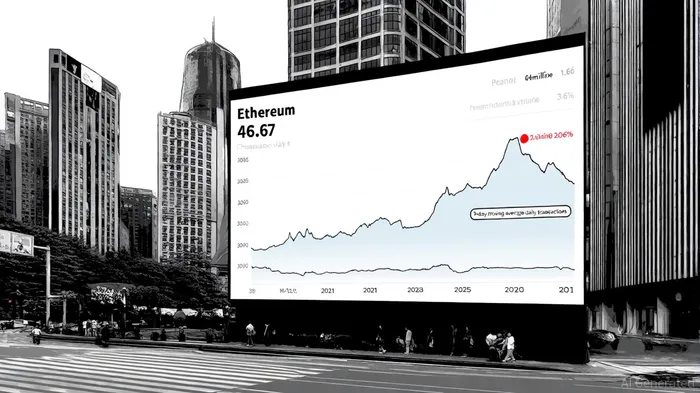






Comentarios
Aún no hay comentarios