
Ethereum's Growing Influence in Latin America: Balancing Global Blockchain Infrastructure with Regional Innovation Potential
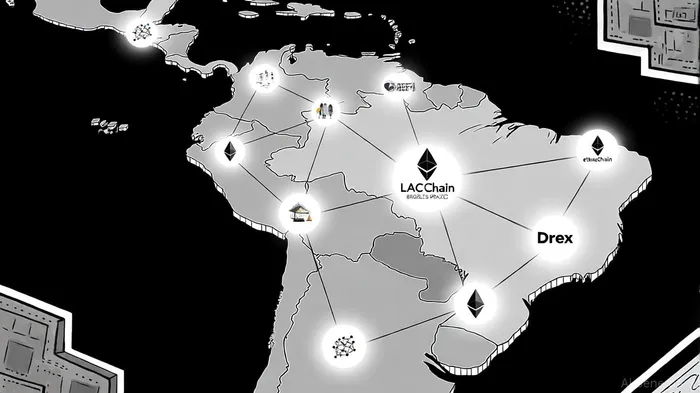
Ethereum's ascent in Latin America is not merely a story of technological adoption—it's a strategic reimagining of how global blockchain infrastructure can be tailored to address regional economic challenges. As the region's crypto ownership surged by 116.5% between 2023 and 2024, EthereumETH-- has emerged as a linchpin for innovation, bridging the gap between decentralized systems and localized needs like remittances, financial inclusion, and institutional trust[1]. This analysis explores how Ethereum's flexibility and institutional partnerships are enabling Latin America to balance global standards with hyperlocal innovation.
The Catalyst: Stablecoins and Cross-Border Remittances
Latin America's economic landscape, marked by high inflation and underdeveloped financial infrastructure, has created fertile ground for Ethereum-based stablecoins. In 2023, Mexico became the largest recipient of crypto-dollar remittances, with $63.3 billion in stablecoin transactions facilitated by platforms like Bitso[2]. These transactions, often converting USDC to pesos, reduced fees by up to 70% compared to traditional services and enabled same-day payouts. Similarly, Brazil saw a 29% rise in stablecoin transactions for cross-border business in late 2023, leveraging Ethereum's robust smart contract ecosystem to tokenize assets and streamline settlements[2].
This surge underscores Ethereum's role as a foundational layer for stablecoins, which act as both a hedge against local currency volatility and a tool for financial inclusion. As of 2025, over 40% of Latin American crypto users rely on stablecoins for daily transactions, a trend that aligns with Ethereum's ongoing upgrades to Layer 2 (L2) solutions, which reduce gas costs and improve scalability[3].
Institutional Innovation: LACChain and Brazil's Drex
While grassroots adoption is critical, institutional projects are reshaping Ethereum's infrastructure in the region. The LACChain initiative, launched by the Inter-American Development Bank (IDB) Lab in 2019, exemplifies this. LACChain's public-permissioned blockchain combines the transparency of public chains with the governance of private ones, addressing regulatory hurdles and fostering cross-border interoperability[1]. By 2025, LACChain had expanded to 12 countries, supporting use cases like digital identity verification and carbon credit tokenization.
Brazil's Drex project, meanwhile, is a bold experiment in Ethereum-based financial modernization. Backed by SantanderSAN--, MastercardMA--, Nubank, and tech giants like AWS and GoogleGOOGL--, Drex leverages Ethereum L2 technology to digitize wholesale interbank transactions and tokenize deposits[1]. The project's interoperability with smart contracts positions Brazil as a “ready for Web3” economy, with plans to integrate tokenized services for retail users. This aligns with Brazil's broader digital agenda, including the PIX instant payment system, creating a hybrid ecosystem where Ethereum complements existing infrastructure.
Philanthropy and the Broader Ecosystem
Ethereum's influence extends beyond finance into social impact. In 2024, over $1 billion in Ethereum-based tokens were donated to global charitable causes, with Latin American institutions increasingly participating in crypto philanthropy[3]. Platforms like The Giving Block have enabled NGOs to accept ETH and ERC-20 tokens for disaster relief and education projects, leveraging Ethereum's programmable money capabilities to automate grants and ensure transparency.
Challenges and the Path Forward
Despite these strides, challenges remain. Regulatory frameworks in Latin America remain fragmented, with countries like Argentina and Brazil adopting cautious but open stances toward crypto. While specific policies supporting Ethereum adoption were not identified in recent research, the region's institutional embrace of blockchain—through projects like LACChain and Drex—signals implicit regulatory alignment. For investors, this represents a unique opportunity: Ethereum's global infrastructure is being adapted to solve regional pain points, creating a flywheel effect where local innovation reinforces Ethereum's long-term value proposition.
Conclusion: A Strategic Investment Opportunity
Ethereum's growing influence in Latin America is a testament to its adaptability. By balancing global standards with regional needs—whether through stablecoins for remittances, institutional-grade blockchain solutions, or philanthropy—Ethereum is not just a technology but a catalyst for economic transformation. For investors, this ecosystem offers exposure to both the scalability of Ethereum's infrastructure and the explosive growth of a region poised to redefine financial inclusion. As Latin America continues to integrate Ethereum into its economic DNA, the rewards for early adopters will likely compound over time.





Comentarios
Aún no hay comentarios