
Ethereum's Embedded Value in DeFi: Underappreciated Asset Retention and User-Driven Liquidity Generation
The Shift to Layer-2s: Scalability as a Retention Tool
Ethereum's layer-1 (L1) network has increasingly become a secure settlement layer, while layer-2 (L2) solutions like ArbitrumARB-- and Base handle high-frequency, cost-sensitive transactions. By September 2025, Arbitrum and Base had attracted $20 billion and $15 billion in total value locked (TVL), respectively, as users migrated everyday DeFi activities to these scalable solutions, according to a CoinDesk analysis. This migration is not just about transaction speed and cost-it's a strategic move to retain users who might otherwise abandon DeFi due to friction.
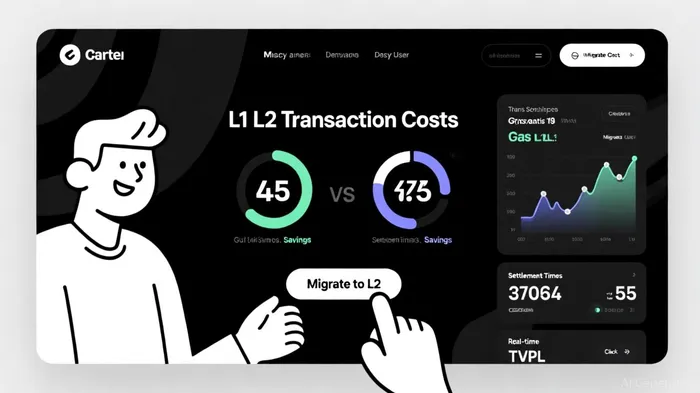
Landing pages for L2-based DeFi protocols now emphasize real-time gas cost comparisons and transaction speed benchmarks against L1, creating a psychological nudge for users to stay within the Ethereum ecosystem. For example, projects like Linear Finance leverage decentralized hosting on BNBBNB-- Greenfield to optimize performance, ensuring that users experience near-instant settlement of synthetic assets without the latency of traditional order books, as described in a 4Everland case study. This seamless user experience directly correlates with higher retention rates, as users are less likely to switch platforms when their interactions are frictionless.
Liquid Staking and Beyond: Yield Optimization as a Retention Hook
Protocols like Ether.fi have redefined asset retention by introducing liquid staking tokens (LSTs) such as weETH. These tokens allow users to stake Ethereum while retaining liquidity, enabling further yield generation through lending or liquidity provision. This innovation addresses a critical pain point: the opportunity cost of locked assets in traditional staking. By tokenizing staked assets, Ether.fi has created a flywheel where users can compound their earnings across multiple DeFi protocols, as detailed in a DefiSeason profile.
However, the most underappreciated strategies go beyond liquid staking. Ethena, a synthetic dollar protocol, has achieved a 76% capital retention rate by employing delta-neutral derivatives strategies. This model combines long spot positions in BTC/ETH with short perpetuals to create a dollar-pegged asset without centralized collateral. Ethena's volatility score of 8.23-significantly lower than the 14.87 average for other DeFi protocols-has attracted institutional confidence, with 68.1% market share in its category, as shown in an A1 Research analysis. Such protocols demonstrate that risk-managed yield strategies can outperform traditional liquidity mining in retaining user assets during market stress.
User Acquisition: Structured Incentives and Gamified Onboarding
Ethereum's DeFi platforms in 2025 have moved beyond speculative yield farming to value-driven user acquisition. Structured token incentives-such as lockups, vesting schedules, and achievement-based rewards-encourage long-term engagement. For instance, ArkenYield employs Concentrated Liquidity Market-Making (CLMM) strategies, optimizing liquidity placement within narrow price bands to maximize compounding returns. This approach is particularly effective in the stablecoin ecosystem, where users demand USD-denominated liquidity without lockups.
Gamified onboarding has also emerged as a powerful tool. Platforms like SafeWallet integrate mission-based quests that guide users through essential actions (e.g., swapping tokens, staking assets) while rewarding them with governance tokens or NFTs. This reduces friction for new users and builds familiarity with DeFi workflows. According to a 2025 MediaX report, protocols using gamified onboarding saw a 30% higher user retention rate compared to those relying on traditional airdrops.
Designing for Trust: Landing Page Elements That Drive Liquidity
Ethereum DeFi landing pages in 2025 prioritize visual clarity and functional interactivity to build trust and encourage liquidity generation. Key design elements include:
1. Real-time analytics dashboards displaying TVL, APYs, and liquidity pool metrics.
2. Interactive components like animated charts and dynamic visuals to highlight performance.
3. Transparent risk disclosures that educate users on impermanent loss and smart contract vulnerabilities.
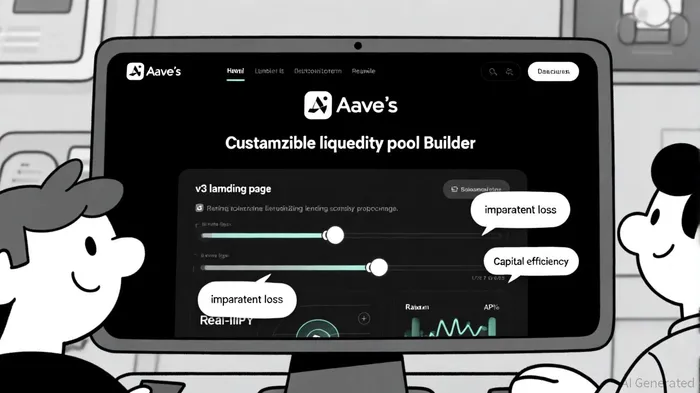
For example, Aave's v3 landing page features a customizable liquidity pool builder, allowing users to allocate capital based on risk tolerance and yield expectations. This tool not only enhances user experience but also increases the likelihood of liquidity provision by making complex strategies accessible.
The Institutional Angle: ETFs and Corporate Treasuries
Ethereum's institutional adoption in 2025 has further solidified its embedded value. Record-breaking inflows into Ethereum ETFs-such as BlackRock's ETHA fund, which attracted $12 billion in historical inflows-have bridged traditional finance and crypto, as discussed in a Decentralogue piece. Corporate treasuries are also treating Ethereum as a digital working capital asset, with some companies holding millions in ETHETH-- as part of their treasury diversification strategy. This shift is reflected in Ethereum's TVL growth, which reached $79.15 billion by August 2025, driven by both retail and institutional participation, according to Currency Analytics.
Conclusion: The Flywheel of Ethereum's DeFi Ecosystem
Ethereum's embedded value in DeFi is not a static asset but a self-reinforcing flywheel. By combining scalable L2s, risk-managed yield strategies, and user-centric design, Ethereum has created an ecosystem where asset retention and liquidity generation are not just possible but sustainable. For investors, this means Ethereum's value proposition extends beyond its role as a settlement layer-it is the operating system for user-driven financial innovation.
As the DeFi landscape matures, the protocols and platforms that master these underappreciated strategies will define the next phase of Ethereum's dominance.






Comentarios
Aún no hay comentarios