
Ethereum's Off-Chain Risks and the Future of Decentralized Security: Assessing Long-Term Investment Implications
The Anatomy of Off-Chain Vulnerabilities
Buterin's warnings highlight a paradox: while Ethereum's consensus layer ensures immutability, external data sources-such as oracles-remain susceptible to manipulation. In 2020, DeFi protocols like bZx and CompoundCOMP-- suffered losses due to validator failures, exposing the fragility of off-chain dependencies, as noted in the Coinotag article. More recently, oracleADA-- manipulation attacks have become a systemic threat. For instance, the 2022 Mango Markets exploit on SolanaSOL-- leveraged flash loans to artificially inflate token prices, draining $117 million in a single incident, according to an OxJournal analysis. These cases underscore a recurring theme: when real-world data feeds into smart contracts are compromised, the entire DeFi infrastructure faces cascading risks.
Decentralized Oracles: A Shield Against Exploits?
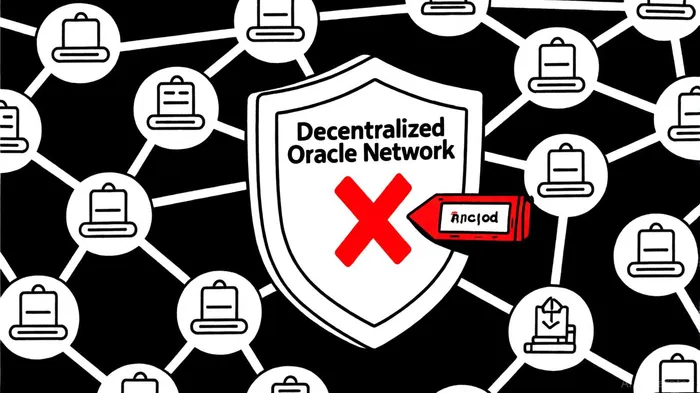
The solution, according to experts, lies in decentralized oracle networks (DONs). Platforms like ChainlinkLINK-- and RedstoneRED-- Finance have emerged as critical infrastructure, offering tamper-proof data feeds to secure DeFi protocols. Chainlink, for example, has been lauded for its compliance capabilities, aligning with institutional requirements such as those of the U.S. Federal Reserve, as noted in a Coinotag article. By enabling customizable node selection and real-time data validation, these networks reduce the risk of single points of failure. Redstone's collaboration with Kalshi further illustrates this trend, powering decentralized prediction markets with secure, real-time data across 110+ blockchain networks, as reported by Blockchain Reporter.
Market Implications: Staking, Adoption, and Price Projections
Ethereum's market dynamics reflect both optimism and caution. According to an OKX report, as of 2025, 30% of its total supply is staked, with $150 billion locked in staking contracts, signaling a shift from speculative trading to long-term ecosystem participation. DeFi's dominance persists, with EthereumETH-- controlling 65% of the TVL market. However, liquid staking derivatives (LSDs) like stETH introduce new risks, including liquidity constraints and depegging vulnerabilities-the OKX report outlines these concerns in detail.
Institutional adoption, meanwhile, is accelerating. Ethereum ETFs have attracted $8 billion in inflows, with BlackRock's ETHA fund alone securing $318 million in a single day, according to the OKX report. Regulatory clarity has been a key driver, reducing uncertainty for large-scale investors. Yet, challenges remain: validator exit queues have lengthened to 12 days, and smaller investors face higher fees compared to institutional players, as the OKX report also notes.
The Road Ahead: Balancing Risks and Rewards
Expert forecasts paint a cautiously bullish picture. Analysts project Ethereum could reach $10,000 by 2028, supported by trendline support near $3,900 and sustained institutional confidence, according to a Coinotag projection. Innovations like EIP-4844 and Layer 2 solutions are addressing scalability bottlenecks, while tokenization and stablecoin growth expand real-world use cases, as outlined in a Coinotag analysis. However, the path is not without hurdles. Short-term price resistance above $4,000 persists, and a dip to $2,000 is considered a potential catalyst for a mid-2026 recovery in the Coinotag projection.
For investors, the key lies in evaluating how effectively Ethereum's ecosystem mitigates off-chain risks. Decentralized oracles, while promising, must evolve to handle increasingly complex data demands. Projects that integrate robust oracle infrastructure-such as Mutuum Finance and Remittix-could serve as bellwethers for broader adoption, according to a Bitget article.
Conclusion
Ethereum's long-term investment potential hinges on its ability to reconcile on-chain security with off-chain vulnerabilities. Vitalik Buterin's warnings act as a clarion call: without addressing these risks, the crypto ecosystem's growth could be stymied. Yet, the rise of decentralized oracle networks and institutional adoption suggests a resilient path forward. For investors, the challenge is to balance the promise of innovation with the realities of evolving threats-a task that demands both technical insight and strategic foresight.






Comentarios
Aún no hay comentarios