
Ethereum's 2026 Glamsterdam Upgrade: A Catalyst for Decentralized MEV Mitigation and Network Scalability
Ethereum's 2026 Glamsterdam Upgrade represents a pivotal evolution in the blockchain's architecture, introducing Enshrined Proposer-Builder Separation (ePBS) and Block-Level Access Lists (BALs) to address critical challenges in MEV (Maximum Extractable Value) mitigation, validator economics, and scalability. These innovations aim to decentralize block production, enhance transparency, and optimize resource allocation, positioning EthereumETH-- as a more robust and sustainable settlement layer for global decentralized finance (DeFi) and enterprise applications.
Enshrined Proposer-Builder Separation (ePBS): Redefining MEV Distribution and Validator Fairness
The ePBS mechanism, formalized under EIP-7732, enshrines proposer-builder separation directly into the consensus layer, replacing the current reliance on external relays like Flashbots' MEV-Boost as explained. This shift introduces a protocol-level auction system where builders submit collateralized bids for block rights, and proposers select the highest-value proposals. By moving this process on-chain, ePBS eliminates single points of failure, reduces censorship risks, and ensures transparent MEV distribution.
A key economic implication is the redistribution of MEV revenue. Under the current system, proposers capture ~97% of block rewards, while builders receive only ~3% according to analysis. ePBS aims to balance this by introducing burn auctions and MEV-smoothing mechanisms, which redistribute MEV proceeds across validator committees rather than concentrating them among a few large validators. This mitigates reward variance and reduces centralization risks, as smaller validators gain equitable access to MEV opportunities. Additionally, a portion of MEV proceeds may be burned, contributing to Ethereum's deflationary pressure and aligning token economics with long-term sustainability.
However, ePBS introduces new challenges, such as the "free option" problem, where builders may opt out of delivering payloads during volatile market conditions, risking liveness issues and empty blocks. Developers are addressing this through tighter time windows for payload reveals and penalties for non-compliance, ensuring the system remains resilient under stress.
Block-Level Access Lists (BALs): Enhancing Execution Efficiency and Validator Economics
BALs, outlined in EIP-7928, introduce block-level access maps that predefine all accessed accounts and storage keys. This innovation reduces synchronization overhead by enabling parallel verification and executionless state reconstruction, allowing nodes to validate blocks without re-executing transactions. For validators, this streamlines the block-processing workflow, lowering computational costs and improving predictability in gas and state management.
BALs also contribute to validator economics by reducing the need for optimistic parallelization mechanisms, which currently require nodes to execute blocks twice-once to determine access and once for actual execution. This efficiency gain could lower hardware requirements for solo stakers and staking pools, democratizing participation and reducing barriers to entry. 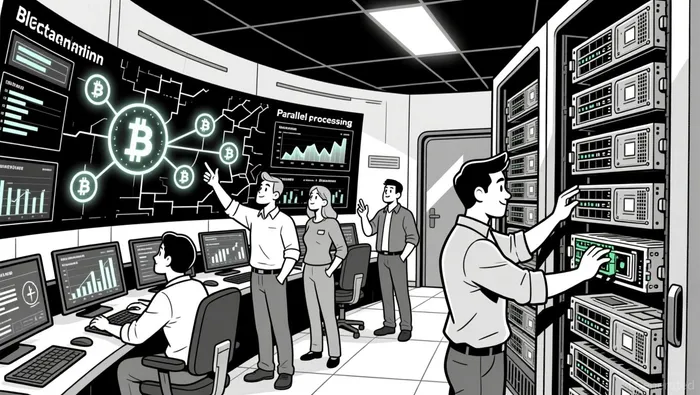 . While specific financial impacts on validator income remain unquantified in current documentation, BALs' broader benefits-such as reduced state bloat and improved scalability-are expected to enhance Ethereum's capacity to support high-throughput rollup activity without compromising decentralization according to analysis.
Gas and State Repricing: Aligning Resource Costs with Real-World Usage
Complementing ePBS and BALs, gas and state repricing reforms (e.g., EIP-7904 and EIP-8032) adjust resource costs to reflect actual computational and storage demands. These changes discourage inefficient smart contract design and mitigate denial-of-service (DoS) risks, ensuring the network remains resilient as transaction volumes grow. For validators, this creates a more sustainable economic model, where revenue is tied to real resource consumption rather than arbitrary pricing.
Implications for Ethereum's Value Capture and Investment Thesis
The Glamsterdam Upgrade positions Ethereum to solidify its role as a global settlement layer, capable of processing millions of transactions per second through rollup-centric design according to analysis. By decentralizing MEV capture and optimizing validator economics, the upgrade reduces reliance on centralized builders and enhances censorship resistance, a critical factor for institutional adoption according to research. Additionally, the integration of EVM64 (64-bit arithmetic operations) and EOF v1 (streamlined smart contract deployment) further lowers gas costs, making Ethereum more competitive for enterprise-grade applications.
From an investment perspective, the upgrade's focus on scalability and decentralization aligns with Ethereum's broader roadmap, including the Surge, Verge, and Splurge phases according to market analysis. These upgrades are expected to drive increased demand for ETH as a settlement asset, particularly as institutions accumulate ETH for treasury reserves according to market insights. The deflationary pressures from MEV burns and gas repricing also support a positive token supply narrative, enhancing ETH's value proposition in a bearish macro environment according to analysis.
Conclusion: A Structural Catalyst for Ethereum's Future
Ethereum's 2026 Glamsterdam Upgrade is not merely a technical overhaul but a structural catalyst for redefining value capture, validator economics, and network scalability. By enshrining ePBS and BALs, Ethereum addresses long-standing MEV centralization risks while optimizing execution efficiency. These changes, coupled with gas repricing and EVM improvements, create a more resilient and equitable ecosystem, positioning Ethereum to dominate the next phase of blockchain innovation. For investors, the upgrade underscores Ethereum's commitment to sustainable growth, making it a compelling long-term asset in a rapidly evolving digital economy.






Comentarios
Aún no hay comentarios