
Ethereum's 2025 Upgrades: A Catalyst for Mainstream Adoption and Investor Opportunity
Ethereum's 2025 upgrades-Fusaka, Pectra, and the foundational Dencun-represent a pivotal phase in the blockchain's evolution. These upgrades are not merely technical refinements but strategic milestones designed to address scalability, reduce costs, and enhance user experience. Collectively, they position EthereumETH-- as a robust, enterprise-ready platform capable of supporting global financial infrastructure. For investors, this roadmap signals a maturation of the Ethereum ecosystem, offering both immediate and long-term opportunities.
Fusaka: Scaling the Network for a Post-Scarcity Era
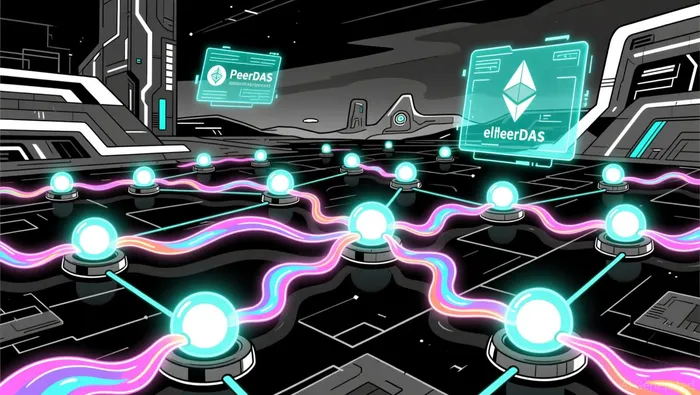 The Fusaka upgrade, scheduled for December 3, 2025, introduces PeerDAS (Peer Data Availability Sampling) via EIP-7594, a groundbreaking shift in how Ethereum handles data verification. By allowing validators to sample data rather than download entire blocks, PeerDAS reduces bandwidth and storage requirements by up to 85% according to CoinGecko. This innovation directly benefits Layer 2 (L2) rollups like ArbitrumARB--, Optimism, and Base, enabling them to process 3.5x more data and lower L2 transaction costs by 40–60% according to CoinGecko. With these improvements, the L2 ecosystem could achieve 100,000+ transactions per second (TPS), rivaling traditional payment systems.
Fusaka also increases the block gas limit from 45 million to 150 million gas units, allowing more transactions per block and supporting complex smart contracts. Additionally, Blob Parameter Only (BPO) forks provide dynamic scalability, adjusting blob capacity incrementally without full network hard forks. For instance, the first BPO fork on December 17, 2025, will raise the target and maximum blobs per block to 10 and 15, respectively according to QuickNode. These changes ensure Ethereum can adapt to growing demand while maintaining stability.
User experience is another focus. EIP-7951 introduces passwordless login and passkey support, aligning Ethereum with modern security standards used in smartphones and hardware wallets. This shift reduces friction for mainstream users, who often struggle with private key management.
Pectra: Laying the Groundwork for 2025
The Pectra upgrade, activated in May 2025, served as a critical precursor to Fusaka. It included 11 EIPs that enhanced staking efficiency, user experience via smart accounts, and L2 integration by doubling blob data capacity according to Consensys. This upgrade demonstrated Ethereum's ability to iterate rapidly, with a 20–21% surge in ETH price following its activation according to Crypto.com. Such market response underscores investor confidence in Ethereum's roadmap.
Pectra's focus on smart accounts and gas optimization also aligns with enterprise adoption. By simplifying account management and reducing transaction costs, Ethereum becomes a more viable option for businesses seeking blockchain solutions.
Dencun: The Foundation for Scalability
While not a 2025 upgrade, the Dencun (Cancun-Deneb) upgrade in March 2024 laid the groundwork for Ethereum's 2025 advancements. Introducing EIP-4844 (proto-danksharding), Dencun enabled ephemeral data blobs to reduce L2 fees and improve data availability according to Nasdaq. This innovation, combined with state expiry to declutter the network, ensures Ethereum remains efficient as usage scales according to KuCoin.
Dencun's success validated the feasibility of Ethereum's scalability strategy, setting the stage for Fusaka's more aggressive optimizations. For investors, this continuity highlights Ethereum's ability to execute its roadmap, a critical factor in long-term value creation.
Cumulative Impact: Enterprise-Ready Infrastructure
The 2025 upgrades collectively address Ethereum's historical limitations. PeerDAS and BPO forks ensure the network can scale without compromising decentralization, while EVM improvements like EOF (EVM Object Format) streamline smart contract execution. These changes make Ethereum a compelling platform for enterprises seeking to deploy decentralized applications (dApps) or tokenize assets.
Moreover, secp256r1 digital signature support enhances compatibility with hardware wallets and mobile devices, broadening Ethereum's appeal to institutional and retail users. The integration of passwordless authentication further bridges the gap between blockchain and traditional finance, where user experience is paramount.
Investor Opportunities: From L2s to Enterprise Adoption
For investors, the 2025 upgrades open multiple avenues:
1. Layer 2 Ecosystems: Projects like Arbitrum and Optimism stand to benefit from reduced costs and increased throughput, potentially driving user growth and revenue.
2. Staking and Infrastructure: Enhanced staking efficiency and blob capacity could attract more validators, boosting network security and decentralization.
3. Enterprise Adoption: As Ethereum becomes more scalable and user-friendly, demand for enterprise blockchain solutions is likely to rise, benefiting companies offering Ethereum-based services.
The market's positive reaction to prior upgrades-such as the 20–21% ETH price increase post-Pectra according to Crypto.com-suggests that investors are already pricing in Ethereum's long-term potential. With Fusaka's activation imminent, the focus now shifts to execution and adoption metrics.
Conclusion: A New Era for Ethereum
Ethereum's 2025 upgrades mark a turning point in its journey toward becoming a global settlement layer. By addressing scalability, reducing costs, and improving user experience, these upgrades position Ethereum to compete with traditional financial systems while retaining its decentralized ethos. For investors, the combination of technical innovation and market validation presents a compelling case for long-term exposure. As the network transitions into a more enterprise-ready platform, Ethereum's role in the global economy is set to expand-offering both risk and reward for those who recognize its potential.







Comentarios
Aún no hay comentarios