
Ethereum 2025 Round Up: How the Network Cemented Its Role as Global Digital Infrastructure
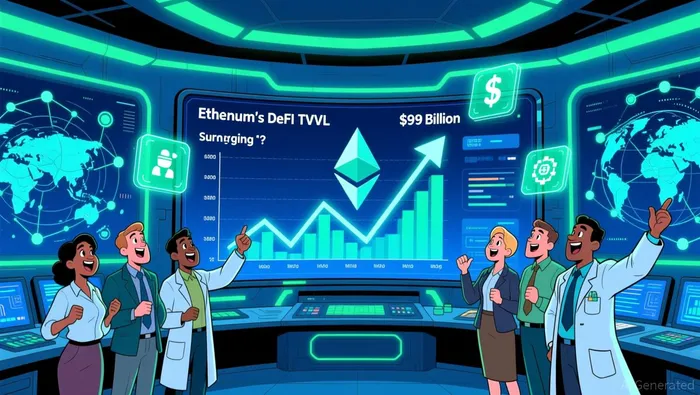
Ethereum recorded significant progress in 2025, reinforcing its role as a foundational layer for digital finance. Total value locked (TVL) in its DeFi ecosystem surpassed $99 billion, reflecting strong institutional and retail adoption. The platform also processed $18.8 trillion in stablecoin settlements, highlighting its increasing utility in global financial infrastructure.
The year saw two major upgrades: Pectra and Fusaka. The Pectra upgrade introduced smart wallet functionality and improved account programmability, enhancing security and developer capabilities. The Fusaka upgrade increased blob capacity and expanded gas limits, directly improving Layer 2 performance and reducing transaction costs.
Layer 2 networks achieved combined transaction throughput of 5,600 transactions per second (TPS), a first for the ecosystem. This performance, along with sub-cent fees, supported broader adoption of decentralized finance, gaming, and decentralized autonomous organizations.
What Drives Ethereum's 2025 Growth
Ethereum's DeFi TVL reached $99 billion, nearly nine times the next-largest blockchain. Institutional adoption surged with $35 billion in ETH held in treasuries and ETFs. Stablecoin settlements alone reached $18.8 trillion, reinforcing Ethereum's role in global settlement infrastructure.
The Pectra and Fusaka upgrades significantly enhanced network efficiency. Pectra enabled smart wallets and improved account programmability. Fusaka introduced PeerDAS, increasing blob capacity by eight times and expanding Layer 1 gas limits by 33%.
What's Fueling Institutional Interest
Institutional adoption of EthereumETH-- accelerated in 2025, driven by stablecoin issuance, real-world asset tokenization, and DeFi growth. Over $35 billion in ETH was deployed into institutional strategies, including exchange-traded funds and capital programming.
Real-world asset (RWA) distribution via Ethereum's smart contracts exceeded $12 billion, with banks and payment processors utilizing Layer 2 for verifiable settlements. This growth is supported by improved regulatory clarity and infrastructure maturity.
How Technology is Reshaping the Network
Layer 2 throughput reached 5,600 TPS, and fees dropped below $0.01 per transaction. These improvements enabled widespread use in retail payments, remittances, and savings products.
Interoperability standards like ERC-7683 and the Ethereum Interop Layer advanced cross-chain execution. These developments support broader ecosystem integration and reduce reliance on single-chain infrastructure.
What's Next for Ethereum and Its Ecosystem
Ethereum's 2025 milestones position it as a dominant force in digital infrastructure. Continued institutional adoption and successful upgrades could lead to broader financial applications and deeper market integration.
Upcoming upgrades like BPO-1 will further enhance blob capacity and reduce Layer 2 fees. These improvements are expected to attract more developers and users to Ethereum's ecosystem.
What Analysts Are Watching
Experts will monitor how Ethereum continues to scale and integrate with real-world financial systems. Transaction throughput, Layer 2 adoption, and institutional participation are key metrics.
Regulatory developments in 2026, including U.S. Senate Banking Committee crypto bill negotiations, could also influence Ethereum's trajectory. The ecosystem's ability to maintain decentralization while scaling will be crucial.
What Investors Should Consider
Ethereum's dominance in DeFi and its growing institutional adoption suggest continued relevance in digital finance. Investors should watch TVL, stablecoin settlements, and Layer 2 performance metrics.
The network's upcoming upgrades and regulatory environment will also shape its long-term potential. Ethereum's focus on security, scalability, and decentralization aligns with global digital infrastructure needs.
What's Shaping the Future of Ethereum
Ethereum's ecosystem now supports machine-to-machine commerce, national digital identities, and decentralized cities. Over 7,500 AI agents registered on testnets, establishing Ethereum as a settlement layer for autonomous systems.
The network's year-end message emphasized that Ethereum is no longer just emerging technology but the scaffolding of digital civilization. This shift positions it for continued innovation and adoption across industries.






Comentarios
Aún no hay comentarios