
Ethereum's $10,000 Aspiration: Catalysts, Risks, and the Road to 2026
Ethereum's journey toward a $10,000 price tag by 2026 hinges on a delicate balance of technological innovation, institutional adoption, and macroeconomic forces. While bullish catalysts like protocol upgrades and ETF-driven demand paint an optimistic picture, structural risks such as centralization and competition loom large. This analysis dissects the critical factors shaping Ethereum's trajectory.
Catalysts: Upgrades, ETFs, and Adoption
Ethereum's technical roadmap is a cornerstone of its 2026 optimism. The Fusaka upgrade, slated for December 2025, aims to double the network's blob capacity and push transaction throughput to 12,000 TPS, addressing scalability bottlenecks [1]. This upgrade, paired with the Pectra network update (May 2025), which reduced gas fees by 35% through proto-danksharding, positions EthereumETH-- to compete with faster blockchains like SolanaSOL-- [2]. Additionally, EIP-7732 could reduce solo staker profitability, potentially stabilizing supply by shifting staking to institutional players [3].
Institutional adoption is another tailwind. U.S. spot Ethereum ETFs, including BlackRock's ETHAETHA-- and Grayscale's multi-asset ETF, have attracted $24.7 billion in assets under management (AUM) as of 2025, locking away a significant portion of liquid ETH supply [4]. These products not only legitimize Ethereum as an asset class but also create scarcity, a key driver of price appreciation.
Adoption metrics reinforce this narrative. Ethereum's active wallet count surged to 127 million in 2025, a 22% YoY increase, driven by Layer 2 solutions and platforms like MetaMask [5]. Daily transactions hit 1.65 million in Q1 2025, with DeFi and NFTs accounting for 62% of activity. The NFT sector alone generated $5.8 billion in trading volume, while DeFi TVL reached $45 billion [6].
Structural Risks: Centralization, Competition, and Regulation
Despite these positives, Ethereum faces headwinds. Centralization risks arise from the decline in solo stakers, which could undermine its decentralization narrative [7]. Meanwhile, competition from Solana and Avalanche—blockchains offering lower fees and higher throughput—threatens Ethereum's dominance in the smart contract space [8].
Regulatory uncertainty remains a wildcard. While U.S. ETF approvals have boosted demand, unclear classifications for staking services and token utility could stifle institutional participation [9]. Additionally, security vulnerabilities in cross-chain bridges and restaking mechanisms pose operational risks [10].
Macroeconomic Forces: Inflation, Rates, and Global Trends
Ethereum's price is inextricably linked to macroeconomic trends. The Federal Reserve's anticipated rate cuts in late 2025 could fuel risk-on sentiment, with Ethereum's 0.77 correlation to the S&P 500 amplifying its volatility [11]. Inflation expectations also play a role: Ethereum's deflationary tokenomics (via EIP-1559) and staking yields of 4–6% make it an attractive hedge against inflation [12].
However, geopolitical tensions and U.S. Treasury yield fluctuations could dampen investor appetite. For instance, a one-percentage-point drop in 10-year Treasury yields historically correlates with a 35% ETH rally over 60 days [13]. Conversely, rising rates could divert capital to safer assets like bonds.
Price Projections: Between Caution and Optimism
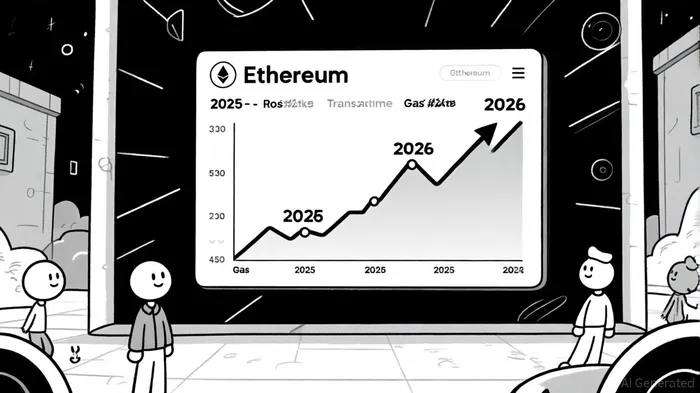
Price forecasts for 2026 span a wide range. A cautious scenario envisions ETH trading between $5,000 and $7,000 if upgrades lag or macroeconomic conditions sour [14]. A bullish case hinges on successful Fusaka implementation and sustained ETF inflows, with some experts projecting $10,000 or higher [15]. AI models and analysts from Binance and Kraken emphasize that institutional adoption and regulatory clarity will be pivotal [16].
Yet, short-term technical indicators suggest caution. Ethereum remains trapped in a descending channel, with bearish volume patterns dominating. A failure to reclaim key resistance levels could expose it to further downside, targeting $4,000 or lower [17].
Historically, when Ethereum closed above its daily R1 resistance level—a common breakout signal—investors saw an average 30-day excess return of +1.58 percentage points compared to a buy-and-hold strategy, according to backtesting from 2022 to 2025. While the edge was modest (win rate of 53%) and not statistically significant, the returns grew gradually, peaking at day 29. This suggests that while a simple breakout strategy offers limited alpha, combining it with tighter filters (e.g., volume confirmation, higher-timeframe resistance) could enhance its efficacy.
Conclusion: A Calculated Bet
Ethereum's path to $10,000 by 2026 is neither guaranteed nor implausible. The Fusaka upgrade, ETF-driven demand, and macroeconomic tailwinds create a compelling case for optimism. However, structural risks—centralization, competition, and regulatory ambiguity—demand vigilance. Investors must weigh these factors against Ethereum's historical resilience and its role as a foundational layer of Web3.





Comentarios
Aún no hay comentarios