
Estee Lauder's Strategic Expansion in Luxury Fragrance Innovation: Brand Differentiation and Shareholder Value Through R&D and Experiential Retail
The Estée Lauder Companies (ELC) is redefining luxury fragrance innovation through a dual strategy of neuroscience-driven R&D and immersive retail experiences, positioning itself as a leader in a market where scent is increasingly tied to emotional and nostalgic value. As the global beauty sector faces headwinds, including a slowdown in China and travel retail challenges, ELC's focus on high-margin, emotionally resonant products offers a compelling case for long-term shareholder value creation.
Neuroscience and Technology: The Science of Scent
At the heart of ELC's innovation is a partnership with Dresden University of Technology, which leverages brain imaging and psychometric studies to decode how fragrances evoke memory and emotion, according to GCI Magazine. This research, led by Dr. Thomas Hummel and Sumit Bhasin, aims to create products that align with Gen Z's preference for scents that reflect mood and identity, the GCI piece notes. By 2025, this neuroscience-driven approach will extend to packaging and marketing, enabling ELC to make data-backed claims about emotional engagement.
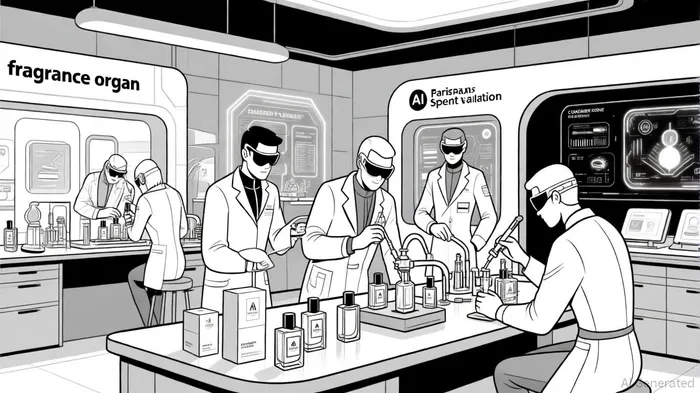
Complementing this is the Paris-based Fragrance Atelier, a co-creation hub opening in 2025 to centralize global brand teams and accelerate collaboration with perfumers and ingredient suppliers, according to Cosmetics Design Europe. The Atelier's "fragrance organ"-a tool for composing signature accords-and Evaluation Rooms with precise smell control underscore ELC's commitment to blending art and science, as reported by Business of Fashion. Meanwhile, a partnership with Exuud Inc. introduces plant-based solid beads for controlled fragrance release, enhancing sustainability while expanding creative possibilities for perfumers, as detailed by BeautyMatter.
Experiential Retail: From Boutiques to AI-Driven Personalization
ELC's experiential retail strategies are equally transformative. The Maison des Parfums in Paris, a dedicated innovation center, exemplifies the brand's "maths with magic" philosophy, combining data analytics with sensory creativity, as Business of Fashion reported. Physical retail expansions, such as freestanding boutiques for Tom Ford and Jo Malone London in New York's Prince Street, create immersive brand experiences that align with the sensory nature of fragrances, Business of Fashion notes. These locations are designed to drive foot traffic and foster brand loyalty in high-traffic urban areas.
Digitally, ELC's AR campaigns, like the Snapchat lens for virtual try-ons of Double Wear Foundation and Advanced Night Repair Serum, bridge online and offline engagement, according to Estetica Export. The AI Scent Advisor chatbot on Jo Malone London's website further personalizes the shopping experience, using algorithms to guide consumers through complex scent profiles, Business of Fashion reported. These omnichannel strategies cater to a generation that values both physical and digital interactions, ensuring ELC remains relevant in an evolving retail landscape.
Financial Resilience and Shareholder Value
Despite a 6% decline in net sales for Q2 2025, ELC's fragrance category grew by 2%, driven by luxury brands like Le Labo and Jo Malone London, Business of Fashion reported. This resilience highlights the premium pricing power of its fragrance portfolio, which accounts for a significant portion of ELC's prestige beauty segment. The company's "Beauty Reimagined" initiative, launched in Q2 2025, aims to restore sustainable growth through operational efficiencies and consumer-centric investments, as noted by GCI Magazine.
A key component of this strategy is the Profit Recovery and Growth Plan (PRGP), which includes restructuring and outsourcing to reinvest in high-growth areas like fragrance innovation, according to Cosmetics Design. While Q2 2025 saw an operating loss of $580 million due to goodwill impairments, the gross margin improved, reflecting the cost savings from PRGP, Cosmetics Design reported. Analysts argue that these short-term financial pressures are a necessary trade-off for long-term differentiation in a market where consumers increasingly view fragrances as emotional investments, Business of Fashion observed.
Conclusion: A Scent of Long-Term Value
Estee Lauder's strategic pivot toward neuroscience, AI, and experiential retail is not merely about capturing market share-it's about redefining the emotional and functional value of luxury fragrances. By investing in R&D that taps into the neuroscience of scent and creating retail experiences that blend physical and digital innovation, ELC is building a moat around its premium brands. For investors, the company's ability to sustain growth in a volatile market-despite broader challenges-underscores the potential for long-term value creation. As the luxury fragrance sector evolves, ELC's "maths with magic" approach may well become the blueprint for beauty's next era.







Comentarios
Aún no hay comentarios