
The Essequibo Gambit: How Geopolitical Tensions Are Fueling Latin America's Energy Play
The simmering dispute between Venezuela and Guyana over the Essequibo region has erupted into a geopolitical firestorm with profound implications for energy investors. As of May 2025, Venezuela's unilateral actions—including plans to hold elections in the contested area—and the U.S. military's rapid escalation of support for Guyana have turned this territorial clash into a high-stakes resource play. With over 11 billion barrels of oil equivalent at stake and global superpowers like Russia and China watching closely, this conflict is no longer just about borders—it's about who controls the energy lifelines of tomorrow.
The Oil Prize: Why Essequibo Matters
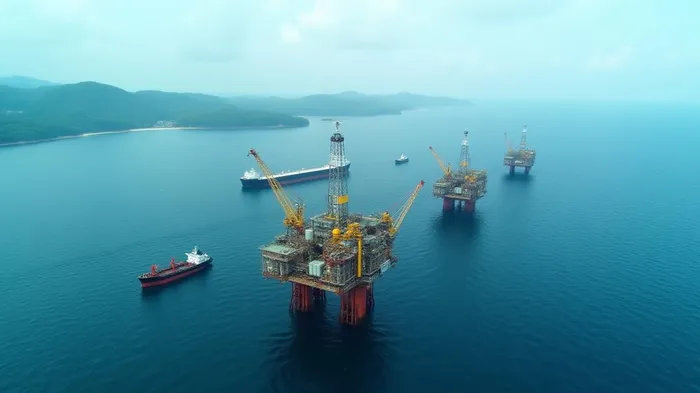
The Essequibo region, which encompasses Guyana's offshore Stabroek BlockXYZ--, is one of the most prolific oil discoveries of the 21st century. ExxonMobil and its partners have already extracted billions of barrels, with production projected to hit 1.3 million barrels per day by 2030—a figure that would surpass Venezuela's current output. For investors, this is a no-brainer: Guyana's oil is low-cost, high-quality, and strategically positioned to meet global demand.
But Venezuela's claims threaten to upend this calculus. The Maduro regime's push to assert control over the region—coupled with its state-owned PDVSA's attempts to drill in disputed waters—has created a geopolitical chokepoint for energy markets. The question is: Can investors capitalize on Guyana's oil boom while mitigating the risks of escalation?
Sanctions, Sabotage, and Strategic Alliances
The U.S. has doubled down on its support for Guyana, framing its involvement as a defense of international law and energy security. A May 2025 security agreement with Guyana includes joint military drills, intelligence-sharing, and protection of oil infrastructure—a direct counter to Venezuela's hybrid tactics. Meanwhile, U.S. sanctions on Venezuela remain a double-edged sword: While they isolate PDVSA, they also create opportunities for rival firms to snap up assets.
Yet the sanctions regime is fracturing. The recent arrival of Venezuelan crude in U.S. ports and lobbying efforts by Chevron (CVX) to maintain ties with PDVSA highlight the tension between geopolitical posturing and profit motives. For investors, this ambiguity is both a risk and a lever:
- Buy the dip in ExxonMobil (XOM): As the operator of Stabroek, Exxon stands to gain if Guyana's oil production scales as projected.
- Consider Hess (HES): A key partner in Stabroek, Hess benefits from Guyana's stability but faces less direct exposure to geopolitical risks than Exxon.
- Avoid PDVSA-linked equities: Venezuela's state-owned firms remain under sanctions, and any resolution favoring Guyana would render PDVSA's claims to Essequibo worthless.
The Geopolitical Minefield
The real danger lies in Venezuela's asymmetric playbook. While outright war is unlikely, sabotage of offshore platforms, cyberattacks on supply chains, or disruptions to Guyana's migrant communities could spook investors. The risk of a supply shock—even a temporary one—could send oil prices soaring, benefiting energy stocks but creating volatility.
Russia's potential involvement further complicates matters. Moscow's historical ties to Venezuela could lead to military support or joint exercises, raising the specter of a proxy conflict. Conversely, China's economic stakes in both nations create opportunities for backchannel diplomacy—but also for market instability if Beijing plays both sides.
Investment Thesis: Play the Long Game
This is a strategic resource play with asymmetric upside. The Essequibo dispute is unlikely to be resolved quickly, ensuring sustained focus on Guyana's energy potential. The U.S.-Guyana alliance locks in geopolitical tailwinds, while Venezuela's isolation creates a vacuum for Western firms to dominate.
Action Items for Investors:
1. Overweight ExxonMobil (XOM): Its operational control in Stabroek and diversified portfolio make it the safest bet in this space.
2. Add Hess (HES) as a leveraged play: Smaller-scale exposure to Guyana's growth story.
3. Avoid PDVSA-linked assets entirely: Sanctions, legal risks, and geopolitical headwinds make these a losing bet.
4. Monitor sanctions dynamics: Track the May 27 deadline for U.S. companies to exit Venezuela—a potential catalyst for volatility.
Conclusion: The New Petro-Geopolitics of the Caribbean
The Essequibo dispute is a microcosm of 21st-century energy geopolitics—a battle over resources, influence, and the rules of the game. For investors, the path forward is clear: Back the winners in Guyana's oil boom while shunning the losers in Venezuela's decline. The risks are real, but the rewards of securing a piece of the next energy superpower are too great to ignore.
The clock is ticking. Will you be on the right side of history?
Data queries generated for reference. Actual investment decisions should consider comprehensive due diligence and risk assessment.







Comentarios
Aún no hay comentarios