
Eshbal's Strategic Roll-Up Play in the Gluten-Free Market: Undervalued Synergy and Scalable Growth in a High-Growth Niche
The global food industry is witnessing a transformative shift toward functional and health-conscious products, with the gluten-free sector emerging as a prime beneficiary of this trend. Eshbal Functional Food Inc. (TSXV: ESBL) has positioned itself at the forefront of this movement through a strategic roll-up approach in the gluten-free market, leveraging acquisitions, operational synergies, and a focus on premium, "better-for-you" products. For investors, the company's current valuation metrics and the broader market dynamics suggest an opportunity to capitalize on undervalued synergies and scalable growth in a niche poised for sustained expansion.
A Roll-up Strategy with Operational and Market Synergies
Eshbal's roll-up strategy is centered on acquiring companies with complementary production capabilities, distribution networks, and brand portfolios to accelerate its North American market entry. A key example is its acquisition of a majority stake in Dare to Be Different Foods (D2BD), a New York-based manufacturer of gluten-free and vegetable-forward products. This move not only expands Eshbal's product offerings but also provides access to D2BD's retail distribution channels, including partnerships with Walmart and over 500 additional stores. By integrating D2BD's operational infrastructure, Eshbal aims to reduce costs and enhance efficiency, a critical factor in scaling its platform for mainstream grocers.
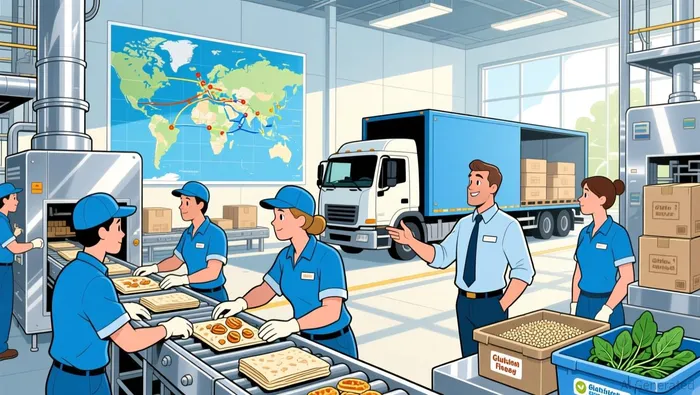 The company's strategic partnerships further underscore its commitment to scalability. For instance, Eshbal's collaboration with Active Marketing Group, a Florida-based food marketing and brokerage firm, strengthens its route-to-market capabilities in the U.S. Similarly, its partnership with Queen St. Bakery for local production of gluten-free pita bread in North America-set to begin in Q1 2026- highlights its focus on leveraging existing infrastructure to meet growing demand. These moves align with a broader industry trend: companies in the functional food sector that demonstrate robust distribution networks and operational efficiency often command higher valuation multiples.
Financial Performance and Undervalued Synergy
Eshbal's financial metrics reveal a company in transition, with improving gross margins and revenue growth despite the costs associated with its recent reverse takeover (RTO) and public listing. For the nine months ending September 30, 2025, the company reported EBITDA of $679,000, a figure that excludes one-time listing expenses. This performance contrasts with its Q2 2025 results, which showed a gross profit margin of 21.2% and a 12% year-over-year revenue increase for the first half of 2025.
While Eshbal's trailing twelve-month P/E ratio is currently negative (–4.2x), reflecting its unprofitable status, the company's EBITDA-based valuation appears undervalued relative to industry benchmarks. The broader food and beverage sector typically trades at 6–12x EBITDA, with functional food brands commanding higher multiples (8–12x) due to their recurring revenue potential and stable margins. Eshbal's focus on premium gluten-free products-such as its Caragil and BARILI brand innovations in Israel-positions it to capture a larger share of the "better-for-you" market, where consumers are willing to pay a premium for quality and health benefits.
Market Dynamics and Scalable Growth
The gluten-free market's growth trajectory provides a compelling backdrop for Eshbal's expansion. North America, which accounted for 35.1% of global gluten-free revenue in 2024, is projected to maintain its dominance, driven by rising demand for bakery products and desserts. The global gluten-free market, valued at $7.75 billion in 2024, is expected to reach $13.67 billion by 2030, growing at a compound annual growth rate (CAGR) of 10.0%. Eshbal's product portfolio, which includes gluten-free pita bread, cream mixes, and seed crackers, aligns with these trends, particularly in the bakery segment, which held 30.8% of the market in 2024.
Moreover, Eshbal's roll-up strategy is designed to capitalize on the fragmented nature of the gluten-free sector. By acquiring operational companies with production, storage, and distribution capabilities, Eshbal can reduce time-to-market and accelerate its North American footprint. This approach mirrors successful roll-up plays in other functional food niches, where consolidation has historically driven margin expansion and market share gains.
Risks and Considerations
Despite its promising trajectory, Eshbal faces challenges. The company's current unprofitability and reliance on equity financing for acquisitions could raise concerns about capital efficiency. Additionally, the gluten-free market is highly competitive, with established players and new entrants vying for shelf space. Eshbal's success will depend on its ability to execute its integration of D2BD and maintain gross margin expansion while scaling production.
Conclusion: A Strategic Bet on Health-Driven Demand
Eshbal's strategic roll-up play in the gluten-free market combines operational discipline, market positioning, and financial prudence. While its current valuation metrics may appear unattractive at first glance, the company's focus on premium, scalable products and its alignment with a high-growth niche suggest that its synergies are underappreciated. For investors with a medium-term horizon, Eshbal offers an opportunity to participate in the functional food revolution-a sector where innovation and consumer demand are reshaping the global food landscape.







Comentarios
Aún no hay comentarios