
ESG Risks and Opportunities in German EV Manufacturing: Navigating Labor Dynamics for Sustainable Growth
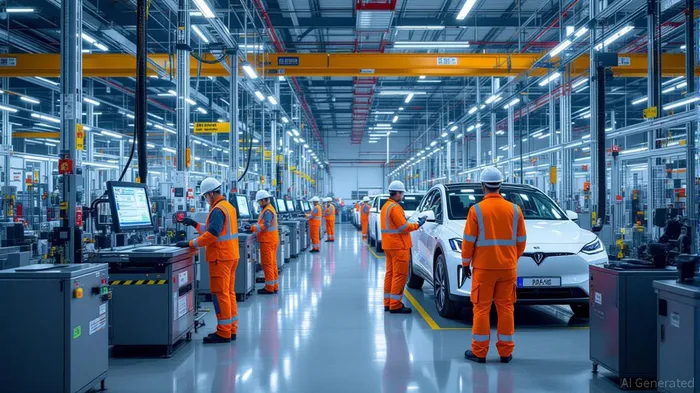
The German electric vehicle (EV) manufacturing sector is at a pivotal crossroads, where evolving ESG regulations and labor dynamics are reshaping investment landscapes. As Europe's industrial powerhouse, Germany's transition to sustainable mobility hinges on its ability to align labor practices with stringent environmental and social governance (ESG) standards. Recent regulatory shifts, including the EU Taxonomy Regulation and the German Supply Chain Act, are forcing automakers and suppliers to re-evaluate their labor strategies, creating both risks and opportunities for investors.
Regulatory Framework: A Catalyst for Change
According to a report by the ICLG on ESG law in Germany, the German Supply Chain Act mandates due diligence for companies with over 3,000 employees (effective 2023) and those with 1,000+ employees (2024), requiring them to address human rights and labor standards across supply chains [1]. Simultaneously, the EU Taxonomy Regulation is establishing technical criteria for “sustainable” economic activities, indirectly pressuring EV manufacturers to decarbonize operations while ensuring ethical labor practices [1]. These frameworks are not merely compliance exercises—they are reshaping how companies source materials, manage labor, and report sustainability metrics.
For example, the Corporate Sustainable Reporting Directive (CSRD) will expand non-financial reporting obligations to 50,000+ EU companies by 2025, emphasizing “double materiality” (assessing both how sustainability impacts businesses and vice versa) [1]. This means German EV firms must now disclose not only carbon footprints but also labor conditions in their supply chains, from battery material extraction to final assembly.
Labor Risks: Hidden Costs of Non-Compliance
While Germany's industrial workforce is highly skilled, the EV supply chain's complexity introduces ESG risks. For instance, battery production relies on global suppliers, some of which may lack transparency in labor practices. The Supply Chain Act's due diligence requirements could expose gaps in subcontractor compliance, leading to reputational damage or legal penalties. A 2023 study by the European Commission found that 18% of German manufacturing firms faced supply chain disruptions due to ESG-related audits, with labor disputes in Eastern Europe and Asia being a recurring issue [1].
Moreover, the shift to EVs is altering labor demand. Traditional internal combustion engine (ICE) plants require fewer workers than EV facilities, which prioritize automation and software integration. This transition risks displacing skilled workers, creating social tensions unless retraining programs are prioritized. Investors must assess whether companies are investing in workforce upskilling—a key ESG metric under the CSRD.
Opportunities: Innovation and Resilience
Conversely, proactive ESG strategies present opportunities. Companies aligning with the EU Taxonomy's criteria can access green financing at lower interest rates, while those adopting circular economy models (e.g., battery recycling) may reduce material costs. For example, BMW's partnership with Northvolt—a Swedish battery supplier adhering to strict labor standards—demonstrates how ethical sourcing can enhance supply chain resilience [1].
Additionally, the Supply Chain Act incentivizes automation and local sourcing to reduce dependency on high-risk regions. This could accelerate Germany's “industrial battery alliance” initiatives, which aim to create regional EV supply hubs with unionized, well-paid labor. Such moves not only mitigate ESG risks but also align with consumer demand for ethically produced vehicles.
Data-Driven Insights: Mapping the ESG Landscape
Conclusion: Strategic Investment Imperatives
For investors, the German EV sector's ESG trajectory underscores the need for rigorous due diligence. While regulatory compliance is non-negotiable, the true differentiator will be companies that integrate labor sustainability into their core strategies. This includes:
1. Monitoring subcontractor compliance with the Supply Chain Act.
2. Investing in workforce retraining to address EV-specific skills gaps.
3. Leveraging green financing through EU Taxonomy-aligned projects.
As Germany's EV industry matures, labor dynamics will remain a critical ESG lever—shaping both regulatory outcomes and market competitiveness.







Comentarios
Aún no hay comentarios