
The Escalating Utility Debt Crisis and Its Impact on Consumer-Driven Sectors
The Debt Crisis: A Ripple Effect on Consumer Sectors
The utility debt burden is no longer confined to the sector itself. According to a report by the Reserve Bank of India (RBI), trade disruptions and financial stress have forced policymakers to introduce debt relief measures, including deferred term loan payments and extended repayment timelines for working capital loans between September 2025 and December 2025. These interventions aim to stabilize export-oriented industries, which are vital to sustaining consumer demand. For instance, exporters now have extended timelines to repatriate funds, indirectly supporting supply chains and preventing abrupt contractions in consumer goods markets.
However, the crisis has also exposed vulnerabilities in consumer-driven sectors. The Sanwaria Consumer case study highlights this: the company reported a standalone net loss of Rs 0.60 crore in Q3 2025, with no sales recorded-a trend persisting since 2024. Such outcomes underscore how utility debt strains downstream industries, particularly those reliant on stable energy and water infrastructure.
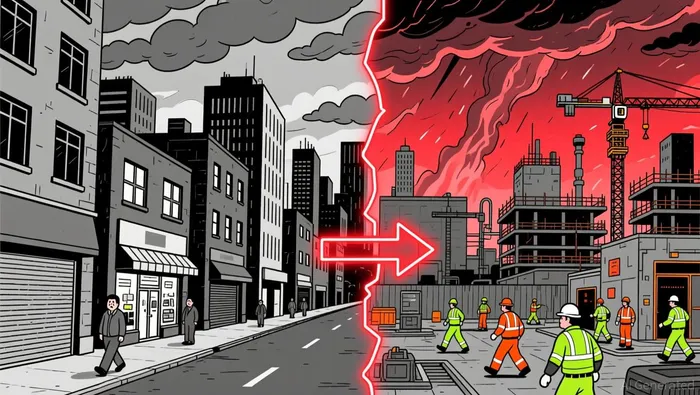
Strategic Sector Rotation: Defensive Plays and Cyclical Bets
Investors are increasingly adopting strategic sector rotation to hedge against the utility debt crisis. A November 2025 analysis reveals a pronounced shift from high-growth tech stocks to value and defensive sectors. Defensive sectors like Utilities and Healthcare have shown resilience, with Utilities Select Sector SPDR (XLU) gaining 0.96% during the October 2025 government shutdown-a classic defensive rotation. Similarly, the Healthcare Select Sector SPDR (XLV) surged 3.09% in the same period, reflecting a "flight to quality" amid uncertainty.
This rotation is further amplified by anticipation of the Federal Reserve's first rate cut of 2025, which favors cyclical sectors like Financials and Industrials. Meanwhile, utilities are uniquely positioned to benefit from AI-driven energy demand and the energy transition. Companies such as NextEra Energy and Constellation Energy are capitalizing on these trends, blending traditional utility roles with renewable energy innovation.
Risk Mitigation: From Cybersecurity to Climate Resilience
The utility debt crisis has intensified risks for consumer-driven sectors, necessitating robust mitigation strategies. Energy and utility firms are now prioritizing integrated risk management frameworks to address cybersecurity threats, which have surged by 70% in the past year. For example, Deloitte's insights emphasize aligning enterprise, operational, and IT risks to safeguard critical infrastructure.
In the debt collection industry, AI and behavioral science are reshaping consumer engagement. AI-driven tools optimize repayment plans by analyzing payment patterns, while behavioral nudges-such as default bias and choice architecture-improve compliance. However, ethical and regulatory challenges persist, requiring careful calibration to avoid discriminatory practices.
Climate risks also loom large. By 2050, the utility sector could face annual costs of $244 billion from climate-related disruptions. Proactive scenario planning and stress tests are now table stakes for utilities, ensuring infrastructure resilience against extreme weather and regulatory shifts.
Conclusion: Balancing Growth and Defense
The utility debt crisis demands a dual approach: defensive positioning to weather short-term volatility and strategic foresight to capitalize on long-term opportunities. Investors are advised to diversify across asset classes, adopt barbell strategies, and leverage AI-driven analytics for momentum insights. For consumer-driven sectors, the path forward hinges on aligning with resilient utilities and embracing adaptive risk frameworks.
As the economic cycle matures, the interplay between utility debt and consumer markets will remain a focal point for investors. Those who navigate this landscape with agility and precision will be best positioned to thrive in an era of uncertainty.







Comentarios
Aún no hay comentarios