
The Escalating US Tariff Crisis and Its Impact on European Equities
The United States and European Union have entered a new phase of trade conflict, with tariffs escalating across key sectors in 2025. From aluminum and steel to pharmaceuticals and automotive exports, the tit-for-tat measures have created a volatile landscape for European equities. While the broader economic impact remains muted—EU goods exports to the U.S. account for less than 3% of EU GDP—the sector-specific vulnerabilities are stark. For investors, the challenge lies in identifying which industries will bear the brunt of these tariffs and which can thrive amid the chaos.
The Vulnerable: Automotive and Pharmaceuticals in the Crosshairs
The automotive sector, a cornerstone of German and broader EU manufacturing, faces an immediate threat. The U.S. has imposed a 15% tariff on EU cars, a fraction of the initially threatened 30%, but still enough to disrupt supply chains and erode margins. Germany's auto giants—Audi, Volkswagen, and BMW—have already signaled production cuts in the U.S., with ripple effects on suppliers and logistics firms. The sector's exposure is not just economic but political: Germany's economy is projected to lose 0.4% of GDP by 2027 if tariffs remain in place.
The pharmaceutical sector is even more precarious. Ireland, the EU's largest pharmaceutical exporter to the U.S., is particularly vulnerable. Nearly 55% of its pharma exports flow to American shores, and a potential 200% tariff—threatened by President Trump—could devastate the country's economy. Ireland's GDP could shrink by 3% by 2028, a scenario that would force companies like PfizerPFE-- Ireland and Roche to reconsider their U.S. market strategies.
The Resilient: Defense and Steel as Strategic Assets
While the automotive and pharma sectors grapple with tariffs, Europe's defense and industrial sectors are emerging as unexpected beneficiaries. The EU's Readiness 2030 plan, coupled with the ReArm Europe initiative, has injected €800 billion into defense modernization, creating a virtuous cycle of innovation and demand. Companies like Airbus (military aviation) and Leonardo (cybersecurity systems) are securing contracts for next-generation technologies, while the EU's push for localized semiconductor production is boosting firms like Infineon and STMicroelectronicsSTM--.
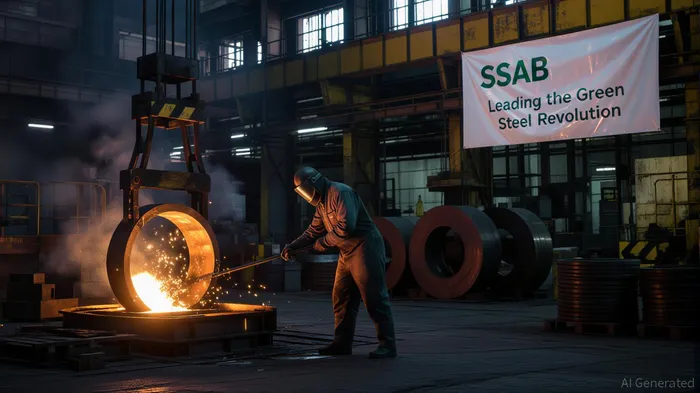
The steel industry, often a casualty in trade wars, has paradoxically found strength in adversity. Swedish firm SSAB, for example, has seen its shares surge as U.S. steel prices rise, bolstering its North American operations. Jefferies analysts note that European steelmakers with U.S. exposure—such as ArcelorMittal—could outperform as competition wanes.
Energy and Cybersecurity: Navigating Uncertainty
The energy sector, too, is adapting. European energy giants like TotalEnergiesTTE-- and Eni are capitalizing on U.S. tariff-driven uncertainty and OPEC+ supply cuts. Meanwhile, the euro's strength against the dollar—part of a broader “Sell America” narrative—has shielded European exporters from some of the worst of the trade war fallout.
Cybersecurity and artificial intelligence are also gaining traction. With the EU's Security Action for Europe (SAFE) loan instrument allocating €150 billion for tech-driven defense, companies like Thales and Diehl Defence are positioned to dominate emerging markets. Investors should watch for firms leveraging EU subsidies to scale AI-driven surveillance and battlefield management systems.
Investment Strategy: Hedging and High-Growth Bets
For investors, the key is to balance defensive plays with high-growth opportunities. Here's how to structure a portfolio in this climate:
- Defensive Equities:
- Steel and Heavy Industry: Firms with U.S. operations or domestic production capabilities (e.g., SSAB, ArcelorMittal).
Energy: Diversified majors insulated by OPEC+ dynamics (e.g., Eni, TotalEnergies).
High-Growth Sectors:
- Defense and Cybersecurity: Prioritize companies aligned with EU spending plans (e.g., Airbus, Leonardo, Thales).
Semiconductors and AI: Invest in firms benefiting from EU localization efforts (e.g., Infineon, STMicroelectronics).
Hedging Against Exposure:
- Short positions in vulnerable sectors (e.g., German automotive ETFs) if tariffs escalate.
- Currency hedges to protect against a weaker euro-dollar relationship.
Conclusion: A New Era of Geopolitical Investing
The U.S.-EU tariff war is not just a trade issue—it's a strategic reordering of global supply chains. While the automotive and pharmaceutical sectors face headwinds, the defense and industrial sectors are being turbocharged by policy and necessity. For investors, the lesson is clear: adapt to the new reality by doubling down on resilience and innovation. The EU's push for strategic autonomy is not a passing trend; it's a blueprint for the future.
In this environment, European equities are not a monolith. They are a mosaic of vulnerability and opportunity. The winners will be those who can navigate the turbulence with foresight—and the losers, those who cling to outdated assumptions. The market, as always, rewards the prepared.





Comentarios
Aún no hay comentarios