
The Escalating Risks in Crypto Infrastructure and the Strategic Case for Cybersecurity Investment in 2026
The cryptocurrency and decentralized finance (DeFi) ecosystems have matured rapidly, but so have the threats targeting them. In 2024-2025, the sector witnessed a staggering $3.4 billion in losses from security breaches, with centralized exchanges and DeFi platforms bearing the brunt of sophisticated attacks. North Korean threat actors, in particular, have emerged as dominant players, leveraging advanced impersonation tactics, supply chain compromises, and AI-driven phishing campaigns to exploit vulnerabilities in multi-signature wallets and smart contracts. As the attack surface expands and regulatory scrutiny intensifies, the strategic imperative for robust cybersecurity investments has never been clearer.
The Vulnerabilities in Centralized and DeFi Infrastructure
Centralized exchanges remain prime targets due to their custodial nature. The February 2025 Bybit breach, where $1.5 billion in Ethereum was stolen through compromised multi-signature processes, exemplifies the sophistication of modern attacks. North Korean hackers embedded themselves within the organization or impersonated executives to gain privileged access, a tactic that has since been replicated across other platforms. Similarly, the CetusCETUS-- DeFi exchange suffered a $220 million loss in May 2025 due to malicious token contracts draining liquidity pools. These incidents underscore a critical shift: attackers are increasingly exploiting off-chain vectors, such as private key compromises and social engineering, which account for 80.5% of stolen funds in 2024.
DeFi platforms, while decentralized, are not immune. Smart contract vulnerabilities-often stemming from unverified code or replication errors- cost over $630 million in the first half of 2025. Access control flaws alone contributed to 59% of DeFi losses, totaling $1.6 billion. Despite these challenges, DeFi's Total Value Locked (TVL) has grown, suggesting that improved security practices, such as formal verification and bug bounty programs, are beginning to mitigate risks. However, the rise in individual wallet compromises- 158,000 incidents affecting 80,000 victims in 2025-highlights the need for user-centric security solutions.
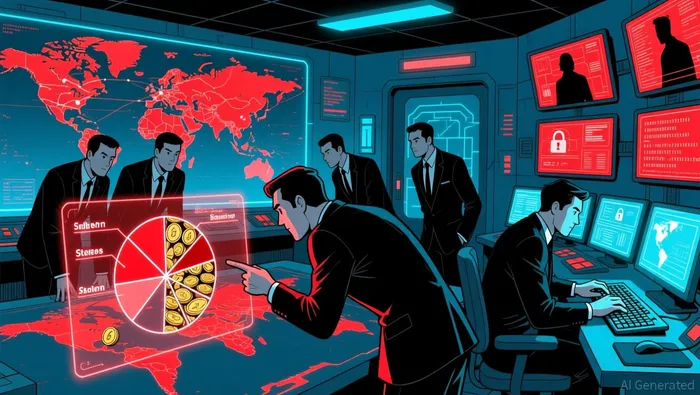
The Evolving Threat Landscape and Regulatory Response
The threat landscape is no longer confined to digital theft. Physical security risks, including kidnappings and ransom attempts, have emerged as a troubling trend. Compliance failures further exacerbate vulnerabilities, as seen in the Bybit breach, which coincided with a 20% drop in Bitcoin prices due to market panic. Meanwhile, financial intelligence gaps have enabled attackers to launder stolen funds through Chinese-language services, mixers, and cross-chain bridges.
Regulatory frameworks are adapting, but inconsistencies persist. The U.S. has positioned crypto as a national priority under the Trump administration, while the EU's Markets in Crypto-Assets (MiCA) and Digital Operational Resilience Act (DORA) aim to standardize security protocols. However, lightly supervised infrastructure remains a gap, as demonstrated by the Bybit incident. These regulatory shifts create both challenges and opportunities for cybersecurity firms that can bridge compliance and technical resilience.
The Strategic Case for Cybersecurity Investment in 2026
The growing sophistication of threats demands equally advanced defenses. AI-driven threat detection platforms are now pivotal, with some achieving a 95% reduction in mean time to response. For instance, Flare's identity intelligence platform monitors 58,000 Telegram channels and 1 million dark web logs weekly, providing real-time visibility into compromised credentials-a critical vector for initial access. Similarly, Mandiant and Cisco Talos are enhancing network threat detection by moving beyond traditional indicators of compromise to address AI-generated polymorphic malware.
Cloud security and Zero-Trust Architecture (ZTNA) are also gaining traction. With 70% of remote access deployments expected to rely on ZTNA in 2026, organizations are prioritizing real-time monitoring across hybrid and OT environments. Post-quantum cryptography (PQC) is another frontier, as companies begin phased migrations to counter future quantum computing threats.
The market for crypto cybersecurity solutions is projected to grow to $520 billion by 2026, driven by AI-powered attacks and the need for adaptive authentication. Leading firms like Palo Alto Networks, CrowdStrike, and Zscaler are capitalizing on this demand. Palo Alto's acquisition of CyberArkCYBR-- and expansion into identity-aware security positions it to address multi-signature and credential-based attacks. CrowdStrike's Falcon platform, with its AI-driven threat intelligence, is a leader in endpoint protection, while Zscaler's cloud-delivered Zero Trust solutions are critical for securing decentralized workloads.
Conclusion
The crypto infrastructure's vulnerabilities are no longer theoretical; they are a daily reality with cascading financial and reputational consequences. However, the same technological advancements that empower attackers-AI, cloud computing, and decentralized systems-also enable unprecedented defensive capabilities. For investors, the 2026 cybersecurity market represents a compelling opportunity: companies that specialize in identity intelligence, AI-driven threat detection, and regulatory compliance are poised to benefit from both the crisis and the innovation it spurs. As the sector evolves, the strategic case for investing in these solutions is not just about mitigating risk-it's about securing the future of digital finance.







Comentarios
Aún no hay comentarios