
Escalating Law Enforcement Corruption and Its Impact on South Korea's Crypto Market Trust and Investment Safety
South Korea's cryptocurrency sector is at a crossroads. In 2025, a seismic scandal rocked the nation's law enforcement apparatus, revealing that senior police officials had colluded with crypto-linked money launderers to evade investigations. Prosecutors indicted two high-ranking officers and five individuals tied to a cryptocurrency firm for accepting bribes in the form of cash, luxury goods, and operational favors, enabling the laundering of 249.6 billion won ($144 million) in illicit funds derived from voice-phishing scams. This case, which exposed systemic vulnerabilities in anti-money laundering (AML) enforcement, has not only eroded public trust but also forced regulators to accelerate a crackdown on crypto-related crime.
The Corruption-Driven Crisis in AML Enforcement
The 2025 scandal underscored a critical failure: law enforcement's inability to guard against internal collusion. Senior officials, including a former police station chief and a National Police Agency officer, allegedly provided sensitive investigative data to crypto executives, allowing them to circumvent regulatory scrutiny. This breach of duty amplified the scale of money laundering, with estimated illegal profits reaching 11.2 billion won from the same scheme. The fallout was swift. South Korea's Financial Intelligence Unit (FIU) intensified its enforcement actions, fining major exchanges like Upbit, Bithumb, and Korbit for AML and KYC violations. These penalties, while necessary, have created a climate of uncertainty for investors.
Regulatory Overhaul and Investor Trust
In response to the crisis, South Korea introduced the 2024 Virtual Asset User Protection Act, a sweeping framework designed to close regulatory gaps and enhance investor protections. The law mandates the separation of customer assets from exchange assets and imposes stricter AML/KYC requirements. However, enforcement has been aggressive, with the FIU imposing fines exceeding 14 billion won on non-compliant platforms. While these measures aim to restore confidence, they have also raised concerns about overregulation stifling innovation.
Investor trust metrics reflect the tension between regulatory rigor and market stability. Between January and August 2025, South Korean virtual asset service providers filed 36,684 Suspicious Transaction Reports (STRs), surpassing the combined total of 35,734 reports from the previous two years. This surge highlights the growing prevalence of illicit activities, particularly stablecoin-based money laundering, which exploits the asset class's price stability and cross-border utility. For context, 90% of crypto-linked crimes tied to "hwanchigi" (unregulated foreign exchange transactions) involve stablecoins.
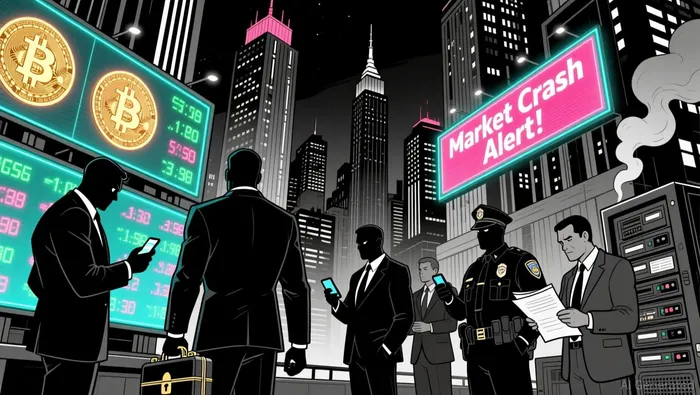
Market Implications and Investor Behavior
The regulatory crackdown has reshaped investor behavior. Heavy fines and business suspensions imposed on exchanges like Upbit-following a $36 million security breach-have made users more cautious about asset inflows and withdrawals. A 2025 report by BraveNewCoin notes that South Korea's enforcement actions have created a "chilling effect" on market participation, with investors prioritizing platforms with robust compliance frameworks. Meanwhile, political instability and delays in implementing a crypto tax regime have further complicated the landscape.
Yet, the regulatory push also signals a broader trend toward compliance innovation. Exchanges are now incentivized to adopt AI-driven transaction monitoring systems and blockchain analytics tools to meet international standards. This shift, while costly, may ultimately strengthen the sector's resilience against corruption and fraud.
The Path Forward: Balancing Vigilance and Innovation
South Korea's experience illustrates a global challenge: how to combat money laundering without stifling crypto's transformative potential. The 2025 scandals have catalyzed a regulatory renaissance, with the FIU and National Police Agency collaborating on cross-border investigations and AI-powered tracking systems. However, the success of these efforts hinges on addressing systemic corruption within law enforcement itself.
For investors, the lesson is clear: South Korea's crypto market remains high-risk but high-reward. While regulatory tightening has improved transparency, the lingering shadow of corruption means due diligence is more critical than ever. As one expert notes, "The key to long-term trust lies not just in stricter rules, but in ensuring those rules are enforced without bias or backdoor deals" according to a recent analysis.







Comentarios
Aún no hay comentarios