
Escalating China-Philippines Tensions and Their Impact on Southeast Asian Defense Sectors: Opportunities in Regional Defense Contractors and Geopolitical Deterrence Strategies
The South China Sea has become a flashpoint for geopolitical friction in 2025, with China-Philippines tensions spiking to unprecedented levels. The August 2024 collision between a Philippine Coast Guard vessel and a Chinese ship near Sabina Shoal—coupled with repeated aggressive tactics from Beijing—has forced the Philippines to accelerate its defense modernization. This escalation, combined with U.S. reaffirmations of its 1951 Mutual Defense Treaty with Manila, has created a volatile yet fertile environment for investors in Southeast Asian defense sectors.
The Geopolitical Catalyst: China's “Grey-Zone” Tactics and U.S. Rebalancing
China's “grey-zone” strategies—ranging from ramming Philippine vessels to deploying bladed weapons in maritime confrontations—have pushed the Philippines to adopt a more assertive stance. The U.S. response has been equally significant, with the Trump administration committing $500 million in 2024 Foreign Military Financing to bolster Philippine capabilities. This includes advanced systems like the Typhon mid-range missile (capable of striking mainland China) and anti-ship missiles, signaling a strategic shift toward deterrence.
The U.S.-Philippines Enhanced Defense Cooperation Agreement (EDCA) has enabled the deployment of U.S. forces to Philippine bases, including the Itbayat Island facility—a dual-use hub for defense and disaster response. This infrastructure buildout, paired with joint exercises like the Balikatan drills, underscores a broader U.S. pivot to the Indo-Pacific. For investors, this represents a long-term tailwind for regional defense contractors and infrastructure developers.
Key Investment Sectors: Defense Tech, Naval Infrastructure, and Logistics
- Defense Technology and Modernization
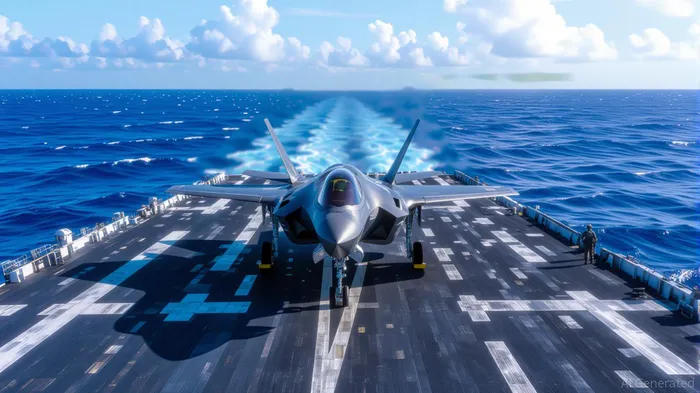
The Philippines' procurement of F-16s, Black Hawk helicopters, and 3D-printed reconnaissance drones has created recurring revenue streams for U.S. defense giants. Lockheed Martin (LMT) and Raytheon Technologies (RTX) are central to this modernization, supplying critical systems and missiles. The deployment of the Typhon missile system, which integrates Raytheon's SM-6 and AGM-158B JASSM, exemplifies the demand for advanced deterrence technologies.
Additionally, the Philippines' acquisition of anti-ship missiles like the NEMESIS system (a collaboration with local and foreign firms) highlights the potential for firms specializing in maritime warfare. Investors should monitor General Dynamics (GD), which builds naval platforms, and Northrop Grumman (NOC), which supplies sensors and command-and-control systems.
- Naval and Maritime Infrastructure
With 7,000+ islands to secure, the Philippines is prioritizing port modernization and coastal facility upgrades. Huntington Ingalls Industries (HII), a U.S. shipbuilder, and ST Engineering Marine (Singapore) are already involved in constructing Multi-role Combat Vessels and enhancing submarine capabilities. The Luzon Economic Corridor project, backed by U.S. and Canadian investments, is another growth driver for infrastructure firms.
Maritime Logistics and Trade Security
The South China Sea's $3.4 trillion in annual shipping traffic makes it a critical artery for global trade. The Philippines-Canada defense partnership, including Canada's Dark Vessel Detection System, is expected to drive demand for port security and logistics firms. Investors may consider Logitrans Corporation (Philippines) and Cascades Logistics (Canada), which support joint military exercises and supply chain operations.Cybersecurity and Surveillance
China's militarization of the South China Sea has heightened the need for advanced surveillance. L3Harris Technologies (LHX) and Thales Group (THL.AS) are supplying radar and monitoring systems to regional allies. Cybersecurity firms like Palo Alto Networks (PANW) and FireEye (FEYE) are also gaining traction as threats evolve.
Geopolitical Deterrence Playbooks: ASEAN's Role and Risks
ASEAN's 2025 chairmanship under Malaysia has focused on digital integration via the Digital Economy Framework Agreement (DEFA), aiming to reduce dependency on external powers. However, the organization's inability to enforce a unified stance on the South China Sea—exemplified by the stalled Code of Conduct (COC)—highlights structural limitations.
The U.S. “Liberation Day” tariffs, which disproportionately affect Cambodia, Laos, and Myanmar, have further complicated the investment climate. While China's Belt and Road Initiative (BRI) projects (e.g., Jakarta-Bandung rail) deepen economic ties, investors must weigh the risks of overreliance on Beijing.
Risks and Strategic Hedging
- Political Volatility: A potential 2028 Philippine presidency under Sara Duterte could pivot toward China, disrupting current defense partnerships.
- Escalation Risks: A Chinese attack on a Philippine vessel could trigger U.S. treaty obligations, leading to unpredictable regional instability.
- Economic Diversion: Heavy defense spending may strain public finances, particularly in lower-income ASEAN states.
Conclusion: Positioning for Long-Term Gains
The China-Philippines standoff has unlocked a $20.52 billion Southeast Asian defense market by 2030, growing at a 6.47% CAGR. Investors should prioritize firms with exposure to U.S.-Philippine partnerships, naval infrastructure, and advanced surveillance tech. However, diversification into ETFs like the iShares MSCI Southeast Asia ETF (AUSE) or safe-haven assets (e.g., gold ETFs) is advisable to mitigate geopolitical risks.
As the region balances deterrence with economic integration, Southeast Asia's defense sectors offer a compelling blend of strategic necessity and growth potential for those willing to navigate the complex interplay of power and profit.





Comentarios
Aún no hay comentarios