
The Erosion of Trust: How FBI Leadership Controversies Threaten Regulatory Credibility and Investor Confidence
The Federal Bureau of Investigation (FBI) has long been a cornerstone of American governance, tasked with upholding the rule of law and safeguarding national security. Yet, recent leadership controversies under the Trump administration have cast a shadow over its institutional integrity, raising urgent questions about regulatory credibility and its ripple effects on investor confidence. As the agency grapples with accusations of politicization, its evolving role-and the broader implications for financial markets-demand closer scrutiny.
A Politicized FBI and the Erosion of Institutional Trust
The appointment of Kash Patel as FBI director and Dan Bongino as deputy director in 2023 marked a sharp departure from the agency's traditional ethos of impartiality. Patel, a vocal Trump loyalist, has implemented sweeping changes, including shifting thousands of agents from national security roles to immigration enforcement and dismissing personnel deemed disloyal or critical of the administration. These actions have sparked lawsuits from former officials, who allege political purges reminiscent of J. Edgar Hoover's abuses in the 1970s and L. Patrick Gray's complicity in the Nixon-era Watergate scandal.
The consequences extend beyond personnel. The FBI's renewed focus on politically sensitive cases-such as the leak of the Dobbs decision and the discovery of cocaine in the White House-has further fueled perceptions of bias. For an agency that prides itself on neutrality, these developments risk undermining its credibility not only domestically but also in the eyes of global partners and investors. 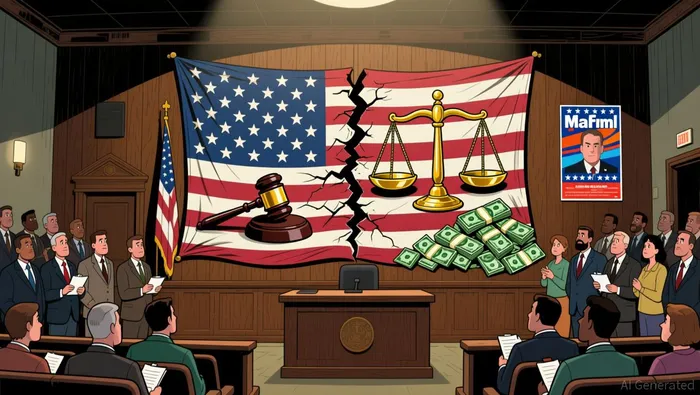
Regulatory Credibility in the Crosshairs
The FBI's credibility is inextricably linked to the broader regulatory ecosystem. As the Department of Justice (DOJ) and other agencies recalibrate their enforcement priorities under Trump's second term, the specter of politicization looms large. The DOJ's anticipated focus on "core fraud" cases, coupled with reduced engagement in novel enforcement actions, signals a narrowing of regulatory oversight. Meanwhile, the Consumer Financial Protection Bureau (CFPB) has faced its own crisis, with a funding shortfall forcing a shift toward a "Humility in Supervision" approach that limits enforcement and places greater onus on financial institutions for self-regulation.
These shifts, driven by the Trump administration's emphasis on cost-cutting through initiatives like the Department of Government Efficiency (DOGE), raise concerns about resource constraints and the capacity to address complex white-collar crimes according to analysis. For investors, the erosion of robust regulatory frameworks could translate into heightened risks, particularly in sectors reliant on consistent enforcement of corporate governance standards.
Investor Confidence: A Delicate Balancing Act
While the U.S. economy has shown resilience in 2025-with equity markets rebounding and the Federal Reserve signaling rate cuts-underlying uncertainties persist. The FBI's leadership controversies, coupled with broader regulatory shifts, have introduced a layer of volatility. According to the 2025 Kearney FDI Confidence Index, investors increasingly view geopolitical tensions and restrictive regulatory environments as significant risks. Similarly, the EY-Parthenon CEO Outlook Survey highlights trade wars and tariffs as top concerns, prompting corporate leaders to reassess global operations.
Patel's personal financial interests, including a stake in the Chinese fashion brand Shein and ties to a Czech arms company, have further complicated the narrative. Critics argue these connections create conflicts of interest, particularly as Patel oversees national security matters according to reports. While direct correlations between FBI leadership changes and investor confidence metrics remain elusive, the cumulative effect of regulatory instability and perceived bias cannot be ignored.
The Path Forward: Vigilance in an Uncertain Landscape
For investors, the lesson is clear: the interplay between political risk and regulatory credibility demands vigilance. Financial institutions must now navigate a landscape where enforcement priorities are increasingly shaped by partisan agendas. This necessitates a dual strategy-proactive internal compliance measures to mitigate regulatory gaps and a cautious approach to markets where oversight is perceived as inconsistent.
The FBI's current trajectory underscores a broader challenge: maintaining the delicate balance between effective governance and institutional independence. As the agency's role in politically charged scenarios continues to evolve, so too must the strategies of those who rely on its integrity. In an era of heightened scrutiny, the line between law enforcement and political influence grows thinner, and the stakes for investor confidence have never been higher.






Comentarios
Aún no hay comentarios