
The Erosion of Conviction in Bitcoin: A Structural Selloff by Long-Term Holders
Bitcoin's price action in late 2025 has revealed a critical inflection point in market dynamics. As the asset tests the psychological $100,000 resistance level, on-chain analytics and sentiment data paint a nuanced picture of diverging behaviors between long-term and short-term holders. Long-term holders-traditionally seen as the bedrock of Bitcoin's structural strength-are accelerating sales, signaling a shift from accumulation to profit realization. Meanwhile, short-term traders exhibit signs of capitulation, creating a volatile interplay that challenges bullish narratives. This article dissects the structural selloff through on-chain metrics and sentiment trends, while evaluating the stabilizing role of institutional demand.
On-Chain Analytics: A Cautious Transition
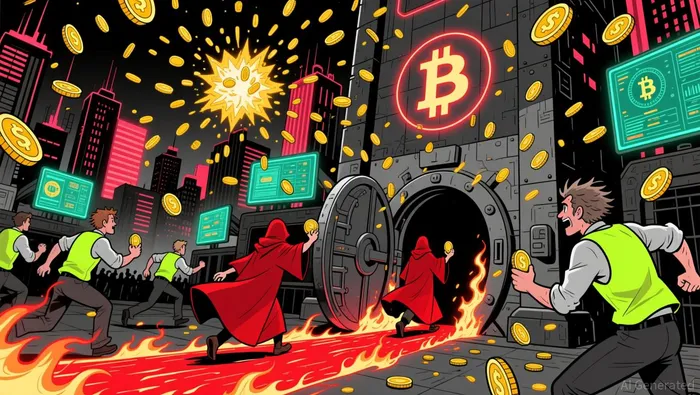
According to Coinotag, BitcoinBTC-- long-term holders are reducing exposure at an unprecedented rate, marked by a contraction in their holding supply and a negative net position change. This trend, observed as early as November 2025, reflects a strategic shift from accumulation to profit-taking, particularly as prices hover near $100,000. Glassnode's on-chain data underscores this divergence: long-term holder activity has accelerated, with over 400,000 BTC-worth approximately $42.3 billion-sold in the past 30 days. Such activity, however, has not triggered sharp price declines, suggesting a market increasingly capable of absorbing large-scale selloffs without panic.
The measured pace of these sales contrasts with historical patterns. In prior cycles, long-term holders often acted as stabilizers, buying during dips. Now, their behavior indicates a loss of conviction in near-term price resilience, potentially driven by unmet rally expectations and year-end tax strategies. This structural shift raises questions about the sustainability of Bitcoin's current price trajectory, particularly as key resistance levels face repeated tests.
Market Sentiment: Capitulation and Resilience
The erosion of conviction is further amplified by sentiment data. While long-term holders sell methodically, short-term traders have exhibited signs of distress. Over $3 billion in BTC was sent to exchanges at a loss within three days, signaling capitulation. Technically, Bitcoin's weekly chart reveals a falling wedge pattern, with a close below critical support levels potentially targeting $72,000 or even $60,000, as speculated by analysts like Peter Brandt.
Yet, amid this bearish backdrop, demand at key levels remains resilient. Institutional investors and corporate treasuries have emerged as stabilizing forces. Bitcoin ETFs, for instance, recorded over $500 million in daily inflows, with 70% of these funds coming from new investors. MicroStrategy's continued additions to its treasury further underscored institutional confidence, cushioning the price against sharper declines. This duality-retail pessimism versus institutional optimism-creates a complex tapestry of market psychology.
The Path Forward: Balancing Selloff and Stabilization
The interplay between structural selloffs and institutional demand suggests a market in transition. While long-term holders' measured exits indicate a temporary loss of conviction, the absence of panic selling and the presence of strong institutional inflows hint at a deeper structural resilience. However, the falling wedge pattern warns of potential downside risks if short-term holders fail to defend key support levels.
For investors, the key lies in monitoring on-chain metrics for shifts in holder behavior and institutional activity. A sustained rebound in long-term accumulation, coupled with continued ETF inflows, could reinvigorate bullish momentumMMT--. Conversely, a breakdown below $72,000 may force a reevaluation of near-term targets.






Comentarios
Aún no hay comentarios