
ERCOT's RTC+B Market Reform: Unlocking Energy Storage Value in a Modernized Grid
Market Mechanics and Grid Modernization
RTC+B replaces the outdated Operating Reserve Demand Curve (ORDC) with Ancillary Service Demand Curves (ASDCs), enabling a more nuanced valuation of grid services such as frequency regulation and voltage support according to Resurety. This co-optimization approach allows batteries to operate as a single, flexible resource-accounting for their state of charge-rather than being treated as separate generation and load components as research shows. 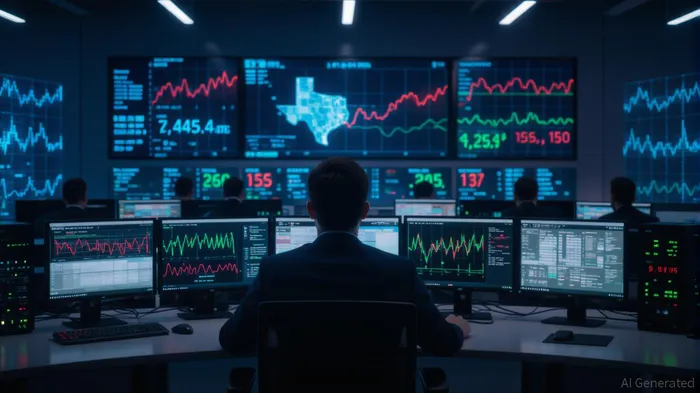 . By dynamically dispatching the most cost-effective resources, ERCOT projects annual wholesale market savings of $2.5–$6.4 billion, driven by reduced reliance on expensive peaking assets and minimized renewable curtailment.
The reform also introduces shorter duration limits for ancillary services, incentivizing battery participation in critical grid functions. However, a new State-of-Charge (SOC) constraint may limit the ability of storage assets to stack multiple services simultaneously. This technical nuance underscores the need for investors to reassess how battery systems are designed and operated to maximize revenue under the new framework.
Risk Profiles and Valuation Models
The integration of batteries into real-time markets inherently reduces price volatility by enabling faster responses to supply-demand imbalances. According to a report by Resurety, this stability could lower the risk premium embedded in storage asset valuations, as the market becomes less reliant on scarcity-driven pricing according to Resurety. However, the same report notes that this efficiency might erode the premium batteries previously commanded during periods of high demand, creating uncertainty for long-term revenue projections according to Resurety.
For valuation models, the shift to ASDCs requires a reevaluation of how ancillary services are priced and aggregated. Traditional models that treated energy and reserves as separate markets are now obsolete. Instead, investors must adopt dynamic, co-optimized models that account for the interplay between energy arbitrage, frequency regulation, and other services. This complexity demands advanced analytics and real-time data integration, which could favor larger players with robust technological infrastructure as research shows.
Long-Term Strategic Positioning
While the immediate benefits of RTC+B are clear, the long-term implications for clean energy investors are more nuanced. The reform aligns with broader trends in grid modernization, where storage is increasingly viewed as a strategic asset for balancing renewable intermittency and ensuring reliability according to RenewAFI. However, the broader U.S. clean energy sector faces headwinds, including policy uncertainty and the phase-out of federal subsidies. In Q3 2025, clean energy investment hit a record $75 billion, but industry leaders emphasize the need for resilience in a world of shifting incentives according to Clean Investment Monitor.
For investors, the key lies in leveraging RTC+B's market design to de-risk projects. Battery storage, now a first-class participant in ERCOT's markets, can diversify revenue streams through participation in multiple ancillary services. This diversification mitigates exposure to any single market segment, a critical advantage in an era of policy flux. Additionally, the reform's emphasis on efficiency may accelerate the retirement of outdated infrastructure, creating opportunities for storage to fill gaps in grid services according to RenewAFI.
Conclusion
ERCOT's RTC+B reform is more than a technical upgrade-it is a catalyst for reimagining energy storage's role in a decarbonizing grid. By enabling batteries to operate as flexible, co-optimized assets, the reform unlocks new value streams while challenging investors to adapt their risk and valuation frameworks. For those who navigate these changes strategically, the path forward is clear: storage is no longer a niche technology but a cornerstone of modern grid infrastructure.







Comentarios
Aún no hay comentarios