
ERCOT's RTC+B Market Reform and Its Impact on Energy Storage Investment
The RTC+B Framework: A New Paradigm for Grid Efficiency
The RTC+B program replaces the outdated Operating Reserve Demand Curve (ORDC) with Ancillary Service Demand Curves (ASDCs), enabling precise pricing of ancillary services like frequency regulation and backup power. Batteries are now modeled as single devices with a state of charge (SoC), allowing them to dynamically shift between energy and ancillary service roles every five minutes. This innovation not only improves grid flexibility but also reduces manual interventions and transmission congestion, projected to save the Texas energy market $2.5–$6.4 billion annually.
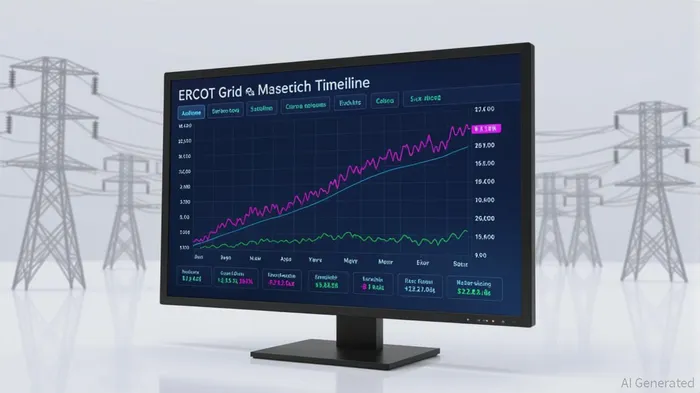 For energy storage, the reform introduces a dual opportunity: batteries can now participate in real-time energy arbitrage while providing ancillary services, a shift from their previous reliance on fixed-price ancillary service markets. However, this also means reduced scarcity-driven premiums, as the co-optimization process prioritizes cost-effective dispatch over high-margin arbitrage.
Strategic Asset Allocation: Navigating New Revenue Streams
The integration of batteries into real-time optimization creates a more competitive market, necessitating strategic asset allocation for investors. Key considerations include:
- Hybrid Project Structures: Combining solar/wind with storage allows developers to leverage synergies between renewable generation and battery dispatch. For example, batteries can store excess renewable energy during low-demand periods and discharge during peaks, maximizing value from both energy arbitrage and ancillary services.
- Portfolio Optimization: Diversifying across geographic locations and resource types mitigates exposure to localized price volatility. Strategic site selection near transmission bottlenecks or high-renewable zones can enhance revenue through congestion management and ancillary service demand.
- Operational Timing: Given the 5-minute dispatch intervals under RTC+B, advanced forecasting tools and real-time bidding systems are critical to optimize SoC management and avoid revenue leakage.
According to Ascend Analytics, operators are advised to lock in a portion of battery capacity for extended periods during peak seasons (e.g., summer) to capture risk premiums and stabilize income streams. This approach contrasts with the previous model of relying solely on ancillary service markets, which have seen revenues decline from $149/kW in 2023 to $17/kW in 2025 due to market saturation as reported by Enverus.
Financial Hedging and Risk Mitigation
The RTC+B framework's emphasis on real-time co-optimization introduces volatility, requiring nuanced hedging strategies. Key tactics include:
- Multi-Hour Block Products: The Day-Ahead Market now offers block products that allow retailers and investors to hedge against intra-hour price swings, reducing exposure to real-time price uncertainty.
- Contract Innovations: Structured contracts, such as fixed-price energy storage agreements or ancillary service guarantees, provide downside protection in a low-margin environment.
- Data Precision: With batteries modeled as single devices, operators must ensure accurate telemetry and settlement data to avoid compliance risks and revenue shortfalls.
For example, Ascend Analytics recommends that storage developers hedge 30–50% of their capacity during peak periods to balance flexibility with revenue stability. This strategy is particularly vital in a market where day-ahead and real-time spreads can fluctuate by up to $70/MWh during high-demand months as noted in industry analysis.
Conclusion: Positioning for a Dynamic Future
ERCOT's RTC+B reform is a double-edged sword: it enhances grid efficiency and unlocks new revenue streams but also demands sophisticated operational and financial strategies. For clean energy buyers and storage developers, success hinges on three pillars:
1. Adopting hybrid project structures to diversify income sources.
2. Leveraging advanced analytics for real-time bidding and SoC optimization.
3. Implementing tailored hedging mechanisms to navigate price volatility.
As Texas transitions to a more dynamic and decentralized grid, investors who align their portfolios with these principles will be best positioned to capitalize on the opportunities-and mitigate the risks-of this transformative market design.







Comentarios
Aún no hay comentarios