
The ERCOT RTC+B Launch: A Game-Changer for Energy Buyers and Storage Investors
Strategic Asset Positioning in a Modernized Grid
ERCOT's RTC+B reimagines how energy and ancillary services are dispatched. The system co-optimizes resources every five minutes in real time, treating batteries as a single asset with a dynamic state-of-charge rather than separate charging and discharging entities. This allows for more precise matching of supply and demand, reducing inefficiencies and curtailment of renewable energy. For example, surplus solar generation can now be stored in batteries instead of being wasted, cutting total system costs by 5.5% in modeled scenarios.
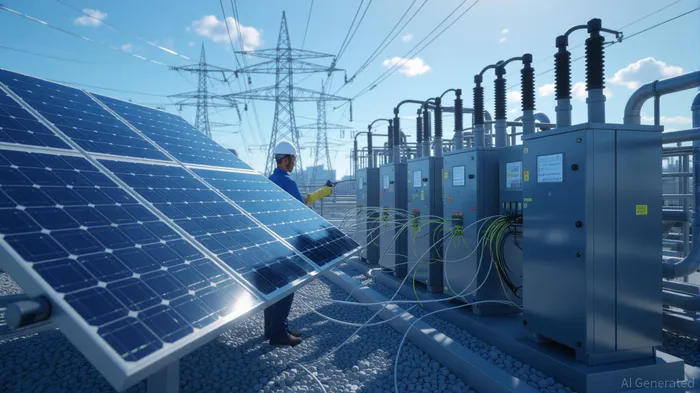 The replacement of the Operating Reserve Demand Curve (ORDC) with Ancillary Service Demand Curves (ASDCs) further enhances market efficiency. ASDCs reflect the specific value of each ancillary service-such as frequency regulation or voltage support-enabling more accurate pricing and reducing reliance on costly natural gas peaking plants during peak hours according to the IMM. This shift not only lowers wholesale prices but also creates a more predictable revenue stream for resources that provide grid stability.
Opportunities for Energy Buyers and ESR Operators
Energy buyers, particularly large commercial and industrial (C&I) consumers, stand to benefit from the projected cost reductions. REsurety analysts note that the RTC+B framework could reduce energy procurement costs by optimizing the use of renewables and storage, making long-term VPPAs more attractive. For instance, a C&I buyer with a solar + storage VPPA can now leverage the RTC+B system to store excess generation during low-demand periods and discharge it during high-demand events, maximizing value from their contracted resources.
Battery energy storage system (BESS) operators also gain from the new design. By participating in real-time co-optimization, BESS can bid into multiple markets simultaneously-energy, regulation, and spinning reserves-without the constraints of prior market rules. This multi-service participation increases asset utilization rates and revenue potential, particularly in a grid with growing renewable penetration according to RenewAFI.
However, the same dynamics introduce risks. As REsurety highlights, the increased availability of BESS and renewables could reduce scarcity pricing during peak periods, potentially lowering the value of battery arbitrage opportunities. Operators must now balance the benefits of higher utilization against the risk of compressed margins in a more stable, less volatile market.
Implications for VPPA Holders and Long-Term Investors
Virtual power purchase agreements (VPPAs) are poised to gain strategic importance in the RTC+B era. By locking in long-term energy prices while allowing counterparties to benefit from real-time market optimizations, VPPAs offer a hedge against volatility while aligning with decarbonization goals. The IMM's savings projections suggest that VPPA buyers could see enhanced returns as system costs decline, particularly if their contracts include storage components that integrate with the new market design according to the IMM.
For long-term investors, the RTC+B rollout underscores the need to prioritize assets that align with ERCOT's efficiency-driven model. Projects that combine solar, wind, and storage-configured to provide multiple grid services-are likely to outperform standalone resources. Conversely, investments in traditional peaking plants or single-function storage systems may face declining value as the grid transitions to a more dynamic, resource-agnostic framework according to ERCOT's official release.
Risks and the Road Ahead
While the IMM's savings estimates are compelling, stakeholders must remain cautious. The success of RTC+B hinges on the accuracy of its dynamic dispatch algorithms and the ability of market participants to adapt to real-time bidding rules. Early implementation challenges-such as software glitches or unexpected interactions between BESS and legacy infrastructure-could temporarily disrupt savings projections according to Enverus analysis.
Moreover, the long-term impact on battery revenue remains uncertain. If the market becomes too stable, the premium prices that BESS operators rely on during scarcity events may erode. This could deter new storage deployments unless offset by regulatory incentives or expanded market participation rules according to REsurety.
Conclusion
ERCOT's RTC+B represents a bold reimagining of grid operations, with the potential to redefine value chains across the U.S. clean energy sector. For energy buyers, the savings and flexibility it offers are a strategic win. For storage operators and VPPA holders, the key lies in adapting to a market where assets must be agile, multi-functional, and deeply integrated with real-time dynamics. As Texas leads this transition, the lessons from RTC+B will likely ripple across other U.S. grids, making strategic asset positioning more critical than ever.







Comentarios
Aún no hay comentarios