
The End of an Era: How the U.S. Downgrade is Redefining Safe Havens in Fixed Income
The U.S. just lost its AAA credit rating. That’s not a typo—it’s a seismic shift in global finance. Moody’s downgrade to Aa1 isn’t just a technicality; it’s a flashing red light for investors to rethink everything they thought they knew about “risk-free” assets. This isn’t 2011 anymore. This time, the writing’s on the wall: Treasuries are no longer the bedrock of safety they once were. The question now isn’t if investors will pivot, but how fast they can get their money into the new pillars of fixed income.
The Death of the “Risk-Free” Treasury
Let’s start with the facts. The U.S. 10-year Treasury yield spiked to 4.49% post-downgrade—the highest since the 2008 crisis—and it’s still volatile. Why? Because the world is finally pricing in the truth: the U.S. debt-to-GDP ratio is projected to hit 107% by 2029, with deficits ballooning to 9% of GDP by 2035. That’s not a typo.
This isn’t about politics; it’s about math. When the world’s largest economy can’t balance its books, the “safety” of its bonds becomes an illusion. And markets are catching on fast.
The New “AAA” Safe Havens: Where to Park Your Cash Now
If Treasuries are no longer the gold standard, where’s the money going? Look to the AAA-rated sovereign bonds that are now the real deal.
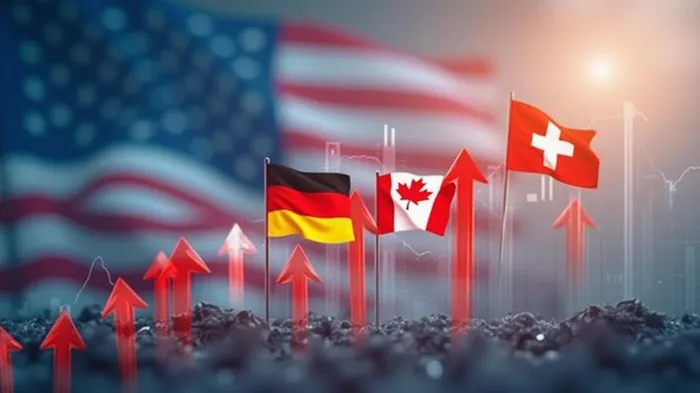
Germany’s 2.506% Yield: The Bund is the new benchmark. With a fiscal discipline the U.S. can’t match, Germany’s 10-year yield is rock-solid. Pair this with its stable 4.50% bank rate, and you’ve got a bond that’s both safe and a steal compared to U.S. risk.
Canada’s 3.412% Yield: A North American alternative with fiscal responsibility. Canada’s AAA rating is backed by a resource-rich economy and prudent spending. The +90.6 basis point spread over Germany rewards investors for taking on a bit more risk.
Switzerland’s 0.819% Yield: Yes, the yield is low, but so is the risk. The Swiss franc’s safe-haven status means this is insurance for your portfolio. With a -168.7 basis point spread vs. Germany, it’s a hedge against global chaos.
High-Yield Corporate Debt: The Hidden Gem in the Crisis
Don’t fall into the trap of thinking this is all about government bonds. The downgrade is forcing a reckoning in corporate credit too.
Investors are fleeing Treasuries, but they’re not going into cash—they’re chasing high-quality corporate debt with yields that now rival or surpass junk bonds. Take companies like Apple (AAPL), Microsoft (MSFT), or Johnson & Johnson (JNJ)—their corporate bonds are trading at spreads that make them 40-60 basis points above Treasuries, offering both safety and income.
But here’s the catch: run from the weak. Corporate default risk hit 9.2% in 2024—the highest since the financial crisis. This isn’t a time for reckless bets. Stick to investment-grade bonds (BBB+ and above) and avoid anything tied to cyclical sectors or heavy debt loads.
The Bottom Line: Act Now or Get Left Behind
The U.S. downgrade isn’t a blip—it’s a permanent shift. Treasuries are no longer “risk-free,” and investors who cling to them are playing with fire.
Here’s what you do:
- Dump Treasuries before yields climb higher. The 4.49% yield is a trap—it could go to 5% if fiscal dysfunction worsens.
- Load up on AAA sovereign bonds like Germany and Canada. These are the new kings of fixed income.
- Go for quality corporate debt—but vet it like your life depends on it.
This isn’t just about avoiding losses; it’s about capitalizing on a once-in-a-generation reallocation of capital. The writing’s on the wall. Move fast, or watch your “safe” money evaporate.
The era of U.S. Treasury dominance is over. The question now is: Are you ready to adapt, or will you be the last one holding the bag?







Comentarios
Aún no hay comentarios