
The New Era of Aviation Safety Scrutiny and Its Impact on Investor Valuations
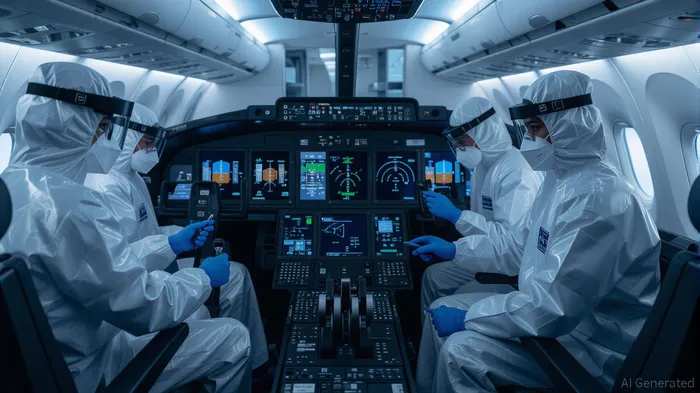
The June 2025 Air India crash—marking the first fatal incident involving a BoeingBA-- 787 Dreamliner since its 2011 debut—has become a watershed moment for the aviation industry. The crash, which killed 260 people, has not only shaken public trust but also triggered a cascade of regulatory actions, stock volatility, and existential questions about the balance between innovation and safety. For investors, the incident underscores how rapidly shifting safety protocols and reputational risks can reshape the valuation of aerospace giants and airlines alike.
The Technical and Regulatory Fallout
The preliminary investigation by India's Aircraft Accident Investigation Bureau (AAIB) pointed to a critical design flaw in the 787's fuel-control switches, which sequentially shut down both engines. This flaw had been flagged as early as 2018 in a U.S. Federal Aviation Administration (FAA) advisory, which warned of potential vulnerabilities in the locking mechanisms of these switches. Yet, the FAA's non-mandatory approach allowed airlines to ignore the risk until now. The crash has forced regulators worldwide to act. India's Directorate General of Civil Aviation (DGCA) ordered immediate inspections of Boeing 787s, while Singapore, South Korea, and the U.S. are reevaluating the design's reliability.
Market Reactions: Panic, Then Prudence
The crash sent shockwaves through financial markets. Boeing's stock plummeted 5% in a single day, with pre-market trading showing a steeper 8% decline. Suppliers like GE AerospaceGE-- and Spirit AeroSystemsSPR-- also faced sell-offs, as investors worried about liability and regulatory delays. However, the market's initial panic began to stabilize as the AAIB report clarified that the crash was likely due to human error rather than a systemic design flaw. Boeing's shares rebounded modestly, rising 1% in the following days, while analysts like Bernstein raised price targets, betting on the company's ability to weather the storm.
The broader industry's response, however, is more nuanced. Airlines operating Boeing 787s, including Air India and Singapore Airlines, have conducted their own inspections, with some reporting no issues. Yet, the incident has reignited debates about the need for cockpit video recorders and stricter pilot training protocols. For investors, the key question is whether these measures will become permanent fixtures, driving up operational costs for airlines and manufacturers.
Regulatory Risk as a Valuation Factor
Regulatory scrutiny is now a core consideration for valuing aerospace companies. The FAA's 2018 advisory, which failed to mandate inspections, has become a case study in regulatory complacency. Now, the FAA faces pressure to issue a binding Airworthiness Directive for the fuel-control switch design—a move that could delay Boeing's 787 deliveries and strain its cash flow.
For Boeing, the long-term implications are twofold. First, the company's order book—anchored by Air India's 220-plane order and other major contracts—provides a buffer against short-term losses. Second, its ability to navigate this crisis will hinge on transparency and swift collaboration with regulators. Failure to do so could erode trust, as seen during the 737 MAX grounding, which cost Boeing over $20 billion.
Investment Implications: Balancing Risk and Resilience
For investors, the crash highlights three key themes:
Regulatory Tailwinds and Headwinds: Airlines and manufacturers operating in markets with proactive regulators (e.g., India, Singapore) may face short-term costs but could emerge stronger with improved safety protocols. Conversely, companies in regions with lax oversight risk reputational damage if similar incidents occur.
Diversification of Supplier Risk: The crash has accelerated interest in diversifying aircraft suppliers. Airlines like DeltaDAL-- and Alaska are already shifting toward Airbus models, which could pressure Boeing's market share and pricing power.
Long-Term Valuation Drivers: Boeing's stock will likely remain volatile until the AAIB's final report is released. However, its strong cash reserves, robust order book, and leadership in next-generation aircraft (e.g., the 777X) suggest a path to recovery, provided it addresses systemic safety concerns.
Conclusion: A Test of Trust and Transparency
The Air India crash is a stark reminder that aviation safety is not just a technical issue but a financial one. For Boeing, the road ahead requires rebuilding trust through transparency, collaboration, and innovation. For investors, it demands a careful assessment of regulatory risks and the ability of companies to adapt. The aerospace sector is at a crossroads—where the cost of complacency is high, but the rewards for proactive governance could be even higher.
In this new era of heightened scrutiny, the winners will be those who treat safety not as a cost, but as a competitive advantage.





Comentarios
Aún no hay comentarios