
EQWL as a Strategic Core Holding in a Highly Concentrated and Overvalued Market

In today's market, where the S&P 500 is dominated by a handful of mega-cap stocks trading at stretched valuations, investors are increasingly seeking alternatives that balance growth potential with risk mitigation. The InvescoIVZ-- S&P 100 Equal Weight ETF (EQWL) has emerged as a compelling solution. By assigning equal weight to each of the S&P 100 constituents—regardless of market capitalization—EQWL counters the overconcentration of the traditional S&P 500 index, which allocates disproportionate exposure to the so-called “Magnificent 7.” This structural advantage has positioned EQWLEQWL-- to thrive in a market environment marked by volatility and speculative fervor.
The Case for Equal-Weight ETFs in a Narrow Market
The S&P 500's forward price-to-earnings (P/E) ratio stands at 22.78 as of December 2024, a decline from earlier in the year but still in the 90th percentile historically. Meanwhile, the “Magnificent 7” alone account for over 30% of the index's value, with forward P/E ratios in the high-20s to 30s—far exceeding the broader market. This concentration has created a fragile ecosystem where a single sector's underperformance could trigger a market-wide selloff.
EQWL, in contrast, offers a more balanced approach. Its equal-weight structure ensures that no single stock—no matter how dominant—can dictate the fund's performance. This diversification has proven critical in 2025, as the ETF outperformed the S&P 500 by 1.36% year-to-date (YTD) in Q2 2025, even as the broader index grappled with volatility from President Trump's proposed tariffs. The equal-weight model's quarterly rebalancing also reinforces a contrarian strategy, systematically selling outperforming stocks and buying underperformers to maintain equilibrium.
Risk-Adjusted Performance: A Clear Edge
While EQWL carries higher volatility—its rolling one-month volatility of 2.51% versus SPY's 1.93%—it consistently outperforms in risk-adjusted metrics. The ETF's Sharpe Ratio (1.14) and Sortino Ratio (1.56) exceed SPY's (0.98 and 1.27, respectively), indicating superior returns per unit of risk. Additionally, EQWL's maximum drawdown of -49.36% is less severe than SPY's -55.19%, suggesting a more resilient structure during downturns.
This resilience stems from EQWL's exposure to a broader array of industries, including smaller and mid-cap companies that are typically undervalued in the S&P 500. These firms often benefit from economic normalization, where growth rates stabilize and valuations for large-cap stocks become less favorable. Historically, the S&P 500 Equal Weight index has delivered 2,000% cumulative returns over 30 years versus the cap-weighted version's 1,720%, underscoring its long-term appeal.
Valuation Metrics: A Key Differentiator
The S&P 500's forward P/E of 22.78 contrasts sharply with EQWL's more attractive valuation. By equalizing exposure, EQWL avoids overpaying for overvalued mega-cap stocks and instead includes a mix of companies with lower P/E ratios. This strategy aligns with mean reversion trends, as the market has begun to broaden in 2024, with 78% of S&P 500 companies exceeding earnings expectations.
Strategic Considerations for Investors
While EQWL's higher expense ratio (0.25% vs. SPY's 0.09%) and increased volatility may deter some, its benefits as a core holding in a diversified portfolio are undeniable. For investors wary of the “Magnificent 7”'s dominance, EQWL provides a hedge against sector-specific risks. Its dividend yield of 1.72% also outpaces SPY's 1.13%, offering an additional income stream during periods of market correction.
However, EQWL should not be viewed as a standalone solution. In a market where AI and tech stocks continue to drive growth, pairing EQWL with a cap-weighted ETF like SPY can balance exposure to high-growth sectors with broader diversification. This dual approach allows investors to participate in the momentum of the “Magnificent 7” while mitigating overconcentration risk.
Looking Ahead: A Market in Transition
The coming months will test the S&P 500's sustainability. With valuations stretched and economic signals mixed (slowing job growth, potential tariff impacts), a correction could disproportionately affect mega-cap stocks. EQWL's structure positions it to weather such a scenario, as its quarterly rebalancing and diversified holdings reduce reliance on any single sector.
For investors seeking a strategic core holding in today's overvalued, concentrated market, EQWL offers a compelling case. By embracing equal-weight principles, it challenges the status quo of market-cap-weighted indices and provides a more balanced, risk-aware alternative for long-term growth.
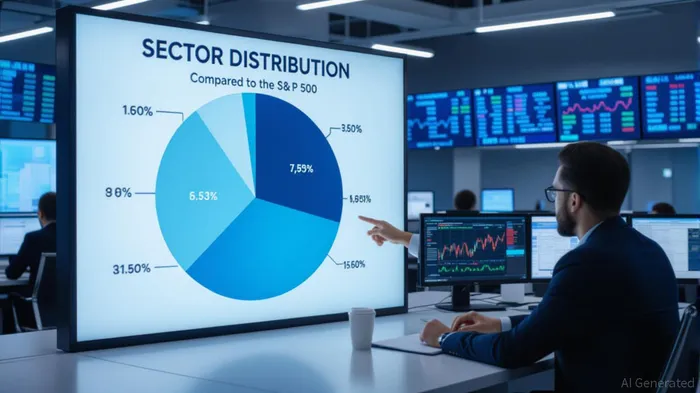
In conclusion, EQWL's outperformance in 2025, combined with its structural advantages, makes it a strong candidate for inclusion in a diversified portfolio. As the market evolves, its ability to adapt to shifting valuations and investor sentiment will likely cement its role as a cornerstone of a resilient investment strategy.





Comentarios
Aún no hay comentarios