
Equity Markets Under Pressure as Geopolitical Risks Collide with Fed Policy Uncertainty
The interplay of escalating Middle East tensions and Federal Reserve policy ambiguity has created a volatile backdrop for global equity markets. As Israel and Iran's conflict intensifies—with potential U.S. military involvement—the Fed's conflicting signals on rate cuts amplify uncertainty, reshaping sector dynamics and regional market divergences. Investors must navigate this landscape strategically, favoring defensive plays and Middle East-exposed equities while hedging against inflation and geopolitical tail risks.
Geopolitical Risks Escalate, Fueling Sector Disparity
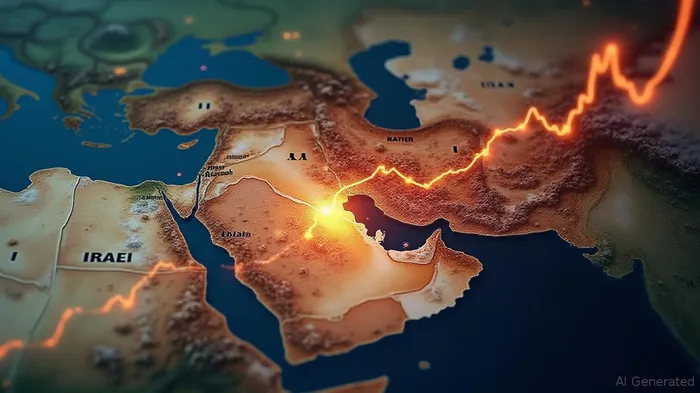
The Israel-Iran conflict has entered a dangerous phase, with U.S. involvement looming as President Trump contemplates direct strikes on Iranian nuclear facilities. This escalation has immediate implications for sectors tied to defense and energy:
- Defense Sector Surge:
Defense stocks have outperformed broader indices, driven by heightened military spending and geopolitical risk premiums. Companies with missile defense systems or drone technology, such as Lockheed Martin (LMT) or Raytheon (RTX), are beneficiaries of heightened U.S. and Israeli procurement.
Energy Sector Volatility:
Energy markets remain vulnerable to supply disruptions if the conflict spills into OPEC+ regions. Middle East-exposed equities, such as Exxon Mobil (XOM) or Chevron (CVX), could see price swings, but long-term investors might consider exposure to energy infrastructure or renewables as a hedge.
Tech and Real Estate Under Pressure:
- High-beta sectors like tech and real estate face dual pressures: elevated rates and geopolitical uncertainty. The Fed's reluctance to cut rates quickly undermines their valuation models, while supply chain risks from Middle East disruptions add to headwinds.
Fed Policy Uncertainty: A Delicate Balancing Act
The Federal Reserve's June 2025 decision to hold rates steady at 4.25%-4.5% while signaling two potential cuts by year-end has left markets conflicted. Internal dissent among Fed officials—seven members oppose any 2025 cuts—adds to the fog:
- Short-Term Volatility:
Fed uncertainty has amplified market swings, with equities oscillating between optimism about rate cuts and fears of stagflation. Investors are pricing in a September cut, but geopolitical risks could delay this timeline.
Long-Term Policy Risks:
- The Fed's focus on tariff-driven inflation and labor market data means rate cuts hinge on softening employment metrics. A prolonged standoff in the Middle East could delay this, keeping rates elevated longer than expected.
Regional Market Divergences: Israel's Resilience vs. U.S. Caution
While U.S. markets oscillate between Fed signals, Israel's equity markets have shown remarkable resilience, buoyed by its tech-driven economy and perceived ability to manage regional threats:
- Israeli Tech and Defense Outperformance:
Israeli tech firms, such as cybersecurity leaders like Check Point (CHKP), and defense contractors like Elbit Systems (ESLT), have outperformed global peers. The market's “war premium” reflects confidence in the government's handling of the conflict.
U.S. and European Caution:
- European markets, particularly in defense and energy, are balancing diplomatic efforts to de-escalate the conflict with exposure to Middle Eastern supply chains. The Fed's policy uncertainty has kept U.S. investors in cash, with equity allocations near multi-year lows.
Tactical Investment Strategy: Allocate Defensively, Hedge Aggressively
Investors should prioritize sectors insulated from Fed uncertainty and geopolitical shocks while hedging against inflation and tail risks:
- Defensive Sectors:
Healthcare and Consumer Staples:
- These sectors offer stable cash flows and inflation resilience. Companies with pricing power, like Johnson & Johnson (JNJ) or Procter & Gamble (PG), are defensive anchors.
Middle East Exposure:
Energy and Defense:
- Allocate to energy infrastructure or Middle East-linked ETFs (e.g., EIS) for upside if conflicts stabilize, but pair this with downside protection (e.g., options).
Hedging Tools:
- Inflation Protection:
- Treasury Inflation-Protected Securities (TIPS) and gold (GLD) provide ballast against rising prices.
- Geopolitical Tail Risk:
- Use inverse ETFs (e.g., ProShares Short S&P 500 (SH)) or volatility-linked instruments to offset sudden market drops.
Conclusion
Equity markets face a precarious balance between geopolitical fireworks and Fed policy limbo. Investors must stay nimble, focusing on sectors that benefit from conflict (defense, energy) and those insulated from inflation and rate volatility (healthcare, staples). Middle East-exposed equities offer asymmetric opportunities but demand hedging against escalation. As the Fed's two-week deadline on Iran looms, portfolios should prioritize capital preservation while positioning for a post-conflict recovery—or the next shock.
The path forward is fraught with uncertainty, but disciplined allocation to defensive sectors and strategic hedging can turn volatility into opportunity.







Comentarios
Aún no hay comentarios