
U.S. Equity Market Volatility in Early 2025: Navigating Greed, Fear, and the New Normal
The U.S. equity market in early 2025 was a rollercoaster ride for investors, driven by a toxic mix of policy uncertainty, aggressive tariff rhetoric, and geopolitical fireworks. As the new presidential administration took office, markets were left scrambling to recalibrate expectations around deregulation, tax cuts, and trade policies. The result? A VIX spike of 30.8 points in early April 2025, pushing volatility into the 99.9th percentile of historical norms since 1990, according to a St. Louis Fed report. For context, that's like watching a calm lake transform into a hurricane in a matter of weeks.
The Policy Whiplash: Tariffs, Trade Wars, and Recession Fears
The administration's tariff announcements in February and April 2025 were far more aggressive than Wall Street had anticipated. Suddenly, fears of a trade war-and the economic carnage it could unleash-sent shivers through the market. The S&P 500 tumbled 12.9% during this period, with investors fleeing equities for the safety of cash or bonds, as the St. Louis Fed reported. The message was clear: when policymakers play with fire, markets pay the price.
But here's the twist: by late April, volatility receded as investors concluded a full-blown trade war was unlikely. This "buy the dip" moment was short-lived, however, as geopolitical tensions flared between India and Pakistan, further stoking jitters, the St. Louis Fed noted. The takeaway? Macroeconomic triggers in 2025 were less about predictable cycles and more about unpredictable shocks.
The VIX and Treasury Yield: A Tale of Two Gauges
The VIX, often dubbed the "fear gauge," became a star player in this drama. By September 2025, the S&P 500 3-Month VIX (VXVCLS) had climbed to 19.38, reflecting a 5.61% daily surge and a 11.19% annual increase, according to YCharts data. Meanwhile, the 10-year U.S. Treasury yield hovered stubbornly around 4%, a level analysts argue is a floor due to fiscal sustainability concerns, according to an AXA IM analysis.
These two metrics tell a compelling story. When investors are spooked, they flock to Treasuries, driving yields lower. But in 2025, even in times of stress, yields didn't dip below 4%, suggesting that inflation expectations and long-term rate hikes were baked into the market's psyche, the AXA IM analysis argued. It's a paradox: fear is rising, but the cost of safety isn't falling.
The Road Ahead: Volatility as the New Baseline
Looking forward, the volatility landscape remains fraught. J.P. Morgan and Morgan Stanley project a VIX range of 17–18, assuming strong earnings and a steady policy path, per a VIX price forecast. But let's not kid ourselves-this is a "stable" floor in a world where fiscal policy uncertainty, higher interest rates, and geopolitical risks loom large.
Institutional positioning in VIX derivatives and seasonal patterns, like the infamous "September effect," also add layers of complexity, the forecast notes. For retail investors, the lesson is simple: volatility isn't a bug-it's a feature of the 2025 market.
Actionable Advice for Investors
- Diversify Beyond Equities: With the VIX prone to spikes, consider allocating to volatility-linked ETFs or Treasury bonds to hedge against sudden downturns.
- Stay Nimble: The "buy the dip" playbook worked in late April 2025, but only for those who could stomach the initial plunge. Position yourself to act quickly when fear-driven selloffs occur.
- Watch the Fed's Moves: Higher long-term rates mean the Fed's policy path will continue to influence both the VIX and Treasury yields. Don't ignore this interplay.
In conclusion, 2025's market volatility is a masterclass in investor psychology. Greed and fear aren't just emotions-they're forces that shape asset prices. As we head into the final quarter, the key is to stay informed, stay flexible, and remember: in a world of unpredictable shocks, preparation is the only sure bet.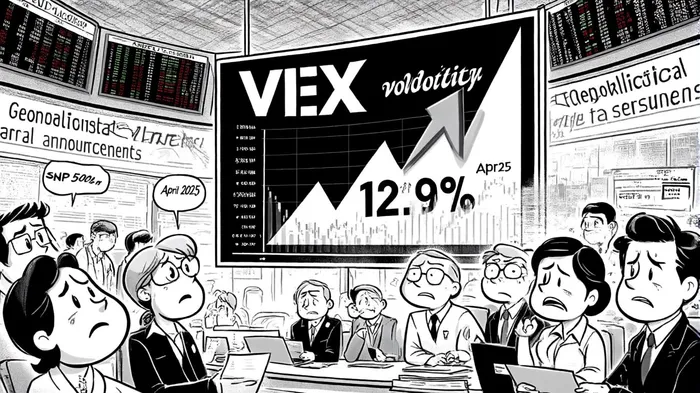







Comentarios
Aún no hay comentarios