
U.S. Equity Market Momentum and Fed Policy Implications: Assessing the S&P 500 Rally's Justification for Further Rate Cuts and Long-Term Exposure
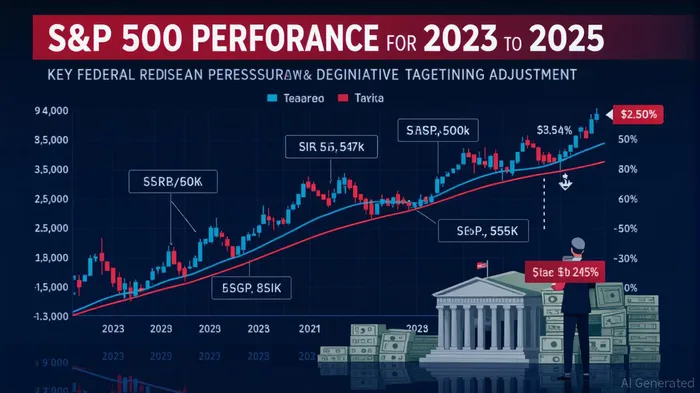
The U.S. equity market has experienced a notable rally in recent months, with the S&P 500 reflecting renewed investor optimism. This momentum coincides with the Federal Reserve's September 2025 decision to cut the federal funds rate by 25 basis points, marking a pivotal shift in monetary policy. As markets grapple with the implications of this move, investors must critically assess whether the current rally justifies positioning for further rate cuts and long-term equity exposure.
Fed Policy: A Delicate Balancing Act
The Federal Reserve's September 2025 policy statement underscored a nuanced approach to its dual mandate of maximum employment and price stability. While inflation has shown progress toward the 2% target, it remains “somewhat elevated,” and labor market conditions, though easing, still reflect a low unemployment rate[2]. The 25-basis-point rate cut signals a willingness to support economic activity without fully abandoning inflationary concerns. However, the Fed's decision to slow quantitative tightening (QT)—reducing Treasury securities runoff from $25 billion to $5 billion monthly—reveals heightened sensitivity to liquidity risks and market functioning[3]. This adjustment, coupled with the potential dissent from Governor Stephen Miran (who advocated for a 50-basis-point cut), suggests internal divisions and a policy environment poised for further recalibration[1].
S&P 500 Rally: Momentum and Underlying Drivers
While specific metrics on the S&P 500's recent rally remain elusive, the interplay between Fed policy and market dynamics is instructive. Historically, rate cuts lower borrowing costs and boost corporate earnings, often fueling equity gains. The Fed's reduced QT pace has likely enhanced liquidity, indirectly supporting asset prices. However, the rally's sustainability hinges on whether economic fundamentals align with accommodative policy. For instance, if inflationary pressures persist or labor market weakness intensifies, the Fed may face constraints in delivering additional cuts. Conversely, a continued easing of inflation and stable employment could justify further rate reductions, amplifying equity market tailwinds.
Positioning for the Future: Strategic Considerations
Investors seeking to capitalize on the current rally must weigh several factors:
1. Policy Path Dependency: The Fed's Summary of Economic Projections (SEP) hints at three potential 25-basis-point rate cuts in 2025[1]. If realized, this trajectory would lower long-term interest rates, potentially extending equity valuations. However, deviations from this path—such as a pause in rate cuts due to inflationary surprises—could disrupt market momentum.
2. Sectoral Resilience: While sector-specific data is unavailable, sectors sensitive to interest rates (e.g., technology, real estate) often benefit from rate cuts. A diversified equity portfolio may offer resilience against policy-driven volatility.
3. Long-Term Exposure Risks: Prolonged accommodative policy risks asset overvaluation and inflation reacceleration. Investors should balance equity exposure with defensive assets and monitor signals of policy tightening.
Conclusion: Navigating Uncertainty with Prudence
The S&P 500's rally, while aligned with the Fed's initial rate cut and reduced QT, does not unequivocally justify aggressive positioning for further rate cuts or long-term equity exposure. The Fed's cautious approach—balancing inflationary risks against growth concerns—suggests a policy path that is neither fully accommodative nor restrictive. Investors should adopt a measured strategy, leveraging the current rally while remaining vigilant to evolving macroeconomic signals. As the Fed's dual mandate continues to shape market conditions, adaptability will be key to navigating the intersection of policy and equity performance.







Comentarios
Aún no hay comentarios