
U.S. Equity Index Resilience Amid Geopolitical Trade Concerns: Strategic Positioning in a Post-Bessent Era
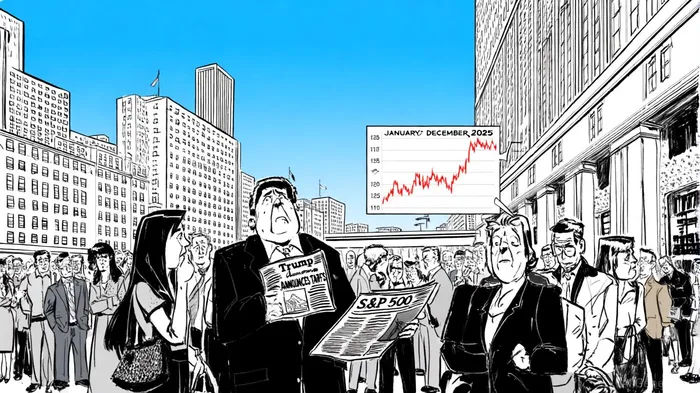
The U.S. equity market's resilience in 2025, despite the seismic shifts in trade policy under Treasury Secretary Scott Bessent, underscores the interplay between geopolitical strategy and financial market dynamics. As the Trump administration's aggressive tariff regime-culminating in the April 2 tariff announcements-triggered a 9.5% correction in the S&P 500 within two trading days, according to Indexology's April report, investors and analysts grappled with the implications of a post-Bessent geopolitical climate. Yet, by September 2025, the index had not only recovered but outperformed expectations, driven by corporate earnings strength and strategic trade negotiations, as noted in MSI's Tectonic Shift. This analysis explores how U.S. equities navigated these challenges and identifies strategic positioning opportunities for investors.
Volatility and the Path to Recovery
The initial shock of the April 2025 tariffs-ranging from 10% minimum import duties to 145% on Chinese goods-sparked a VIX spike to pandemic-era levels, as documented by the FRED blog. However, the 90-day pause on tariffs announced shortly thereafter catalyzed a 9.5% rebound in the S&P 500 within a week, according to the USICG market update. This volatility highlighted the market's sensitivity to policy uncertainty but also its capacity to recalibrate when clarity emerges. Treasury Secretary Bessent's role as a stabilizing force in trade negotiations, particularly with China, became critical. By September, the administration's emphasis on "fair trade" and reported progress in de-escalating tensions-including rare earth magnet shipments to the U.S.-fueled renewed optimism, as discussed in the USICG market update.
Sectoral Resilience: Defensive Plays Outperform
The S&P 500's sectoral performance in Q1-Q3 2025 revealed a stark divergence. Defensive sectors like energy, healthcare, and consumer staples outperformed, with energy leading at 9.3% returns in Q1 due to rising natural gas prices, according to a Visual Capitalist chart. Conversely, growth-oriented sectors such as information technology (-12.8%) and consumer discretionary (-14.0%) lagged, reflecting investor flight to stability amid trade uncertainty, as reported by Visual Capitalist. The S&P 500 Low Volatility Index, composed of the 100 least volatile companies, demonstrated relative stability, outperforming the broader index by 14.0% from February to April 2025, according to Indexology's April report. This "low volatility anomaly" reinforced the importance of quality and consistency in uncertain environments.
Investor Sentiment and Strategic Positioning
Investor sentiment mirrored the market's volatility. In April 2025, only 19% of AAII survey respondents expected stocks to rise over the next six months, as noted in the USICG market update. However, by October, bullish sentiment had rebounded to 45.87%, driven by Bessent's trade diplomacy and the administration's 3-3-3 Plan (3% GDP growth, 3% inflation, 3% deficit reduction), as discussed in MSI's Tectonic Shift. Strategic positioning for investors now hinges on balancing exposure to sectors insulated from trade frictions-such as utilities and healthcare-with opportunities in nearshoring-driven industries like industrial automation and critical mineral production, points highlighted in MSI's Tectonic Shift.
Geopolitical Implications and Long-Term Outlook
Bessent's actions, including the $20 billion Argentina bailout and renegotiation of trade agreements with 17 partners, signal a broader strategy to counter China's economic influence while stabilizing key alliances, according to the USICG market update. The administration's focus on de-risking supply chains-evidenced by $7 trillion in foreign investment commitments from Japan, the UAE, and Saudi Arabia-further underscores the shift toward strategic economic realignment, as described in MSI's Tectonic Shift. For equities, this means favoring companies with robust supply chain management and pricing power, particularly in energy, industrials, and technology.
Conclusion
The post-Bessent geopolitical climate demands a nuanced approach to equity investing. While trade policy uncertainty remains a headwind, the S&P 500's resilience-driven by sectoral diversification, policy clarity, and strategic nearshoring-highlights opportunities for long-term growth. Investors should prioritize defensive sectors, monitor trade negotiations, and capitalize on the administration's push for economic rebalancing. As Bessent's tenure continues to shape the global economic landscape, adaptability and strategic foresight will be paramount.







Comentarios
Aún no hay comentarios