
U.S. Equities on a Tightrope: The Illusion of Strength Amid Growing Risks
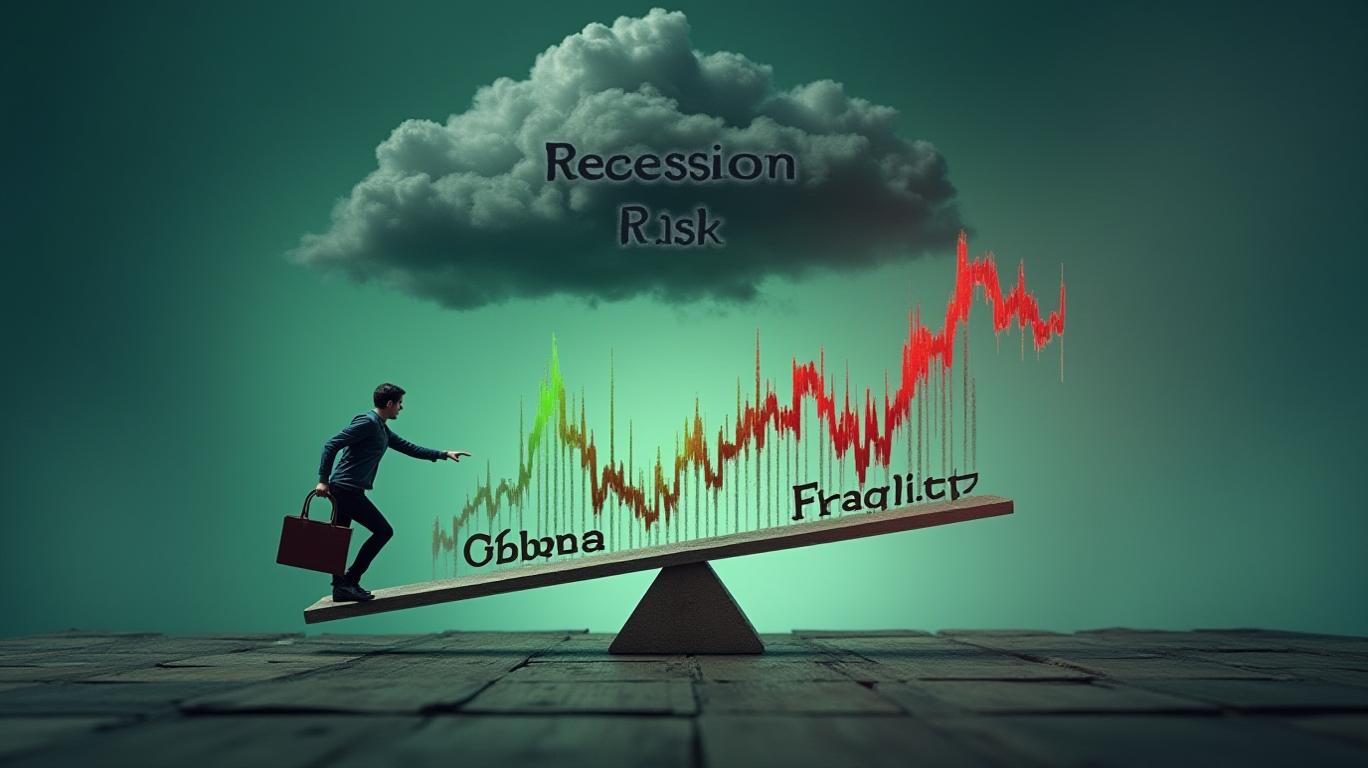
Despite the S&P 500’s recent 5.7% weekly gain, Goldman SachsGIND-- warns that the U.S. stock market is teetering on the edge of a reckoning. The firm’s latest analysis paints a grim picture: high valuations, policy uncertainty, and geopolitical tensions have left equities vulnerable to a correction—or worse. With the probability of a U.S. recession now at 45% (up from 35%), and global peers like J.P. Morgan flagging a 60% risk of global downturn, the market’s current euphoria appears increasingly detached from underlying fragility.
The "Priced for Perfection" Paradox
The S&P 500’s two-year surge—its best since the 1920s—has been a double-edged sword. While earnings growth and multiple expansion (valuations) have propelled returns, the market now demands flawless execution from companies and policymakers. Goldman’s Peter Oppenheimer notes equities are “priced for perfection,” with the S&P 500’s P/E ratio hitting 21.7x, the 93rd percentile historically. This leaves little room for error: any disappointment in earnings, growth, or Fed policy could trigger a sharp sell-off.
The "Magnificent 7" Trap
Concentration risk is the silent killer. The tech giants—Apple, Microsoft, Amazon, and their peers—now account for 25% of the S&P 500, having surged 47% in the past year. Yet their dominance masks a critical flaw: their massive capital expenditures (CapEx) are eroding free cash flow, slowing profit growth. Meanwhile, the median S&P 500 company managed just 10% gains, highlighting a widening chasm between the haves and have-nots.

Rate Risks and Policy Missteps
Interest rates are the next battleground. The U.S. 10-year Treasury yield has spiked to 4.5%, up 100 basis points since September, squeezing corporate margins and increasing debt burdens. Goldman highlights that market expectations for Fed rate cuts have collapsed—from 125 basis points in September to under 40 basis points today. With little room for easing, the Fed’s next moves will be scrutinized for clues on whether it prioritizes growth or inflation.
Trade policy adds fuel to the fire. Trump’s tariffs on Chinese imports and autos threaten to disrupt global supply chains, disproportionately hurting the “Magnificent 7,” which derive 47% of sales internationally. Domestic-focused firms (the S&P 493) might fare better, but the broader market could still face a liquidity crunch if trade wars escalate.
The Path Forward: Diversify or Diverge
Goldman’s prescription is clear: diversify geographically, sectorially, and strategically. Investors should consider cheaper non-U.S. markets (aided by a strong dollar), “quality compounders” in sectors like healthcare and industrials, and active stock-picking as correlations between stocks weaken.
The firm forecasts the S&P 500 to reach 6,500 by year-end—a 10% gain—assuming 11% earnings growth and 2.5% GDP expansion. However, this hinges on policy balance: avoiding broad tariffs, managing rate expectations, and navigating AI’s shift to monetization (Phase 3 applications favoring software/services firms).
The Imminent Crossroads
The warning signs are flashing red. Goldman warns of a potential 30% correction if overheating markets, trade wars, or Fed missteps collide. While the bull run continues, the risks of a “compression” (multiple contraction) loom large. Investors must ask: Is this a buying opportunity, or the calm before the storm?
The answer lies in the Fed’s next move and Washington’s policy choices. With the market’s fate hanging by a thread, diversification and hedging—not complacency—are the only safe bets.

Conclusion:
The U.S. equity market’s fragility is undeniable. Record valuations, concentration risks, and macroeconomic headwinds create a precarious setup. While Goldman’s 6,500 target suggests hope, the path to that number is fraught with pitfalls. Investors ignoring the 45% recession risk or the tech sector’s CapEx traps do so at their peril. The playbook now favors caution: hedge with options, diversify geographically, and favor sectors with sustainable growth. The market’s “priced for perfection” mantra isn’t just a metaphor—it’s a countdown to a reckoning.





Comentarios
Aún no hay comentarios