
Equinor's 250 New Wells in Norway and Its Strategic Implications for Energy Transition Investors
Equinor's Dual Strategy: Fossil Fuel Expansion and Renewable Ambitions
Equinor's 250-well initiative, aimed at sustaining output levels until 2035, is framed as a response to prolonged global demand for hydrocarbons. According to a Reuters report, the company cites the International Energy Agency's (IEA) projection that oil and gas demand could grow until 2050 as a key rationale. CEO Anders Opedal emphasized the need to counter the natural decline of Norway's aging continental shelf, positioning the project as a "major industrial effort" to secure energy supply.
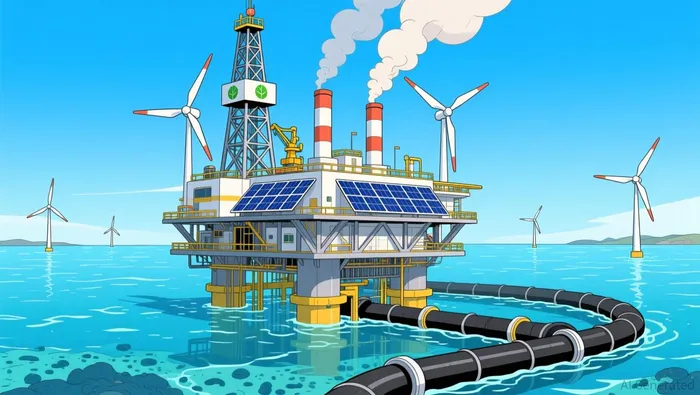
However, this expansion contrasts with Equinor's net-zero by 2050 pledge. The company has outlined ambitious targets, including a 50% net reduction in operated emissions by 2030, 10–12 GW of renewable energy capacity, and 30–50 million tonnes of annual CO2 transport and storage capacity. Projects like Johan Sverdrup Phase 3 and Fram Sør incorporate carbon-reduction technologies, while the Bass Strait offshore wind farm in Australia underscores its renewable push. This duality reflects a broader industry trend: leveraging traditional assets for short-term stability while investing in long-term decarbonization.
Investor Skepticism and the Net-Zero Alignment Challenge
Despite these efforts, investor scrutiny remains intense. A critical issue is Equinor's continued planning for oil and gas production growth until 2027, which clashes with its net-zero timeline. UK pension funds, including Brunel Pension Partnership and Railpen, have raised concerns with Norway's financial regulator, alleging that Equinor's climate disclosures may mislead stakeholders. They argue the company lacks clear Scope 3 emission reduction targets and risks prioritizing short-term profits over long-term sustainability.
This skepticism is compounded by the slow progress of low-carbon technologies. EquinorEQNR-- itself has tempered earlier optimism about carbon capture and storage, citing high costs and adoption delays. For investors, this raises questions about the feasibility of reconciling fossil fuel expansion with net-zero goals.
Energy Security vs. Climate Accountability: A Calculated Risk?
Equinor's strategy highlights a broader dilemma for energy transition investors. On one hand, its new wells could bolster energy security in a world still reliant on hydrocarbons. Norway's geopolitical stability and mature infrastructure make it a relatively low-risk asset, particularly as Europe seeks to reduce dependence on volatile suppliers. On the other hand, the 250-well project risks undermining Equinor's climate credibility at a time when regulators and shareholders increasingly demand absolute emission reductions.
The company's recent 10% stake in Ørsted, a Danish renewable leader, signals a strategic pivot. Yet, as noted by Natasha Landell-Mills of Sarasin & Partners, such moves must be accompanied by "reliable climate reporting" to justify long-term investment. For energy transition investors, the challenge lies in assessing whether Equinor's dual focus is a genuine bridge to decarbonization or a temporary compromise.
Implications for Energy Transition Investors
Equinor's case underscores the complexity of investing in the energy transition. While its renewable ambitions align with global climate goals, its fossil fuel expansion exposes it to regulatory, reputational, and market risks. Investors must weigh these factors against the company's operational efficiency and Norway's favorable regulatory environment.
For those prioritizing energy security, Equinor's wells offer a hedge against near-term supply disruptions. However, for investors focused on net-zero alignment, the company's progress will hinge on its ability to scale CCS, accelerate renewable growth, and demonstrate transparency in emission accounting. The coming years will test whether Equinor can credibly balance these priorities-or if its strategy will be seen as a step backward in the race to decarbonize.





Comentarios
Aún no hay comentarios