
EQT's Strategic Exit from Kodiak Gas: Implications for Private Equity Divestitures in Energy Infrastructure
In the evolving landscape of private equity energy infrastructure, EQTEQT-- Corporation's 2023 divestiture of its stake in Kodiak GasKGS-- Services has emerged as a pivotal case study. This exit, formalized through a Registration Rights Agreement on July 3, 2023, underscores a broader strategic shift in how private equity firms are repositioning portfolios amid macroeconomic and technological disruptions. The transaction, which saw Kodiak Gas Services transition to a publicly traded entity on the NYSE under the ticker KGS, reflects a calculated move to unlock liquidity while aligning with long-term market dynamics.
Structural Rationale Behind EQT's Exit
EQT's decision to divest its stake in Kodiak Gas aligns with its 2024 strategic pivot toward core infrastructure investments, as outlined in its year-end report. By exiting non-core assets, EQT has reallocated capital to higher-growth opportunities, a trend mirrored across the private equity sector. For instance, the firm's broader restructuring efforts—including a $12.3 billion sale and a pending $34.5 billion merger—highlight a pattern of portfolio optimization driven by evolving market demands.
Kodiak Gas itself exemplifies this trend. Post-divestiture, the company has pursued aggressive growth through strategic acquisitions, such as its $854 million all-equity purchase of CSI Compressco LP in December 2023. This move, which expanded its footprint in the large-horsepower compression market, was fueled by robust demand from the Permian Basin and surging LNG export needs. Such actions illustrate how private equity-backed firms leverage post-exit liquidity to scale operations in niche, high-margin sectors.
Market Signals in Energy Infrastructure Secondary Offerings
The energy infrastructure sector is witnessing a paradigm shift, driven by AI-driven demand for power and digital infrastructure. U.S. power demand is projected to grow five- to sevenfold over the next three to five years, creating a critical bottleneck in energy generation and transmission. This has spurred private equity to prioritize investments in power generation, battery storage, and data center infrastructure, with energy transition themes gaining prominence.
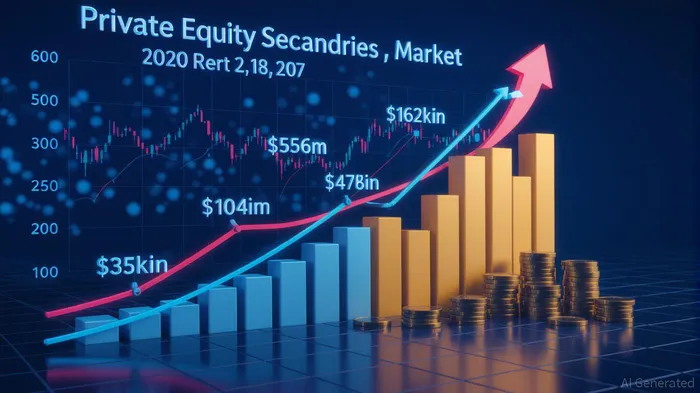
Secondary offerings have become a cornerstone of this strategy. The secondaries market, valued at $162 billion in 2024, has seen a surge in GP-led continuation funds and direct secondaries, enabling firms to extend hold periods and optimize capital deployment. EQT's exit from Kodiak Gas, while not disclosing specific valuation terms, fits this model by providing liquidity to stakeholders while allowing the company to capitalize on its public market listing.
Implications for Private Equity Divestitures
EQT's exit signals a broader trend: private equity firms are increasingly using secondary offerings to navigate regulatory uncertainty and shifting interest rates. For example, global M&A activity in energy infrastructure declined by 9% in the first half of 2025 due to tariff volatility and regulatory hurdles. However, firms like EQT are countering this by focusing on strategic divestitures that align with long-term energy transition goals.
The structural implications are profound. By exiting Kodiak Gas, EQT has demonstrated how private equity can balance short-term liquidity needs with long-term value creation. The firm's 2025 guidance, bolstered by Kodiak's strong fleet utilization and Permian Basin demand, highlights the residual benefits of such exits. Meanwhile, the rise of AI in private equity operations—enhancing due diligence and portfolio monitoring—has further streamlined the divestiture process.
Conclusion
EQT's strategic exit from Kodiak Gas encapsulates the interplay of macroeconomic forces, technological disruption, and private equity innovation. As energy infrastructure becomes a linchpin for AI-driven growth, secondary offerings will remain critical for firms seeking to reallocate capital and navigate regulatory headwinds. For investors, the transaction underscores the importance of aligning with sectors poised for structural demand—such as large-horsepower compression and energy transition—while leveraging liquidity tools to optimize returns.
Source:
[1] Registration Rights Agreement, EQT CorporationEQT-- [https://www.sec.gov/Archives/edgar/data/1767042/000119312523181442/d529642dex101.htm]
[2] EQT AB Year-End Report 2024 [https://www.scribd.com/document/885309537/EQT-AB-Year-End-Report-2024]
[3] Kodiak Gas Services, Inc. - Market Insights Report [https://www.marketreportanalytics.com/companies/KGS]
[4] EvercoreEVR-- Transactions [https://www.evercore.com/our-transactions/]
[5] Midstream Calendar: Kodiak Gas Acquires CSI Compressco [https://midstreamcalendar.com/2023/12/19/breaking-kodiak-gas-services-inc-to-acquire-csi-compressco-lp-in-an-854-million-all-equity-transaction/]
[6] J.P. Morgan Alternative Investments in 2025 [https://privatebank.jpmorganJPM--.com/nam/en/insights/markets-and-investing/ideas-and-insights/alternative-investments-in-2025-our-top-five-themes-to-watch]
[7] Paperfree Private Equity Mid-Year Report 2025 [https://paperfree.com/en/magazine/mid-year-report-private-equity-2025]
[8] PwC Global M&A Trends 2025 [https://www.pwc.com/gx/en/services/deals/trends.html]





Comentarios
Aún no hay comentarios