
EQT's Strategic Divestiture of Nordic Broadband and Data Centre Assets: Unlocking Undervalued Opportunities in the Nordic Digital Transformation
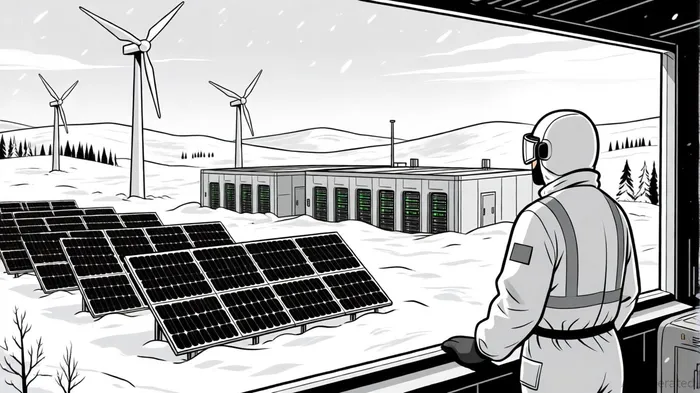
The Nordic region has long been a beacon of innovation, sustainability, and digital resilience. Now, with EQT's strategic divestiture of its Nordic broadband and data centre assets, investors are being handed a golden opportunity to tap into a market poised for explosive growth. Let's break down why this move is a masterstroke—and how it opens the door to undervalued infrastructure opportunities.
The EQTEQT-- Playbook: Capital Recycling in a Shifting Landscape
EQT's decision to sell its Nordic broadband and data centre business—known as GlobalConnect—is no accident. , leveraging a hybrid liquidity model that blends public sell-downs, full exits, and minority stake sales[1]. This approach allows EQT to accelerate returns for limited partners while reallocating capital to higher-conviction themes like healthcare, software, and [1].
The Nordic broadband and data centre assets, while profitable, now sit in a sector where EQT's focus has shifted. The firm's Q1 2025 announcement emphasized a thematic portfolio strategy centered on “essential infrastructure” and [4]. By exiting this segment, EQT is not only optimizing its capital but also signaling to the market that the Nordic digital infrastructure is entering a phase of renewed investor interest.
Why the Nordics? A Gold Mine for Digital Infrastructure
The Nordic data centre market is a sleeping giant. , . This growth is fueled by three pillars:
1. : The Nordics' cold climate and access to make them ideal for energy-efficient data centres. Sweden, for instance, boasts 100% renewable-powered facilities like EcoDataCenter, which aims to be 99% fossil-free by 2028[3].
2. : With Microsoft's $3.2 billion investment in Sweden's cloud and and Finland's strategic position between Europe and Asia, the region is becoming a latency-sensitive hub[3].
3. Government Support: Nordic governments are incentivizing and digital innovation. Sweden's fast-track permitting for data centres and Norway's clean energy grid are prime examples[1].
Undervalued Opportunities Post-Divestiture
EQT's exit creates a vacuum that savvy investors can fill. Here's where the puck is going:
1. Underpenetrated Rural Markets
While like Stockholm and Helsinki are saturated, rural areas in Sweden, Finland, and Norway remain underpenetrated. These regions offer low-cost land, abundant , and minimal regulatory hurdles. For example, , .
2.
The Nordic Forward program is pushing for and tech-driven ecosystems by 2030[2]. This includes deep-tech solutions like and IoT-driven smart mobility. Investors who back these projects can align with global while capturing first-mover advantages.
3. Emerging Technologies: AI and Quantum Computing
The Nordics are quietly becoming a testing ground for . Iceland's 100% , for instance, is attracting energy-intensive . Meanwhile, Finland's position as a latency hub makes it ideal for , .
Risks and Rewards: Navigating the Nordic Landscape
Of course, the Nordics aren't without challenges. Geographic remoteness, workforce shortages in rural areas, and infrastructure complexity in Arctic zones are real hurdles[2]. But these are surmountable—and the rewards far outweigh the risks.
Consider Mubadala's reported interest in acquiring a minority stake in GlobalConnect, . This signals confidence from a global player in the region's long-term potential. For private equity firms, the Nordic market offers a unique blend of , , and strategic positioning.
The Bottom Line: Time to Act
EQT's divestiture isn't just a corporate move—it's a green light for investors. The Nordic digital infrastructure is at an inflection point, with waiting to be unlocked. From rural data centres to , the opportunities are vast.
As the market shifts, one thing is clear: The Nordics are not just the future of digital infrastructure—they're the present. And the clock is ticking.







Comentarios
Aún no hay comentarios