
Epiroc's Strategic Expansion and Its Implications for Industrial Equipment Investors
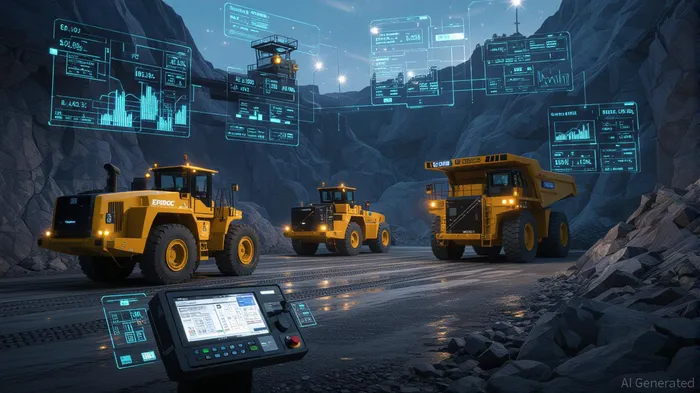
In the evolving landscape of industrial equipment, Epiroc AB (EPOKY) has emerged as a pivotal player, leveraging strategic expansion to address post-pandemic challenges while positioning itself for long-term growth. For investors, understanding Epiroc's focus on operational efficiency and supply chain resilience offers critical insights into its competitive edge and future potential.
Strategic Initiatives: Automation, Digitalization, and Electrification
Epiroc's 2024–2025 strategic roadmap underscores its commitment to innovation. The launch of Groundbreaking Intelligence, a digital mine ecosystem unveiled at MINExpo® 2024, exemplifies this approach. This platform enables scalable solutions for data-driven planning, automation, and connectivity, aligning with the mining sector's demand for productivity and sustainability[1]. By 2024, Epiroc reported a 21% expansion in its automated fleet of driverless machines, now exceeding 3,450 units[4]. Such advancements not only enhance operational efficiency but also reduce labor and energy costs, a critical factor in an industry grappling with rising inflation and resource constraints.
The company's R&D investments have further solidified its leadership. In 2024, Epiroc allocated record-high resources to automation, digitalization, and electrification, including partnerships like its collaboration with SSAB to integrate fossil-free steel into equipment[1]. These initiatives align with global decarbonization goals, making Epiroc an attractive option for investors prioritizing ESG (Environmental, Social, and Governance) criteria.
Supply Chain Resilience in a Post-Pandemic Era
Supply chain disruptions, exacerbated by geopolitical tensions and natural disasters, have forced industrial manufacturers to rethink logistics. Epiroc's strategy includes nearshoring, reshoring, and strengthening partnerships with free-trade partners to mitigate risks[1]. For instance, its global network of workshops and strategically located distribution centers ensures rapid service delivery, a key differentiator in markets where downtime is costly[3].
The company's 2024 acquisitions—such as Stanley Infrastructure, ASI Mining, and Radlink—have expanded its digital and automation portfolio while diversifying its supplier base[3]. These moves reflect a systems-thinking approach to supply chain management, emphasizing flexibility and robustness. As noted in a 2024 study, supply chain flexibility (SCFL) is now a cornerstone of resilience, enabling firms to adapt to extended lead times and volatile shipping costs[3]. Epiroc's integration of IoT and big data analytics further enhances its ability to monitor and optimize supply chain performance[3].
Financial Performance and Market Confidence
Epiroc's financials underscore its strategic success. In 2024, the company achieved record revenues of SEK 63.6 billion (approximately $6.3 billion), driven by strong mining sector demand and strategic acquisitions[2]. Despite weaker construction segment performance, Epiroc maintained an adjusted operating margin of 19.8%, demonstrating disciplined cost management[2]. Analysts have taken note: Epiroc exceeded Q4 2024 operating profit expectations, reporting SEK 3.43 billion—surpassing the SEK 3.34 billion forecast[3].
Investor sentiment remains cautiously optimistic. As of Q3 2025, Epiroc secured a SEK 2.2 billion contract for autonomous and electric mining equipment in Chile[3], signaling robust demand. Wall Street analysts have assigned a “Moderate Buy” consensus rating, with a mean price target of SEK 210.32 (compared to the current trading price of ~SEK 205.90)[2]. These metrics suggest confidence in Epiroc's ability to sustain growth amid macroeconomic headwinds.
Implications for Investors
For industrial equipment investors, Epiroc's strategic expansion offers several takeaways:
1. Long-Term Operational Efficiency: Automation and digitalization reduce costs and improve margins, a critical advantage in capital-intensive industries.
2. Supply Chain Resilience: Epiroc's diversified supplier network and technology-driven logistics mitigate risks, ensuring consistent service delivery.
3. Sustainability Alignment: With 2030 sustainability goals on track—including a record-low injury frequency rate—Epiroc aligns with global regulatory and consumer trends[2].
However, challenges persist. The construction segment's underperformance highlights sector-specific vulnerabilities, and rising shipping costs could pressure margins unless offset by pricing power. Investors should monitor Epiroc's Q2 2025 results (announced July 18) for further clarity on its trajectory[3].
Conclusion
Epiroc's strategic focus on automation, electrification, and supply chain resilience positions it as a leader in the industrial equipment sector. By addressing post-pandemic challenges through innovation and operational excellence, the company not only strengthens its market position but also creates long-term value for shareholders. For investors seeking exposure to a resilient, forward-thinking industrial player, Epiroc's trajectory offers compelling potential—provided they remain attuned to sector-specific risks and macroeconomic shifts.







Comentarios
Aún no hay comentarios