
Epiroc AB's Strategic Expansion in Sweden and Its Implications for Industrial Machinery Stocks
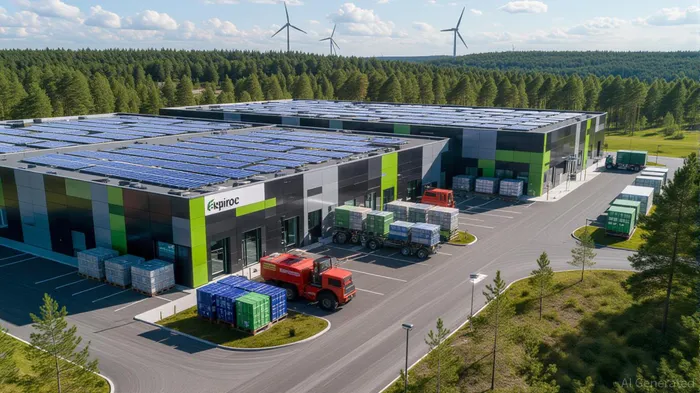
Epiroc AB's recent strategic expansion in Sweden, particularly the construction of a new global distribution center in Örebro, underscores its ambition to redefine supply chain efficiency in the industrial machinery sector. This 29,000 m² facility, equipped with solar panels and advanced automation, is designed to consolidate fragmented distribution operations into a centralized hub, promising improved logistics, reduced environmental impact, and enhanced customer service [1]. Scheduled to open in late 2027, the center will serve as a critical node for distributing spare parts for Epiroc's drill rigs, loaders, and mine trucks [2]. Such investments are not merely operational upgrades but strategic moves to solidify Epiroc's position in a competitive market while aligning with global sustainability trends.
Supply Chain Optimization: A Catalyst for Margin Expansion
Epiroc's supply chain has long been a cornerstone of its competitive advantage. The company's 2023 financial results highlight this strength, with revenues surging 21% year-over-year to SEK 60.3 billion and an operating profit of SEK 13.2 billion [3]. By 2024, Epiroc had achieved a record operating cash flow of SEK 4 billion in Q4, driven by robust demand for automation and electrification solutions in mining [4]. These figures reflect not only market demand but also operational efficiency, as evidenced by a 26.15% EBITDA margin and a 19.47% operating margin in recent periods [5].
The Örebro distribution center is poised to amplify these metrics. By centralizing distribution, Epiroc aims to reduce logistics costs through automation and smarter inventory management. For context, the company's Q1 2025 interim report noted a 19.9% adjusted operating margin, slightly down from 20.4% in the prior year, but still robust given challenges like foreign exchange volatility and weaker construction sector demand [6]. The CEO, Helena Hedblom, emphasized ongoing efficiency measures, including site closures and workforce reductions, to offset these pressures [6]. The Örebro facility, with its focus on automation and sustainability, could further insulate margins by minimizing waste and optimizing delivery timelines.
Shareholder Value Creation: Balancing Growth and Efficiency
Epiroc's strategic investments are not without risks. Q2 2025 results, for instance, showed an 8% revenue decline to SEK 15.1 billion, largely due to a 9% negative currency impact [7]. However, organic growth of 1%—driven by mining sector demand and service operations—demonstrates resilience. The company's largest-ever contract, a SEK 2.2 billion deal with Fortescue for autonomous and electric mining equipment, highlights its leadership in electrification [7]. Such contracts not only diversify revenue streams but also lock in long-term value.
From a shareholder value perspective, Epiroc's return on equity (ROE) of 23.47% and a 20.6% return on capital employed in 2024 [5] indicate strong capital allocation discipline. The acquisition of STANLEY Infrastructure, which added SEK 4.7 billion in annual revenue, further broadens Epiroc's offerings in hydraulic and infrastructure attachments [3]. These moves, combined with supply chain optimizations, create a compounding effect: lower costs, higher margins, and reinvestment in high-growth areas.
However, historical data on earnings-related trading strategies suggests caution. A backtest of a simple buy-and-hold approach around Epiroc's earnings releases from 2022 to 2025 showed a total return of -97.9%, with an annualized return of -65.9% and a maximum drawdown of 98.2%[9]. This stark underperformance highlights the risks of relying on short-term timing around earnings announcements, even for fundamentally strong companies. Investors may need to focus on long-term operational execution rather than market timing to capture value.
Industrial Machinery Sector Implications
Epiroc's expansion in Sweden has broader implications for industrial machinery stocks. As mining and infrastructure sectors increasingly prioritize automation and decarbonization, companies that integrate sustainability into their supply chains—like Epiroc—will likely outperform peers. For example, Epiroc's collaboration with ABB on underground trolley systems for mine haulage decarbonization [8] positions it at the forefront of a transition toward greener operations. This aligns with global regulatory trends and investor preferences for ESG-aligned portfolios.
However, the lack of specific ROI projections for the Örebro facility remains a caveat. While Epiroc's historical margins suggest that such optimizations typically yield cost savings and margin expansion, the exact financial impact of the new center will depend on execution risks and market dynamics. Analysts will need to monitor inventory turnover ratios, logistics cost per unit, and customer satisfaction metrics post-2027 to fully assess its value.
Conclusion: A Model for Sustainable Industrial Growth
Epiroc AB's strategic expansion in Sweden exemplifies how supply chain optimization can drive both operational efficiency and shareholder value. By investing in cutting-edge infrastructure, automation, and sustainability, the company is not only addressing immediate market demands but also future-proofing its business against cyclical downturns. For investors, Epiroc's blend of high-margin aftermarket services, innovation in electrification, and disciplined cost management makes it a compelling case study in industrial machinery resilience. As the Örebro distribution center nears completion, its success could set a new benchmark for the sector—and reinforce Epiroc's status as a leader in sustainable productivity solutions.







Comentarios
Aún no hay comentarios