
Eos Energy Enterprises: A Deep Dive into Intrinsic Value and the Case for a Cautious Buy
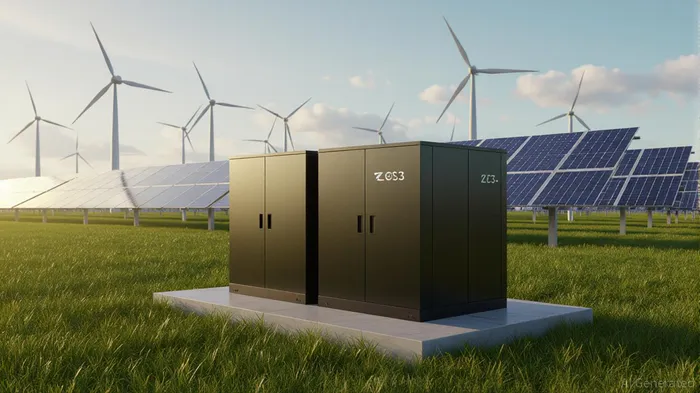
When it comes to energy storage, the stakes are higher than ever. With the global push for renewable energy and the insatiable demand for grid stability, companies like (NASDAQ: EOSE) are sitting at the intersection of innovation and necessity. But is EOSEEOSE-- a buy? Let's break it down using the tools every investor should have in their arsenal: (DCF) analysis and a close look at analyst price targets.
The DCF Model: A 9.4% Discount to Intrinsic Value
Eos Energy's intrinsic value, as calculated by a 2-stage DCF model, sits at $6.55 per share, while the stock currently trades at $6.02, a 8.1% discount. This model assumes a 9.4% cost of equity (levered beta of 1.367) and a terminal growth rate of 3.1%, reflecting long-term U.S. GDP growth. The present value of free cash flows over 10 years is estimated at $529 million, with a terminal value of $1.8 billion.
But here's the kicker: Eos isn't just a numbers game. The company's recent $250 million convertible notes offering and $50 million prepayment on its Delayed Draw Term Loan have slashed interest costs by 400 basis points and extended debt maturities. These moves are critical. They reduce the risk of near-term liquidity crunches and free up capital for scaling production.
Analyst Price Targets: A Mixed Bag of Optimism
Six Wall Street analysts have weighed in, with an average 12-month price target of $6.75—a 3.0% premium to the DCF intrinsic value and an 11.1% upside from the current price. The range is wide: from a low of $5.00 to a high of $9.00. This variance reflects the stock's volatility and the uncertainty around Eos's path to profitability.
The highest target, $9.00, assumes a 49% upside and hinges on Eos hitting its 2025 revenue guidance of $150–190 million and scaling production to 2 GWh annually by mid-2026. The lowest target, $5.00, factors in execution risks, such as delays in manufacturing expansion or a slowdown in demand for long-duration energy storage (LDES).
The Risks: A High-Stakes Game
Eos isn't for the faint of heart. The company's $1.1 billion deficit and $931.7 million in liabilities are red flags. Its adjusted EBITDA loss of $51.6 million in Q2 2025, despite a 75-point margin improvement, shows it's still burning cash. The debt restructuring is a lifeline, but the $250 million in 2030-maturing convertible notes could become a burden if interest rates rise or the stock underperforms.
Moreover, Eos faces stiff competition from established players like and startups in the LDES space. Its $18.8 billion commercial pipeline is impressive, but converting that into revenue will require flawless execution.
The Verdict: A Cautious Buy for the Long Haul
Here's where I stand: Eos EnergyEOSE-- is undervalued relative to its DCF intrinsic value, but the path to $6.75 is anything but smooth. The stock's current price offers a margin of safety, especially for investors who believe in the long-term potential of LDES. However, the risks—operational, financial, and market—are significant.
If you're considering a position, wait for a pullback. The stock's volatility (a 35.45% drop from its peak in 2025) suggests it's still finding its footing. Use the DCF model as a floor and the analyst targets as a ceiling. And keep an eye on the $183.2 million cash reserves—they're Eos's lifeline.
In the end, Eos Energy is a high-risk, high-reward play. For those with a 5–7 year horizon and a stomach for volatility, it could be a gem. But for the rest of us? Patience and a diversified portfolio are still the best strategies.
Final Call: Buy EOSE with a stop-loss at $5.00, but only if you're comfortable holding through the next few quarters of turbulence. This isn't a get-rich-quick scheme—it's a bet on the future of energy storage. And if Eos nails its execution, the rewards could be substantial.





Comentarios
Aún no hay comentarios