
EOS's 14% Surge: A Catalyst for Long-Term Blockchain Exposure?
Institutional Activity: A Double-Edged Sword
Institutional ownership of EOSE now stands at 54.87%, with $184.35 million in inflows over the past year, according to MarketBeat. Electron Capital and Geode Capital have aggressively increased stakes-by 39.9% and 101.4%, respectively-while Legal & General and Invesco have reduced holdings. This divergence highlights a critical dynamic: some institutions see potential in Eos's strategic bets on AI-driven energy storage, while others are wary of its financials.
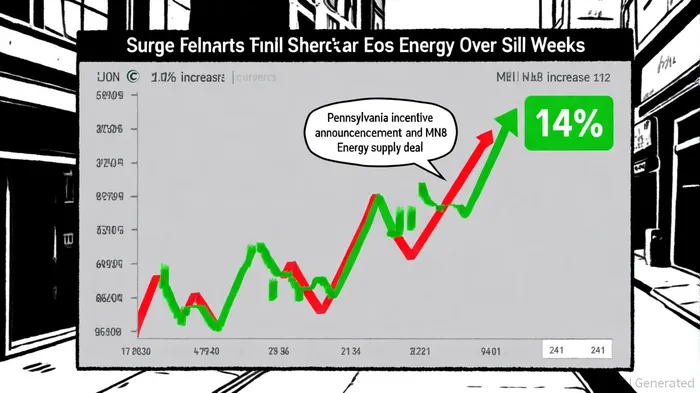
The recent Pennsylvania incentive package, which includes a 432,000 sq. ft. manufacturing plant and a Pittsburgh software hub for its DawnOS battery management system, has likely attracted institutional attention, according to StockTitan. DawnOS, designed for "security, performance, and American innovation," aligns with growing demand for secure energy infrastructure in data centers and AI facilities, though StockTitan also notes the roadmap and commercialization timeline. For institutions betting on the energy transition, Eos's focus on U.S. manufacturing-a nod to "reshoring" trends-adds a layer of geopolitical appeal, according to a Motley Fool article.
On-Chain (Operational) Metrics: Expansion vs. Execution Risk
While Eos's operational announcements are ambitious, execution remains unproven. The company aims to achieve 8 GWh of annualized energy storage capacity through Project AMAZE, a goal detailed in the Motley Fool article, but its current financials tell a different story. A 28% revenue miss in the June quarter and a slashed 2025 EPS forecast from -$0.58 to -$1.43, according to TradingView analysis, underscore operational challenges.
The supply deal with MN8 Energy for 750 MWh of Z3 systems, according to a GuruFocus report, is a positive step, but scaling to 8 GWh will require consistent demand. Eos's collaboration with Talen Energy to power AI infrastructure is also promising, given the sector's insatiable energy needs. However, the company's reliance on state subsidies-like Pennsylvania's $24 million package-raises questions about long-term sustainability. If federal or state support wanes, Eos's margins could face further pressure.
The Long-Term Outlook: Catalyst or Mirage?
For long-term investors, Eos's surge hinges on two factors: execution of its expansion plans and institutional confidence in its financial turnaround. The DawnOS software hub and Z3 systems position Eos to capitalize on AI's energy demands, but the company must prove it can scale profitably.
Institutional inflows suggest some investors are willing to bet on this vision. However, the Altman Z-Score-a bankruptcy predictor-remains dire, and the recent earnings miss has likely shaken hands. A key test will be whether Eos can secure additional partnerships or financing without diluting shareholder value.
Conclusion
EOSE's 14% surge reflects a mix of optimism and opportunism. Institutional investors are betting on its U.S. manufacturing and AI energy storage plays, but financial metrics remain a red flag. For blockchain enthusiasts, the name "EOS" might be misleading-this is not the EOS blockchain but a stock with a similar ticker. That said, if Eos can execute its ambitious plans and attract sustained institutional support, it could become a niche play in the energy transition. For now, though, the surge looks more like a short-term catalyst than a long-term bet.





Comentarios
Aún no hay comentarios