
EnviTec Biogas: Dividend Cut Signals Caution, But Strategic Shifts Offer Long-Term Opportunity
The recent dividend cut by EnviTec Biogas (ETR:ETG) from €3.00 to €0.50 per share for fiscal 2024 marks a pivotal moment for investors. While the reduction underscores near-term financial strain, it also reveals a company navigating a critical juncture: sacrificing short-term payouts to fund transformative investments in bio-LNG and carbon capture infrastructure. This article dissects the sustainability of EnviTec's dividend, the quality of its earnings, and whether the current valuation—now trading at a 40% discount to its 2023 peak—presents a compelling opportunity or a warning sign.
The Dividend Cut: A Necessary Sacrifice or a Structural Weakness?
EnviTec's dividend cut, announced in May 2025, reflects a stark reality: revenues have plummeted by 19% to €337.7 million, and Earnings Before Taxes (EBT) have halved to €44 million since 2022's record highs. The decision to slash the dividend from €3.00 to €0.50 is both a response to these headwinds and a strategic pivot. The company has redirected capital toward high-growth initiatives, such as converting four of its biogas plants into bio-LNG and liquefied carbon dioxide (LCO₂) facilities—a €50 million investment completed by early 2025.
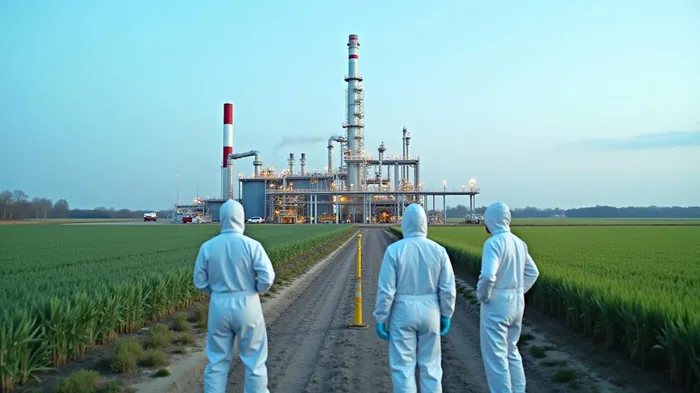
Critically, the dividend cut reduces cash outflows at a time when free cash flow (FCF) has turned deeply negative: -€65 million in 2024, compared to a positive €28 million in 2023. This shift highlights a disconnect between statutory profit (€28.6 million) and cash generation, as capital expenditures surged to €53 million. The accrual ratio—a measure of earnings quality—now stands at 0.40, suggesting nearly 40% of reported profits lack cash flow support. Such a ratio typically signals heightened risk of future earnings disappointments, per academic studies.
Earnings Quality: A Warning or a Temporary Blip?
The accrual-driven earnings in 2024 are concerning. While EnviTec cites “normalizing conditions” after 2022–2023's record performance, the data paints a murkier picture:
- Revenue Decline: A 20.9% drop in total output to €352.5 million, driven by falling electricity and gas prices, as well as fewer completed plant construction projects.
- Balance Sheet Stress: Cash reserves fell from €85.3 million to €26.6 million, with over €50 million diverted to strategic projects.
However, the company's equity ratio remains robust at 44.6%, and its 2025 guidance—projecting EBT of €25–35 million—assumes stabilization, not collapse. Management points to long-term tailwinds:
- Bio-LNG Growth: Converted plants now produce premium-priced bio-LNG for the transport sector, a market expected to expand at 15% annually through 2030.
- Carbon Capture: LCO₂ sales could tap into Europe's emerging carbon credit markets, where prices hit €90/ton in 2024.
Growth Prospects: Riding Regulatory Tailwinds
EnviTec's strategy hinges on Europe's push for renewable gas. Germany's biomass package (2024) mandates higher biogas utilization in power grids, while the EU's RePowerEU plan allocates €17 billion to biomethane projects. These policies align with EnviTec's investments:
- Joint Ventures: A partnership with LIQVIS to build LNG infrastructure positions it in the growing hydrogen carrier market.
- Diversification: Entry into wind and solar through a joint venture reduces reliance on volatile gas prices.
Risks: Regulatory Hurdles and Liquidity Constraints
The negatives are significant:
1. U.S. Market Stagnation: A 38% drop in the Plant Construction order backlog (to €129 million) reflects regulatory uncertainty in key U.S. states.
2. High Accrual Ratios: A 0.40 ratio raises questions about whether reported profits overstate true profitability.
3. Cash Flow Strains: Without FCF improvement, further dividend cuts or debt issuance may be needed.
Investment Thesis: A Buy for Patient Investors
EnviTec's shares now trade at a Price/Earnings (P/E) ratio of 8x—a historic low and a 60% discount to its 2022 peak. This valuation assumes the company's strategic bets fail. But if its bio-LNG and carbon capture projects deliver, earnings could rebound sharply by 2026–2027.
Actionable Recommendation:
- Buy: For investors with a 3–5-year horizon, the current valuation offers asymmetric upside.
- Hold: For short-term traders, as liquidity risks and regulatory delays remain unresolved.
Final Analysis: Red Flag or Buy Signal?
EnviTec's dividend cut is a necessary trade-off for growth, not a death knell. While the accrual ratio and negative FCF demand caution, the company's alignment with EU decarbonization policies and its advanced infrastructure investments position it to capitalize on the €200 billion renewable gas market by 2030.
The question for shareholders is this: Will the market overreact to near-term pain, creating a buying opportunity, or will EnviTec's cash flow struggles persist? For those willing to bet on Europe's energy transition, now may be the time to act.
Conclusion: EnviTec Biogas presents a high-risk, high-reward scenario. The dividend cut and negative cash flow are clear warning signs, but the strategic pivot to bio-LNG and carbon capture—backed by robust regulatory tailwinds—suggests a compelling long-term story. For investors with patience, the current valuation could be a once-in-a-cycle entry point.







Comentarios
Aún no hay comentarios