
Enova's Strategic M&A Play with Grasshopper Bancorp: A Catalyst for Enhanced Financial Services and Long-Term Growth
Enova International's $369 million acquisition of Grasshopper Bancorp represents a calculated move to consolidate its position in the digital financial services landscape. By merging its online lending expertise with Grasshopper's robust digital banking infrastructure, Enova aims to create a more diversified platform capable of addressing evolving consumer and small business needs. This transaction, announced in December 2025, has already sparked optimism among investors, with Enova's stock rising 1.33% in pre-market trading. The deal's strategic rationale, financial synergies, and long-term growth potential warrant closer scrutiny for investors seeking to understand its implications.
Strategic Rationale: Bridging Lending and Banking Capabilities
Enova's core strength lies in its consumer and small business online lending platforms, while Grasshopper has built a reputation as a digital-first bank with $1.4 billion in total assets and $3 billion in deposits as of September 30, 2025. The acquisition allows Enova to integrate Grasshopper's Banking-as-a-Service (BaaS) and API-driven infrastructure, enabling seamless product offerings such as commercial lending, SBA loans, and embedded finance solutions. This synergy addresses a critical gap in Enova's current portfolio, transforming it from a lending-focused entity into a full-stack financial services provider.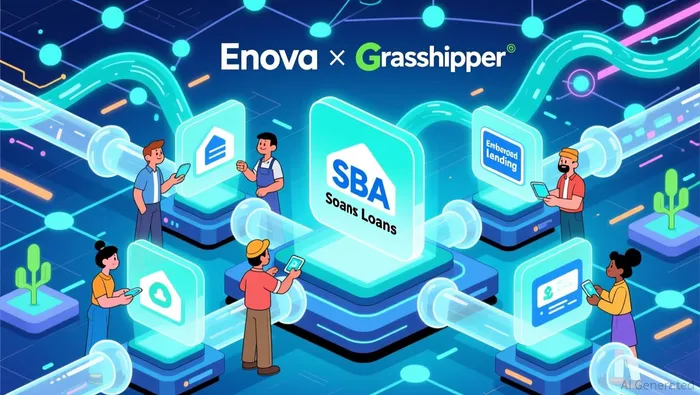
Grasshopper's digital lending team, which expanded by 34% in 2025, further strengthens Enova's ability to scale operations. By leveraging Grasshopper's technology, Enova can accelerate its entry into new markets and diversify revenue streams beyond its traditional lending verticals. For instance, Grasshopper's SBA lending expertise could open avenues for Enova to tap into government-backed loan programs, a sector with stable demand and regulatory tailwinds.
Financial Synergies: Earnings Accretion and Operational Efficiency
The acquisition is projected to deliver significant earnings per share (EPS) accretion, with adjusted EPS growth exceeding 15% in the first year post-closing and surpassing 25% once synergies are fully realized. These figures underscore the transaction's financial discipline, particularly given Grasshopper's strong deposit base, which can reduce Enova's funding costs and enhance its net interest margin. Grasshopper's $3 billion in deposits also provides a stable liquidity foundation, a critical advantage in a post-2023 regulatory environment where capital adequacy remains a priority.
Moreover, the combined entity's cost structure is poised to benefit from operational efficiencies. Grasshopper's digital infrastructure, which supports scalable, low-cost customer acquisition, aligns with Enova's data-driven underwriting models. This integration could reduce customer acquisition costs and improve cross-selling opportunities, further amplifying margins.
Market Reaction and Regulatory Considerations
The market's immediate positive response to the announcement-Enova's stock climbing 1.33%-reflects confidence in the deal's strategic logic. However, the transaction's success hinges on regulatory approvals from the Office of the Comptroller of the Currency (OCC) and the Federal Reserve, as well as Grasshopper shareholder approval. While the expected closing date of late 2026 introduces some uncertainty, the absence of antitrust concerns or CRA objections in the announcement suggests a smoother regulatory path.
Long-Term Growth Catalysts: Diversification and Innovation
Beyond near-term financial metrics, the acquisition positions Enova to capitalize on long-term trends in digital finance. Grasshopper's BaaS platform enables third-party partnerships with fintechs and neobanks, a sector projected to grow as traditional banks offload non-core services. This could unlock recurring revenue streams for Enova, reducing reliance on cyclical lending markets.
Additionally, the combined entity's expanded geographic footprint-Grasshopper operates in 48 states-provides a foundation for cross-border service expansion. Enova's leadership transition, with Steve Cunningham assuming dual roles as CEO of both Enova and Grasshopper Bank effective January 1, 2026, signals a unified strategic vision. This alignment of leadership could accelerate integration and innovation, critical factors in a competitive digital banking space.
Conclusion
Enova's acquisition of Grasshopper Bancorp is a masterclass in strategic M&A, combining complementary strengths to build a more resilient and diversified financial services platform. The transaction's immediate EPS accretion, long-term operational synergies, and alignment with digital banking trends make it a compelling case study for investors. While regulatory and integration risks remain, the potential rewards-enhanced product offerings, expanded market reach, and sustainable growth-justify the strategic bet. For Enova, this move is not just about scale; it's about redefining its role in the evolving financial ecosystem.







Comentarios
Aún no hay comentarios