
Engineering and Regulatory Shortfalls: Hidden Threats in Emerging Market Infrastructure Investments
A Case Study in Compounded Risks
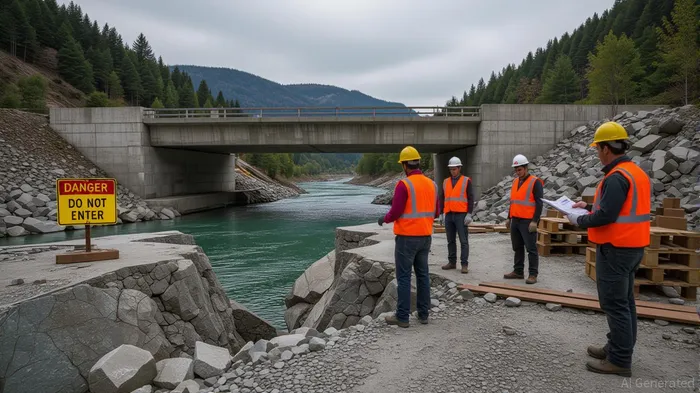
The Hongqi Bridge, a 758-meter structure completed in 2025 by the Sichuan Road & Bridge Group, collapsed after being closed to traffic the day prior due to visible cracks and ground shifts, according to a Zoombangla video. Authorities attributed the failure to worsening geological conditions, but experts are scrutinizing design flaws, material quality, and construction oversight as contributing factors, as noted in the Zoombangla video. This duality-natural disasters intersecting with human error-highlights a critical vulnerability in emerging market infrastructure: the tendency to prioritize speed and scale over long-term resilience.
The incident mirrors broader patterns. In the U.S., the 2024 collapse of the Francis Scott Key Bridge in Baltimore was linked to regulatory failures, including the Maryland Transportation Authority's lack of vulnerability assessments, as reported in a CBS News report. Such cases reveal a systemic issue: infrastructure projects in both developed and emerging markets often lack proactive governance frameworks to address compounding risks like climate change and urbanization.
Market Sentiment and Investment Shifts
The Hongqi collapse has already influenced investor behavior. Emerging market infrastructure funds have seen mixed performance, with some regions attracting capital while others face scrutiny. For instance, Gramercy raised $760 million for private-credit deals in Latin America, reflecting continued confidence in regional opportunities, as noted in a Morningstar article. Conversely, Saudi Arabia's smart cities market-projected to grow at 9.2% CAGR through 2033-faces questions about its reliance on opaque financing models, according to a Vocal media analysis.
However, the broader trend is caution. A Bloomberg analysis notes that infrastructure investors are increasingly demanding transparency in risk assessments, particularly for projects in geologically unstable areas, as reported in a Bloomberg article. This aligns with post-Hongqi calls for stricter safety inspections and accountability in public works, as highlighted in the Zoombangla video. Yet, the challenge remains: how to balance rapid development with due diligence in markets where regulatory frameworks are still evolving.
Mitigating Exposure: Strategies for Investors
To navigate these risks, investors must adopt a multi-layered approach:
1. Demand Granular Due Diligence: Scrutinize project-specific risk assessments, including geological surveys and third-party engineering audits. The Hongqi Bridge's collapse, for example, could have been mitigated with real-time monitoring systems for ground movement, as suggested by the Zoombangla video.
2. Leverage International Standards: Prioritize projects adhering to global benchmarks like ISO 31000 (risk management) or the World Bank's infrastructure resilience guidelines.
3. Diversify Geographically and Sectorially: Avoid overconcentration in high-risk regions. Saudi Arabia's smart cities, for instance, offer technology-driven infrastructure with lower physical exposure compared to mountainous road projects, as noted in the Vocal media analysis.
4. Engage in Policy Advocacy: Support initiatives that strengthen regulatory oversight, such as mandatory vulnerability assessments for bridges and tunnels, as suggested by the CBS News report.
Conclusion
The Hongqi Bridge collapse is not an isolated incident but a symptom of deeper governance challenges in emerging market infrastructure. For investors, the lesson is clear: hidden threats like engineering shortfalls and regulatory gaps can erode returns as swiftly as any market downturn. By integrating rigorous risk assessments and advocating for systemic reforms, investors can protect their portfolios while fostering sustainable development in high-growth regions.







Comentarios
Aún no hay comentarios